English
 Español
 Français
 Deutsch
 Italiano
 Português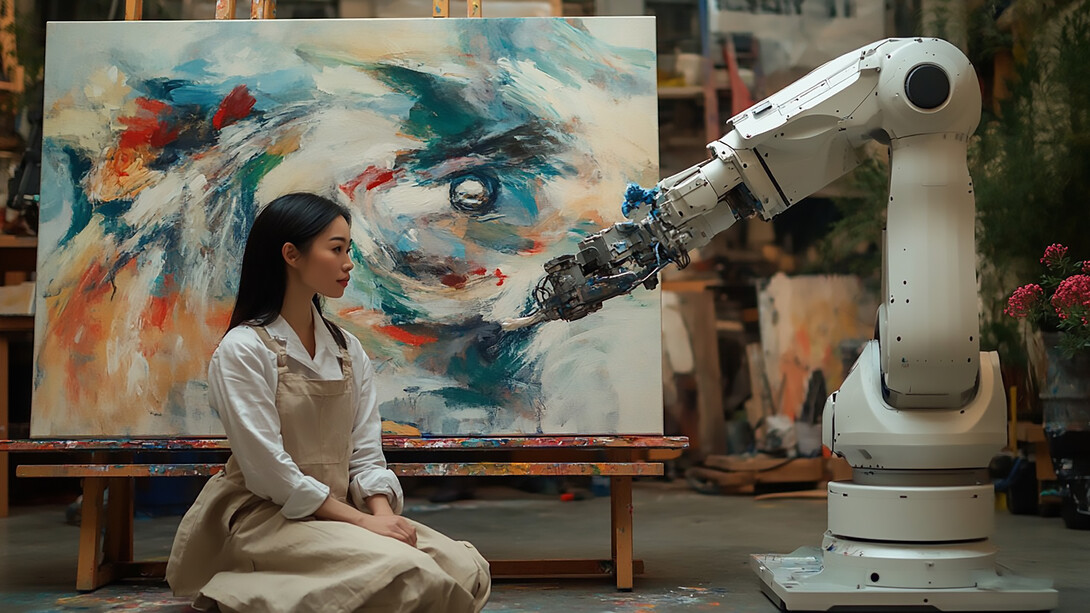
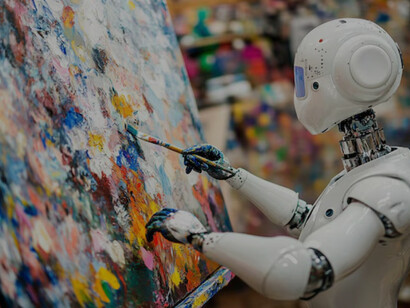
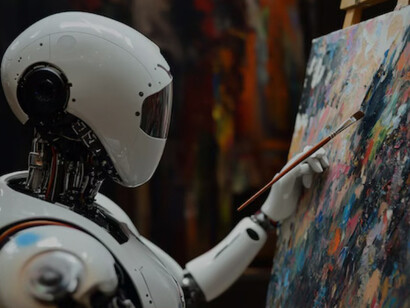
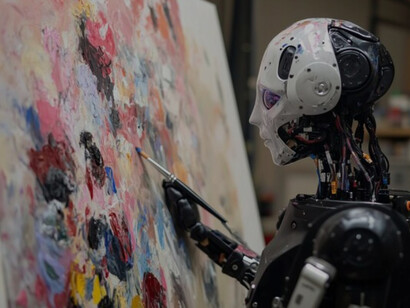
In the last two years, artificial intelligence has gone from a background experiment to a center-stage disruptor in the creative economy. What was once a niche tool for tech enthusiasts is now writing scripts, painting portraits, composing music, and even generating film trailers in seconds. For an industry that has thrived for centuries on human talent, the arrival of a tireless, infinitely scalable “creative partner” has sparked equal parts excitement and existential dread.
The creative economy, spanning film, music, design, publishing, and much more, is no stranger to technological upheaval. The printing press, photography, synthesizers, and digital editing software all shook up artistic production in their own time. But AI is different. It’s not just a tool to execute human ideas more efficiently; it can produce the ideas itself, blurring the line between creator and creation.
From assistance to authorship
At the beginning, AI was framed as an assistant: an algorithm that could help a designer brainstorm color palettes or suggest melodies to a composer. These tools were welcomed, especially in high-pressure industries where deadlines are tight and budgets tighter.
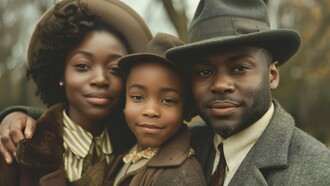
But as AI models became more sophisticated, the narrative shifted. We now have AI systems capable of generating photorealistic movie scenes, hyper-detailed illustrations, or full pop songs without any direct human artistic input. A single prompt can yield results that once took teams of writers, animators, and editors weeks to produce.
This leap has triggered a redefinition of authorship. If an AI model trained on thousands of artworks can produce an original image, who gets the credit: the AI, the human who wrote the prompt, or the artists whose work was used to train the system? The debate is not just philosophical; it’s legal and financial. Copyright law was not built to handle the concept of a non-human creator.
The economic ripple effect
At the heart of the creative economy is labor, the time, skill, and emotional investment of people producing unique cultural products. AI threatens to alter the value of that labor.
For studios and agencies, the attraction is obvious: lower costs, faster turnaround, and an endless supply of concepts to choose from. In advertising, for example, campaigns that might once have required a dozen photographers and designers can now be trialed in-house using AI-generated imagery. Independent musicians can use AI mastering tools to get studio-quality sound without paying for studio time.
For workers, the picture is more complicated. Entry-level creative jobs, the ones traditionally used to gain industry experience, are among the most at risk. If an AI can quickly produce ten versions of a draft logo, why hire a junior designer? The result could be a bottleneck where emerging talent struggles to enter the industry, ultimately shrinking the pool of experienced professionals in the long run.
Creativity vs. originality
One of the most contested questions is whether AI can truly be “creative.” Critics argue that AI is fundamentally derivative: recombining patterns from existing works rather than inventing something entirely new. Supporters counter that all human creativity is, to some extent, built on remixing influences.
The difference lies in intent and experience. Human artists bring lived perspectives, emotions, and cultural context to their work. AI doesn’t “feel” or “think”; it predicts what comes next based on data. This may not matter to audiences if the output resonates emotionally, but for many creators, it’s a crucial distinction.
The music industry offers an illustrative example. In 2023, an AI-generated song mimicking the voices of Drake and The Weeknd went viral before being pulled from streaming platforms. Listeners praised the track’s quality, but the artists and their labels were quick to condemn it. The controversy revealed an uncomfortable truth: audiences may enjoy art without caring whether a human made it, as long as it entertains.
Legal gray zones
The law is scrambling to catch up. In the United States, the Copyright Office has ruled that AI-generated works are not eligible for protection unless there is significant human involvement. In the EU, proposals are circulating to require full disclosure when AI tools are used in the creative process. Meanwhile, lawsuits are piling up from artists, authors, and photographers alleging that AI companies used their work without permission to train models.
This uncertainty makes it hard for creative professionals to plan their careers. Will AI content be labelled? Will consumers care? Will companies have to pay licensing fees to the creators whose work trained the AI? The answers could define the next decade of the creative economy.
Cultural consequences
Beyond the economics, there’s a deeper cultural question: what happens to art when the process of making it is drastically shortened? For some, AI offers a liberation from technical barriers, allowing more people to express themselves creatively without years of training. For others, the risk is a flood of homogenized content, where art is optimized for algorithms rather than human depth and diversity.
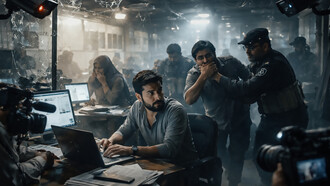
There’s also the issue of authenticity. In an era already struggling with misinformation, deepfake videos and AI-generated audio could erode trust in media. A song “by” a beloved artist might be fake; a photograph of a protest might never have happened. The creative economy doesn’t exist in a vacuum; it influences politics, public opinion, and social cohesion.
Finding a new balance
If history is a guide, the creative economy will adapt. The rise of photography didn’t eliminate painting; synthesizers didn’t kill live music. AI will likely become another tool in the artist’s kit—powerful, but still dependent on human guidance to create work with emotional and cultural resonance.
Some creators are already experimenting with hybrid models, using AI to handle technical heavy lifting while they focus on storytelling, concept, and nuance. Others are carving out niches by marketing their work as “100% human-made,” appealing to audiences seeking authenticity.
The challenge and opportunity is to ensure that AI enhances creativity without erasing the people behind it. That will require new laws, ethical standards, and a public conversation about what we value in art.
As AI takes its place in the spotlight, the creative economy is being rewritten in real time. Whether this becomes a golden age of innovation or a cautionary tale of automation will depend less on the technology itself and more on how we, as a society, choose to use it.