English
 Español
 Français
 Deutsch
 Italiano
 Português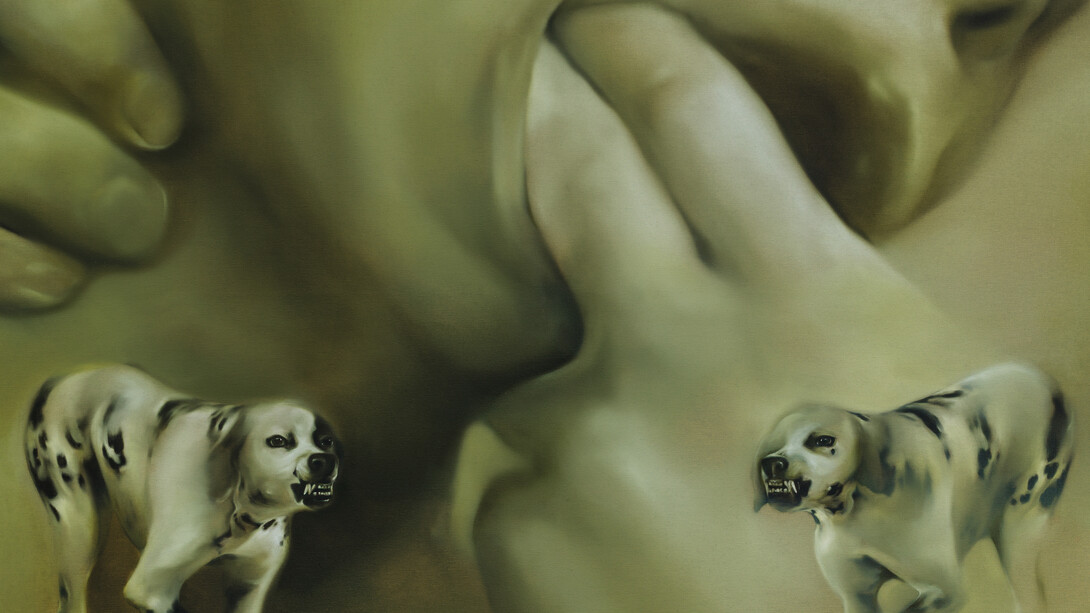
The exhibition opening on February 26 at Tempesta Gallery brings together the painterly practices of Paulina Emilia Aumayr and Lorenzo Conforti, placing two distinct yet resonant artistic approaches in dialogue. While operating through different formal and conceptual languages, both artists share a deep engagement with psychological, bodily, and structural dimensions of contemporary experience.
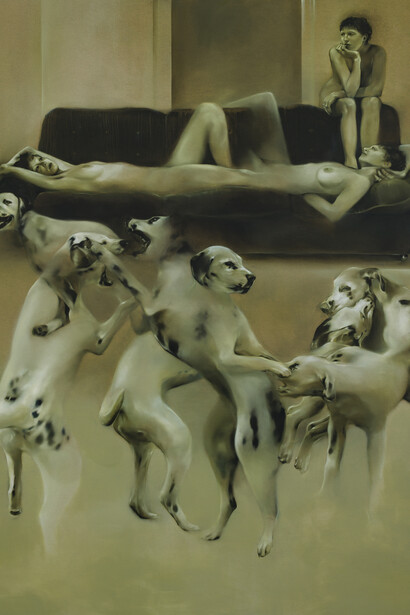
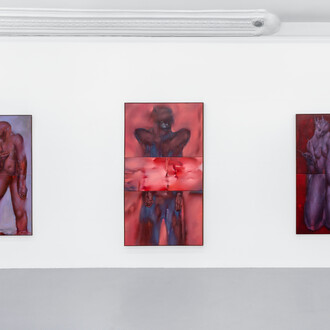
Paulina Emilia Aumayr (b. 2002, Vienna – lives and works in Vienna) works across painting and text. Since 2021, she has been studying at the Academy of Fine Arts Vienna in Daniel Richter’s class. Her practice navigates the intersections of intimacy and violence, rendering visible the subtle and systemic structures of patriarchal power. Through color, gesture, and language, Aumayr translates feminist resistance into images charged with tension, vulnerability, and confrontation.
Her work has been exhibited at Galerie Kandlhofer, Galerie Krinzinger, VinVin Galerie, Galerie Michael Bella, Weserhalle Berlin, and Parallel Art Fair.
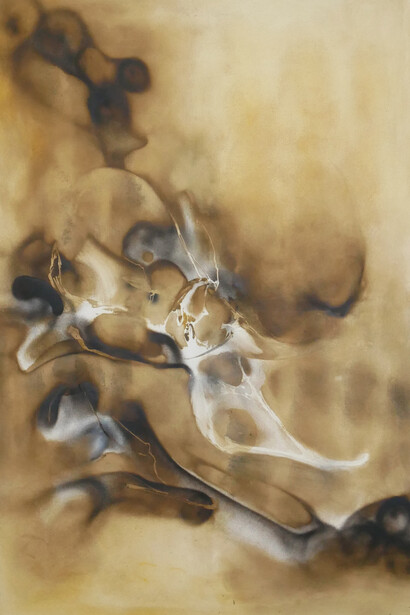
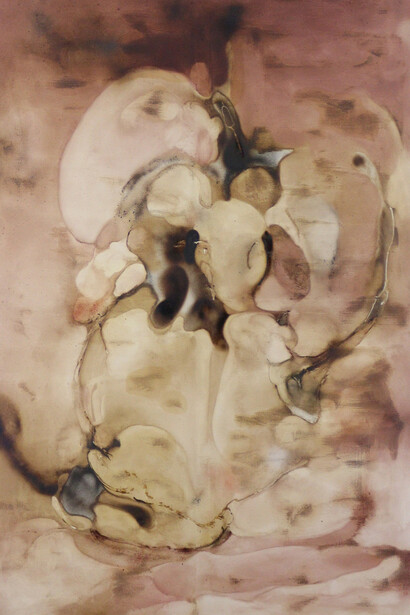
Lorenzo Conforti (b. 1996, Tolentino – lives and works between Milan and Tolentino) develops a painting practice rooted in the fusion of images drawn from diverse organic anatomies. Raised within the worlds of music and graffiti writing, he studied at the Academy of Fine Arts in Urbino, where he co-founded the collective Hardchitepture (2019–2024), focused on environmental and scenographic installation, before completing his studies at the Academy of Fine Arts in Milan.
His painting operates at the threshold of abstraction, generating hybrid and layered forms that resist the contemporary urgency to define, explain, or assign meaning. The works function as unstable inner landscapes—spaces of psychological transaction where fragmentation, overload, and uncertainty coexist. For Conforti, painting remains the only anchor capable of sustaining the instability of beauty, opening onto visions in which matter is in constant transformation and timeless bodies float within vast, germinal pictorial spaces.
The exhibition establishes a dialogue between two practices that approach painting as a critical and sensitive field: on one side, a space of indeterminacy and perceptual complexity; on the other, a site of political and affective resistance. Painting does not provide definitive answers, but instead opens unstable territories in which viewers are invited to linger, reflect, and question.