English
 Español
 Français
 Deutsch
 Italiano
 Português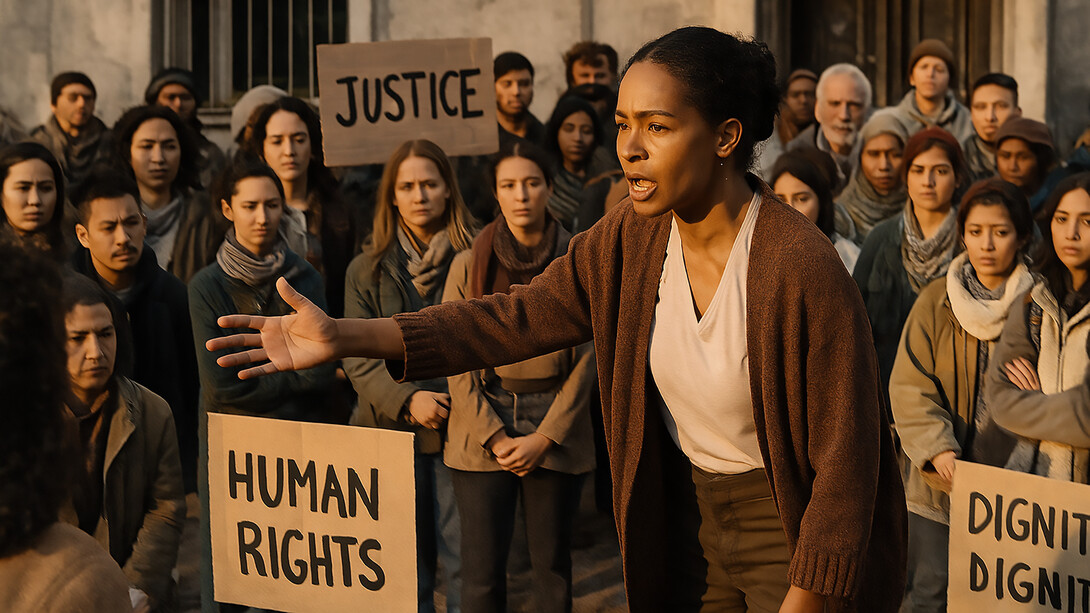
We may not exert political leadership on these issues yet, but we cannot, at least, run away from showing intellectual leadership.
The vast majority of humanity just has the right to see, to hear… and to remain silent.
(Eduardo Galeano)
The setting
The new emerging human rights-based approach to development work comes as a vindication to old-time activists who, for long, had been advocating and fighting for a more political approach to the ‘maldevelopment’ developing countries were subjected to since the second half of the 20th century.
The various mainstream Western-inspired approaches to development used during the last fifty years only weakly touched the political underpinnings of the development problematique, mainly failing to tackle it as the principal stumbling block to genuine poor people’s and countries’ development. These development models that came and went were devoid of a political vision/perspective (other than the one intentionally promoting the status quo) and simply led to a dead-end alley. It took us years to figure that out.
In the fight for a more genuine grassroots, people-centred development paradigm, a breakthrough came in 1984. At that time, the first steps were taken to implement what later became UNICEF’s ‘Conceptual Framework of the Causes of Malnutrition’ with its different levels of causality (immediate, underlying, and basic). (Jonsson et al., 1993 and UNICEF, 1990) The framework reminded us that only when those living in poverty are understood to be the most effective analysts of their own problems and agents of their own solutions is it possible to formulate effective and sustainable interventions. It calls for focusing more proactively on the people’s access to and control over the resources they need to develop and on the structural underpinnings of underdevelopment (i.e., the basic causes).
The increasing use of the Framework represented the acceptance of a dialectical approach that looks at the major and minor contradictions in society that result in, for example, a worldwide high prevalence of preventable ill-health and malnutrition of women and children, seen as an outcome of social and political processes biased against those rendered poor. The adoption of this approach was, therefore, a step towards further politicising the development paradigm. It called for a dialectical unity of knowledge and action.
For a long period thereafter, the international development community got sidetracked and concentrated mostly on individually acting on each of the underlying causes (in our example, of ill-health and malnutrition). Not surprisingly, such a shortcut approach (avoiding the politics of it all) ended up being ‘too timid and too narrow’. (In a way, this was a comparable course to that which, in the 1980s, chose reductionistic approaches to primary health care that led us only halfway to ‘Health For All by the Year 2000’). Only later did the literature begin insisting that acting on each of the underlying causes was necessary but not sufficient— that all had to be tackled at the same time. But still, no voices insisting on the need to also tackle the basic causes were heard loud enough. Again, it took us years to figure that out.
Roughly ten years after the Conceptual Framework approach was launched, came the (complementary) ‘Human Rights-based Approach’, encompassing:
A revival of the role of the economic, social, and cultural rights in development work,
A drive to explicit ‘poverty redressal objectives’ in development work, making it paramount that we need to work with those rendered poor as protagonists, and
A further bid to more concretely operationalise the newly ratified rights, such as those enshrined in the Convention on the Elimination of all Forms of Discrimination Against Women (CEDAW), the Convention on the Rights of the Child (CRC), the Right to Food, and the Right to Development.
The new human rights discourse
The human rights-based approach is, in good part, about the politics of enforcing (all) human rights. This is because human rights are the resurrection of or the return to a greater focus and action on the basic causes of the conceptual framework, which still remain mainly unaddressed at the base of the causality pyramid.
In no uncertain terms, the human rights framework reiterates that a relationship exists between human rights and economic and social development, and, in that relationship, it is the politics of equity that ultimately counts.
Orthodoxy aside, politicisation is here meant to be a process that transforms anguish into anger and into the search for being ultimately relevant-keeping in mind that a political climate is something one creates, not something that is found out there.
In that same sense, human rights are about breaking the silence of powerlessness that keeps the needs and desires of people made poor and marginalised from being part of national political agendas. For the disempowered to get a voice is not enough; human rights are about getting them influence and about the processes that lead from having a voice to having influence.
In sum, the added value of human rights is that they cannot be relegated to a mere social aspiration: they are rights, even if, at present, some of them are not enforced (or enforceable yet).
When a little is not enough
Taking a minimalist stand towards human rights will not harm, but neither will it do much good. What you push is what you change.
This is because the neoliberal development paradigm has led to:
Adopting what has been called an ‘exclusion fallacy’, where what we choose not to discuss (most often the politics of it all) is what is assumed to have no bearing on the issue(s), and
Consistently adopting soft solutions when faced with hard choices (for instance, ‘safety nets’ that are nothing but part of a strategy to manage poverty to attenuate social unrest, keeping it at a minimum).
Moreover, such exclusions and the choice of patch solutions make measurable statistics (as those of the SDGs) their primary goal – not participation, not equity, not human rights. The stark reality is that there is no escape from politics, no way to represent the social world free of ideology. Commitment to change coming from ethical imperatives alone does not fuel great social movements anymore. It is not enough to encourage the articulation of a shared moral vision, because it leaves us unable to consolidate this vision into moral outrage and that outrage into political power to change an unfair state of affairs impinging on the rights of people.
Society is said to evolve as a pendulum: a conservative cycle/a liberal cycle; action and reaction-always taking a toll of death. As long as we are trapped in this cycle and do not proactively try to break its passive successions, we cannot expect much in the way of human rights. As a matter of fact, remaining passive, we cannot even expect any fundamental change, except that of the awful slow variety, where each step takes two generations or more.
Actually, both soft (ethically motivated) and hard (politically motivated) approaches to human rights are necessary. But the former alone is simply not sufficient! Both call for a profound commitment.
The bottom line is that there will be no more business as usual (or even business being ‘more focused’ or interventions ‘more targeted’, as the present mood seems to call for). This is thus a key time for reflection and soul-searching.
We need moral advocates to influence perceptions. Granted. We need mobilisation agents and social activists to influence action. Granted. But we also need political advocates to raise political consciousness and provide leadership. The latter cannot be left for later. Therefore, since working on a common set of values is politics, agreeing on the politics of human rights – beyond ethical pronouncements-- is the real challenge.
But orthodoxy (the right doctrine) is not enough either. Orthopraxis (the right acting) is ultimately more important. (A. Gramsci). The challenge is to move the process from orthodoxy to orthopraxis and from minimalist to a commensurate size course of action.
Breaking into the human rights paradigm
The use of the human rights-based approach to development work undoubtedly constitutes a paradigm break. But so far, this break has only been conceptual, not yet operational. In this day and age, there is a need for commitment beyond ethics. What I am convinced of is that, in its operationalisation, the new human rights paradigm will have to become more overtly and explicitly political with the creation of well-organised claim holders’ pressure groups among those whose human rights are being violated. And to transcend minimalism, these groups will further have to rapidly coalesce into bigger movements, a challenge, among others, for progressive Internet sites and lists.
One can confidently say that fighting for human rights is combating the surplus powerlessness of the have-nots by creating a movement that helps build committed, multi-level action networks.
We need to explode the myth that things are just fine; they are not. For this, of necessity, our strategy must become more political; that is an imperative, set by the way the world ticks. Power politics cannot just be ignored; we cannot look the other way; we have to deal with it.
It is not enough to go from people’s needs to their entitlements and from there to their rights and then pass laws, crossing our fingers that the latter are enforced. This is considered to be a soft approach in the new paradigm.
We need to start from the people’s felt needs, translate those into concrete and effective demands that bring about people’s organisations that start exercising (growing, de facto) power, and then consolidate (their newly acquired) power with that of other like-minded similar organisations.
The latter delineates the needed hard approach and path, because what is needed is to counter a host of complex social and political issues that are preventing people from improving their own well-being, and these are mostly related to control processes in society.
Has science helped people’s development?
In the latter part of the twentieth century, and till today, science was/is not deliberately at the service of people’s rights and development. The mainstream sciences --both basic and social-- simply have failed to raise the level of the political discourse in development work.
Science does provide us with the knowledge we need to implement human rights. But without the ethical and political imperatives to apply its principles to human development, it remains toothless and idle and overwhelmingly serves the interests of the ‘haves’.
Getting from here to there
Meetings on human rights, and even the UN Secretary General’s own pronouncements, are desperately asking for ways to operationalise the new human rights-based approach to development. But to what avail?
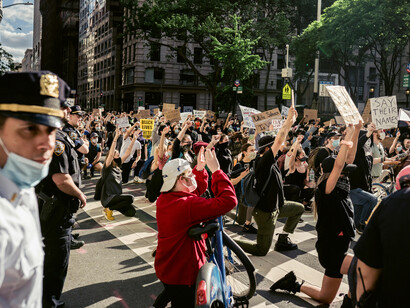
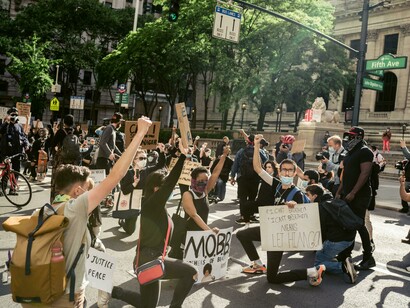
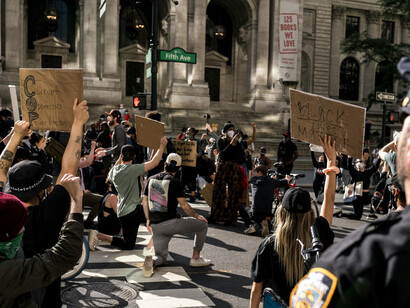
As alluded to earlier, the fundamental changes needed to realise universal human rights are not possible without conflict with the powers-that-be (those who have excess power). Thus, the a call for politicising praxis in this new paradigm. But because there is no progressive politics without the masses, only political mobilisation – or ‘practical politics’, as it also has been called-- will do, no matter what we call it. Otherwise, we may have to wait for another ten years (or two generations…) for who knows what new breakthrough… [Actually, I do subscribe to the metaphor that “without genuine political mobilisation, development is like a Christmas toy: batteries not included”].
We are talking here about a practical, hands-on mobilisation: a mobilisation for self-help actions, for lobbying, for placing demands, for fighting with people for their economic, social, and cultural rights, and for exerting active resistance to social injustice. Such a mobilisation has to lead to an empowerment where popular demands are made into concrete action proposals.