English
 Español
 Français
 Deutsch
 Italiano
 Português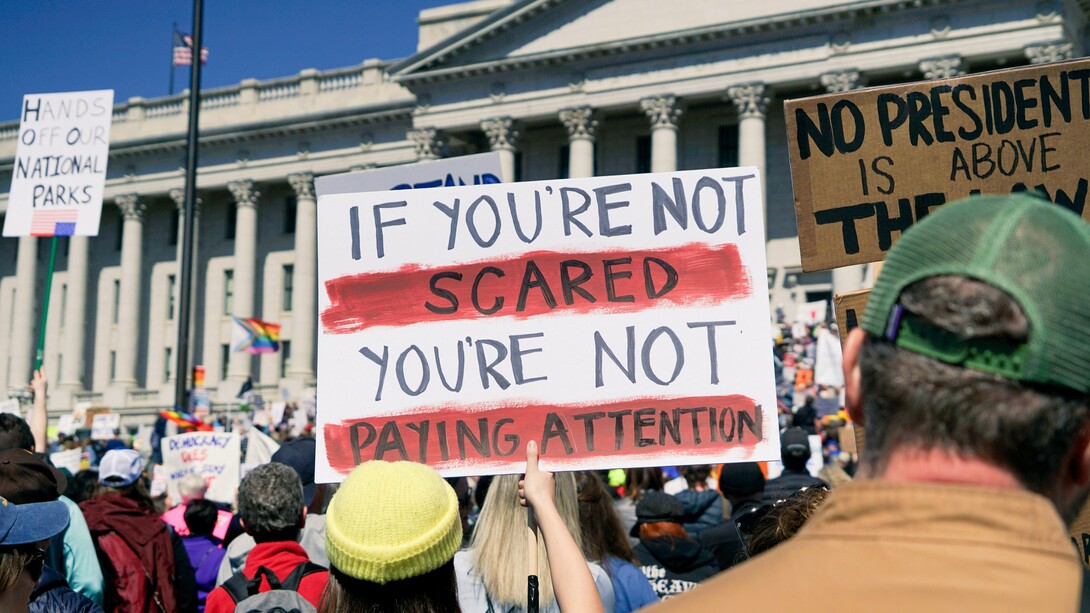
It often happens that academics and the media are reluctant to immediately label ideological movements and events that appear to represent change. Trump is still portrayed as 'capricious', 'arbitrary', 'incomprehensible', and 'inexplicable'.
However, after less than a year in power, a pattern is beginning to emerge, not only in the US but also in Europe.
Far-right governments are not new. We had Bolsonaro in Brazil, Duterte in the Philippines, we still have Modi in India, and Erdogan in Turkey. What clearly characterises them is authoritarianism, often violent repression of the opposition, control over the judiciary, and the media. More recent examples are Bukele in El Salvador, Noboa in Ecuador, and Milei in Argentina.
In Europe, the 'Visegrad countries' have shifted: Poland, Hungary, Slovakia, and the Czech Republic. Meloni is in power in Italy. In the Netherlands, Geert Wilders only narrowly lost the elections. In countries such as Germany, France, the United Kingdom, and Belgium, far-right parties are peaking in the polls.
There are many explanations for this, but two are decisive.
In Europe, and to a lesser extent in Latin America, there is an aversion to migrants. They are blamed for everything that goes awry; they are profiteers and fortune seekers who must disappear as quickly as possible. They are blamed for the lack of affordable housing and the shortcomings in social security. Yet everywhere it is these people who do the dirty and heavy work in construction or fruit picking. In all OECD countries, according to a recent report, they receive proportionally less social security than the native population.
There are many explanations for this aversion among ordinary people to anything that is 'different'. The terrorist attacks by Islamists certainly play a role. What may be even more important is what Dominique Willaert so aptly described in his book about the Dender region in Belgium. Socio-economic changes have made many people vulnerable, people who have worked hard to acquire their own homes and feel middle-class. Their social position is threatened by the arrival of people who do not speak their language and do not always share their 'values'. Yet these migrants are also keen to ensure good education for their children and social mobility.
Migration and social vulnerability have led to a profound distrust of the political class. The biggest victim of this is undoubtedly social democracy, whose raison d'être is precisely the welfare state. And it is precisely the social democrats who are eagerly joining in the neoliberal discourse of austerity and the dismantling of socio-economic rights. This explains why the successors to the communist parties in Central Europe disappeared so quickly after their initial successes.
After almost forty years of neoliberal policy, the new vulnerability has simultaneously led to an individualisation of all problems, facilitated by the disappearance of collective facilities, from village pubs to political services. 'It's your own fault' takes precedence over collective shortcomings.
Social protection is being replaced by police and military protection, and it is precisely this militarisation of society that contributes to feelings of fear and a shift to the right.
Trump's success can be explained in part by people's belief that they should not concern themselves with their neighbours and 'the other', but should primarily look after themselves. More 'freedom', fewer rules, less solidarity. It has worked.
A philosophy
At the level of political parties and leaders, however, something very different is at play. Politicians such as Trump, Meloni, and Orban know exactly what they want.
They translate the legitimate concerns of their citizens into the terms of their philosophy. This happens differently in every country, of course, depending on specific circumstances, but some common characteristics do emerge.
Take the aversion to migrants. What right-wing political leaders are playing on is by no means the vulnerability of ordinary people, but rather a desire for cultural uniformity, for pure ethnicity, because they believe that non-diverse societies are easy to oversee and control. Society is one, like an organism; trade unions and other civil society organisations are anathema. There is no class conflict; the goal is one cohesive group behind one leader.
Without a doubt, religion and white supremacy also play a role. We do not like Muslims, and black people or indigenous people are inferior. The Crusades and the great cooking pot of the cannibals are still in our subconscious.
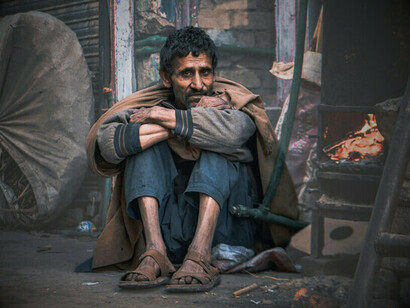
There is more, especially in the US. Anyone wondering how someone like R.F. Kennedy Jr, an anti-vaxxer, could become Minister of Health need only think of Darwin. Survival of the fittest: we don't need preventive medicine because those who are weak can quietly drop out, and then only the strong–white–people will remain. This thinking explains the growing contempt, also in Europe, for all vulnerable people, from asylum seekers to the poor. They are the 'losers' who deserve no respect.
From redistribution to the “dangerous classes”
People's social vulnerability is primarily due to economic changes. Company closures and relocations, the erosion of labour rights through the growth of platform work, and downgrading due to the 'innovation' of digital work.
The redistribution of risks and incomes was typical of post-war Keynesianism. With the introduction of neoliberalism, redistribution disappeared from the agenda and welfare states became increasingly delegitimised. However, following von Hayek and Friedman, it was recommended that something be done for poor people. This poverty policy was perfectly compatible with neoliberalism and cost little or no money. After all, neoliberalism remains liberalism with a belief in the equality of people.
Now that we are witnessing the end of that period and are on our way to something new, even the care for the poor is disappearing. Some narratives and initiatives remain, such as the ILO's 'floors of social protection' or the UN Social Summit in Qatar. However, the lack of ambition cannot be denied. At the annual meeting of the World Bank and IMF, the theme of poverty or social protection was no longer present. Last month's EU tripartite summit stuck to generalities. In short, the social theme that received so much attention over the past twenty years has almost completely disappeared.
This ties in with the first point on migration. Poor people are now also losers, and those who are just above that level can get by with private insurance. Hence, the growing contempt and stigmatisation of those who need help and protection.
Progressive complicity
This subheading may be too strong, but to completely ignore the role of some developments on the progressive side would paint a false picture.
One could dismiss it as 'woke', a movement that plays a very justified and positive role in sketching a history that has winners and losers and takes diversity into account.
But when protests arise because a poem by a black woman – The Hill We Climb by Amanda Gorman – cannot be translated by a white poet – Marieke Lucas Ryneveld – then that too is a desire for ethnic purity, a rejection of universalism in art, a denial of the ability of white people to feel the pain of black people, and vice versa.
Or this: poverty creeps into your DNA, says Tim Jongers, because poverty does not leave you even when you have sufficient income. In other words: once poor, always poor. This leads to the impossibility of social mobility and to fascism. A society is like a living organism, each with its own specific and unchangeable function. You are who you are, and you stay where you are.
With the exaggerated focus on so-called 'multidimensional poverty' and the failure to recognise the central role of income in becoming economically and financially self-sufficient, many experts are – unconsciously – playing a dangerous game.
Part of feminism is in the same boat. With the confusion that has arisen between sex and gender – as if everyone can choose their own sex – many people began to turn away from something they did not understand. The right wing cleverly exploited this to consign the whole of feminism to the dustbin and, at the same time, to condemn the entire LGBT community. In the society that is coming our way, virility is an important virtue. This helps to explain the success of the far right among young men who want to boost their self-esteem.
A new ideological agenda
The ideas that are gaining ground today are not new. They have always been defended by a small minority and condemned when voiced. That is now changing; the brakes have been removed. Trump is very clear – 'they kill, it's in their genes' – and in Europe, these ideas are slowly coming to the fore. Second-class citizens, vermin, pure racism. 'Then they'll just be a bit hungrier in Africa,' says Geert Wilders.
People are no longer equal. The reactions to Sarkozy's imprisonment in France made it clear that some still – or once again – think, and now also say, that criminal law is only for 'la canaille', the rabble. Not for respectable people.
This means the end of liberalism, of Enlightenment thinking, of the mission to emancipate people, as Ico Maly explains so perfectly. In Flanders, too, the far right is rebelling against 'materialistic ideologies' and thus against the foundations of liberal democracy.
The growing and shameful inequality is a breeding ground for polarisation. We, rich people, are better than all the others; we have what we have, and that's fine. We don't have to contribute to society. We have the right to be rich.
It is neoliberalism that has failed economically and is now clinging to the seeds of fascism in order to save itself.
Naomi Klein refers to this as 'end-of-times fascism'. Almost all of the tech billionaires are connected in some way to fundamentalist churches, waiting for 'the rapture'. They realise perfectly well that with the climate crisis, COVID-like epidemics and AI, chaos and destruction await us, the Apocalypse. They are preparing to withdraw even further from society and are wondering whether, apart from themselves, other people deserve to be saved and which groups should be exterminated. They laugh at the idea that we owe each other something because we belong to the same humanity. Hence, the assertion that 'empathy is the greatest weakness of Western civilisation'. They can easily contemplate total destruction rather than the loss of their supremacy.
It is unadulterated fascism.
It began with 'Coffee, that's how I am' as an advertisement and statement of identity in the emerging neoliberalism forty years ago. It ends with genetically determined 'vermin' and 'dangerous classes' that the army and police must take action against. People no longer matter, let alone be equal.