English
 Español
 Français
 Deutsch
 Italiano
 Português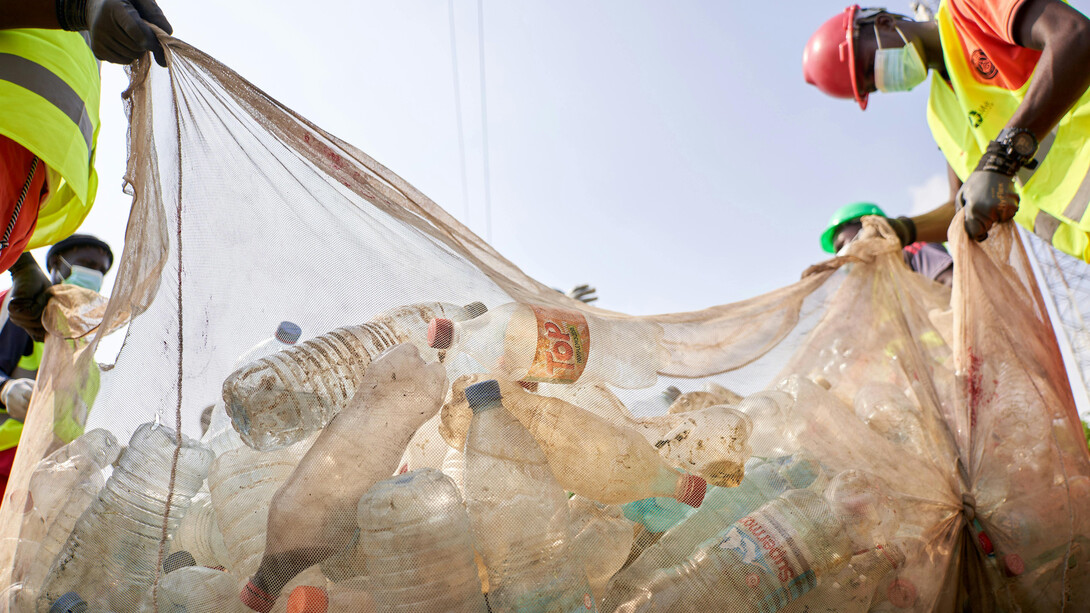
I can sometimes be such a bloody know-all! I've been doing all this sustainability stuff for so long that as soon as a particular topic crops up (which I think I've got sorted in my own mind), I immediately go into ‘nothing to learn here’ mode, power down the old brain, and wait for what I think I know to be confirmed.
Case in point: microplastics. I've been on the case with microplastics for a long time. Working with companies that are responsible for tens of millions of tonnes of plastic waste means that one has to be on the case if one is going to challenge them appropriately. So I keep up with the latest articles, follow the non-technical science, tut-tut vigorously at the continuing failure of politicians to even touch the sides of this vast global problem – and, given half a chance, opine eloquently on what I think ought to happen next.
So, I'm not quite sure why I chose to read Matt Simon’s ‘A Poison Like No Other’, dealing with the microplastics crisis. Perhaps it was the subtitle: ‘How Microplastics Corrupted Our Planet and Our Bodies’ – I do like a big bold subtitle. Or it might well have been my intense anger at the all-too-predictable collapse (in August 2025) of negotiations on the Global Plastics Treaty — brutally executed by today’s supremely arrogant petrochemicals industry. Whatever it was, I got myself a copy of ‘A Poison Like No Other’. And it showed me, in short order, that my knowledge about microplastics was wafer thin and that the crisis is so, so much worse than I had ever imagined.
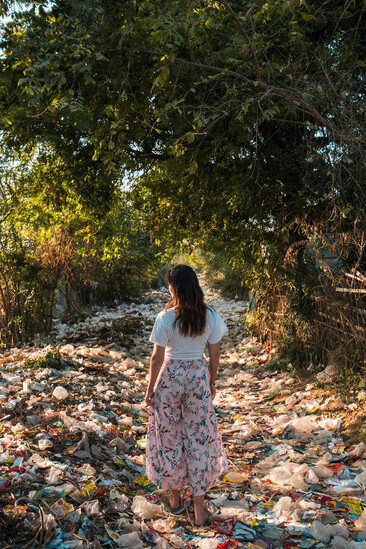
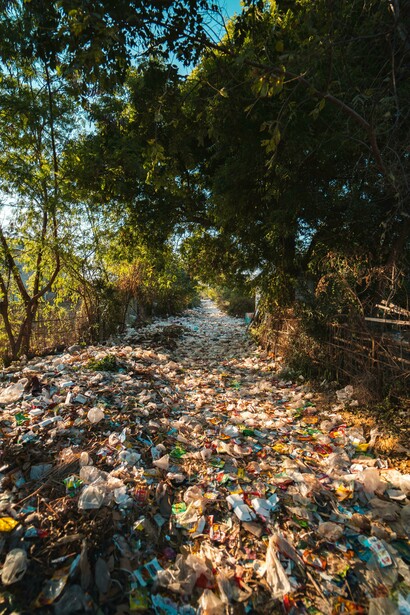
What we talk about most of the time is macroplastics: plastic bags, plastic bottles, plastic packaging, plastic everything, everywhere, in each and every corner of our lives. Matt Simon calls it ‘the plastisphere’. Microplastics are what we end up with when macroplastics break down into little pieces less than 5 mm in size. And when all those teeny-weeny bits of microplastics (and microfibres from our clothes) continue to break down, we end up with unimaginably, unaccountably (as in beyond our ability to count it all) large volumes of nanoplastics. Which, at a millionth of a metre, are not visible to the human eye.
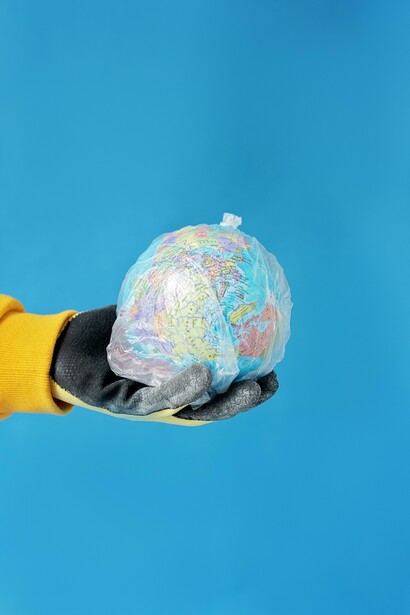
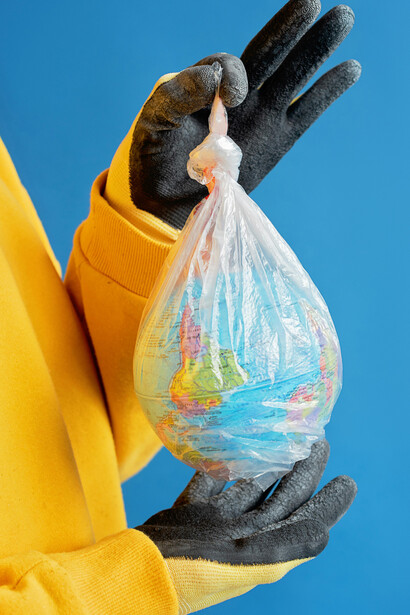
‘A Poison Like No Other’ comprehensively explores the (literal) ubiquity of this source of pollution in the water environment, in the soil, in the atmosphere, and last – but most disturbingly of all – in our own bodies. The sheer scale of the plastisphere is staggering:
“Exactly how much plastic humanity has produced thus far, we will never know. But scientists have taken a swing at an estimate: more than 18 trillion pounds, twice the weight of all the animals living on Earth. Of that, 14 trillion pounds have become waste. Just 9% of that waste has been recycled, and 12% has been incinerated. The rest has been landfilled or released into the environment.”
What scientists have only recently discovered is that as microplastics and microfibres degrade, they split into more and more small pieces, creating an ever-larger surface area on which every conceivable kind of bacteria, viruses, algae, larvae, microbes and infinite varieties of chemical pollutants (including the real baddies like endocrine disruptors and persistent toxics) happily take up residence. And that's how the food chains that underpin the whole of life on Earth (including our own existence, at the very top of those food chains) have become increasingly contaminated.
Simon argues (convincingly, I believe) that this confronts us with a crisis that is unlike any other. He describes it as “an unprecedented threat to life on the planet”, although he's very cautious about linking the presence of microplastics in the human body (scientists have detected microplastics in blood, in every part of our digestive systems, in our brains, in mothers’ milk, in placentas in semen – and even in newborns’ first faeces) with any particular uptick in health issues. Respiratory diseases, such as asthma, cognitive problems, and even obesity have all been linked to the vast increase of plastics in the environment – and it's hard not to imagine that this is rather more than just correlation.
At the heart of this crisis is a classic ‘progress trap’: our modern world simply wouldn't be possible without a vast range of plastics. We should, of course, be doing much more to reduce the damage caused by that dependency – a tax on virgin plastics, for instance, or specific technological interventions such as mandatory filters in all new washing machines to capture the microfibres before they can escape into the water environment – but we'll still be caught in the trap.
However, Matt Simon is astonishingly understated in his critique of the petrochemicals industry. That may be because ‘A Poison Like No Other’ was completed well before the industry was finally revealed in all its poisonous glory as it succeeded in crashing negotiations on the Global Plastics Treaty – under the aegis of UNEP (United Nations Environment Programme) – in August 2025.
Talks had been going on since 2022, and although critics of the process (including myself) were deeply sceptical about the industry's intentions, nobody could have predicted the systematic subversion of the entire process right from the off. Hundreds of corporate lobbyists succeeded in slowing things down, blocking progress at every meeting. Saudi Arabia (the undisputed leader of the bloc of petrochemical countries) somehow got itself onto the coordinating bureau of National Representatives. UNEP itself was subject to intense lobbying, intimidating tactics, and all sorts of ‘inducements’. Its Executive Director, Inger Andersen, has been widely criticised as getting ‘too close to the industry’, not just by NGOs but by independent scientists (whose advice has been consistently ignored by UNEP) and all those other businesses and countries which really did want to see a deal done – including mandatory limits on all future production.
And that remains a crucial objective. From 450 million tonnes today, production is due to triple by 2060. This means that the principal proposal from the industry (that we can recycle our way out of this crisis) is cynically unrealistic. Total recycled volumes have been stuck at around 9% for many years, and even if that doubled, it would still leave untouched the unavoidably vast increases in microplastics and nanoplastics.
No doubt the talks will soon resume. Between now and then, let's hope that UNEP’s Inger Andersen has had a chance to read A Poison Like No Other. Perish the thought that she should remain as ill-informed as I once was.