English
 Español
 Français
 Deutsch
 Italiano
 Português
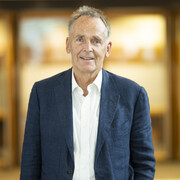
My name is Michael von der Schulenburg. I am a practicing Catholic and have worked for the United Nations for 34 years in development and peace missions—mostly in leading positions and in countries that were at war or directly or indirectly affected by war. Today, I am an independent Member of the European Parliament for the BSW Group. I am enclosing my CV, as it may help to understand what I am going to say here.
First, I would like to point out that I have not lived in Germany since 1978 and now have my primary residence in Austria. I would like to emphasize, therefore, that much of what I write here is based on personal impressions and does not stem from in-depth analysis. I am not a theologian and have no theological expertise. This open letter should therefore not be understood as an accusation or an attribution of blame, but rather as an expression of an inner unease about the Church I belong to that stems from my many years of experience with war and peace in many parts of the world.
The words ‘Pax Christi’ already say it all—a program that obliges Christians to work for understanding and peace. This should be of utmost importance, especially at this time: a time when the war in Ukraine and Israel's wars in Gaza, the West Bank, Lebanon, and Syria—as well as its wars with Iran, Yemen, and Qatar—have led to unspeakable human suffering and a scale of military violence that threatens us all.
The dangers of these wars are incalculable. For the first time since the end of the Second World War, nuclear weapons are playing a strategic role in these conflicts, as a deterrent. But where is the red line between deterrence and use? Against this backdrop, reports of the modernization of nuclear weapons, the rapid development of new and ever faster rocket delivery systems, and plans for renewed nuclear weapons testing should be deeply disturbing to us.
With this development, we are putting creation at risk. How can we remain silent about this?
On my travels, I regularly visit Sunday church services in Austria, Germany, the Netherlands, and Belgium. But in recent years, I have not once heard an intercession for the children in Gaza—or for the young Ukrainians and Russians who are daily killed or maimed in our neighboring European state. No sermon has mentioned these wars, and no peace greeting during these services has warned of a development that could lead to the destruction of humanity and all life on Earth. One can leave Catholic Sunday services in the belief that there are no wars, no human suffering, and no dangers.
Yet Pope Francis—like Pope Leo XIV today—has worked tirelessly for peace and repeatedly called for peaceful solutions to conflicts. In the summer of 2022, under the leadership of Jeff Sachs, I was invited by the Vatican, together with Romano Prodi, Anatol Lieven, Richard Rubenstein, and many others—including several cardinals—where we worked out a possible peace solution for the war in Ukraine. When I tried to report on this in the diocese of Vienna or in my small parish in Bisamberg, I was met with rejection. They didn't even want to meet me for a coffee. Where does this fear of addressing the issue of war come from?
This silence on the part of the Church is now being broken by the alarming statement on military service issued by the German Bishops' Conference on 13 October this year. It is written in the style of a legal opinion—there is no trace of the spirit of Pax Christi in it. On the contrary, it reads like a justification for preparations for war. The German government's war narrative is adopted completely uncritically. Such a black-and-white portrayal with clear attributions of blame may be understandable for a government in conflict with Russia, but it is not an acceptable approach for bishops of a global church.
Military service—a central issue in the German government's preparations for war—is justified in this statement. The argument of a ‘security threat from Russia,’ i.e., an immediate threat of war against Germany and its NATO partners, is adopted. However, the existence of such a threat of war is only claimed by European NATO members and, in particular, by the German government. In the USA, on the other hand, the annual joint threat assessments of the US intelligence services never mention such a threat. Even in the many non-NATO countries where the majority of Christians live today, there is apparently no perception of a danger that Russia would ultimately attack us as well. So why do German bishops adopt this view?
Should it even be the role of German bishops to take sides in wars? Is it even a Christian attitude to bless one's own war readiness while demonizing one's opponents? Would it not rather be the task of a Christian community to be understanding and conciliatory towards opponents? Are diplomatic principles for resolving conflicts—such as (i) showing respect for one's opponents, (ii) listening to their narratives, and (iii) attempting to understand their positions—not ultimately principles that would be more fitting for a Christian church than the bishops' statement on military service that has now been published?
Should German bishops, in the spirit of Pax Christi, not rather focus their energy on initiating dialogue and developing prospects for peace, as we already did in the summer of 2022, four months after the outbreak of the war, at the Pontifical Academy of the Vatican, the Pontificia Academia Sancti Thomae Aquinatis? This academy was founded in 1879 by Pope Leo XIII, the predecessor and role model of the current pope.
Could the Charter of the United Nations—a document that has been supported by all popes since the Second World War—not also help German bishops to adopt a more Christian attitude to the question of war and peace?
Four thoughts on this:
The commitment to peaceful solutions to conflicts
In order to avoid wars, all 193 member states of the United Nations have committed themselves in the Charter to resolving their conflicts exclusively by peaceful means—i.e., through negotiations, diplomacy, mediation, or arbitration. This also applies, of course, to wars that have already broken out, which should be ended as quickly as possible. Would it not therefore be appropriate for German bishops to call on the German government to engage in talks and negotiations with Russia in order to achieve a peaceful solution to the war in Ukraine?
The abandonment of the idea of just wars
The UN Charter no longer distinguishes between just and unjust wars. It obliges all warring parties equally to strive for a peaceful solution. In all wars, each side claims to be in the right. That is why considerations of war guilt play no role in ceasefire and peace negotiations. According to the Charter, all wars are immoral—and yet the Charter recognizes that wars are not about morality but about competing interests. A peaceful solution, therefore, always means a balance of interests. Accusations of guilt, such as those expressed by German bishops, are out of place in this context.
No more wars
Security policy considerations in the Western world today are shaped by the saying of the 4th-century Roman military writer Publius Flavius Vegetius Renatus: ‘Si vis pacem, para bellum’—‘If you want peace, prepare for war.’ But this saying assumes that man is always an enemy to man and that peace can only be enforced by weapons. This is a deeply inhuman worldview—and German bishops should clearly distance themselves from it.
The UN Charter, on the other hand, is based on a positive view of humanity: that through reason and trust, humans are capable of resolving conflicts peacefully—in a way that can be accepted by all sides. Is this not an attitude that is closer to the Christian faith?
The word as the foundation of creation
It is often criticized that the UN Charter consists only of words—and that it cannot achieve anything in a world with almost three trillion dollars in annual military spending. But shouldn't such an argument stir Christians in particular? Christianity—like Judaism and Islam—is based on the word. The Gospel of John even begins with the weighty words, ‘In the beginning was the Word.’ If the Word stands for divine creation, how can we accept that our peace is based on man-made weapons systems that could destroy all life on earth in a matter of hours? Shouldn't religious communities be the primary advocates of the UN Charter?
On 15 November, Pax Christi will hold a peace conference in Heidelberg. I am enclosing my paper ‘Never Again War—the Charter of the United Nations’ and the accompanying letter in German and English. The paper was written on the occasion of the 80th anniversary of the UN Charter on 24 October 2025 and can be downloaded free of charge from my website.
Peace be with you!