English
 Español
 Français
 Deutsch
 Italiano
 Português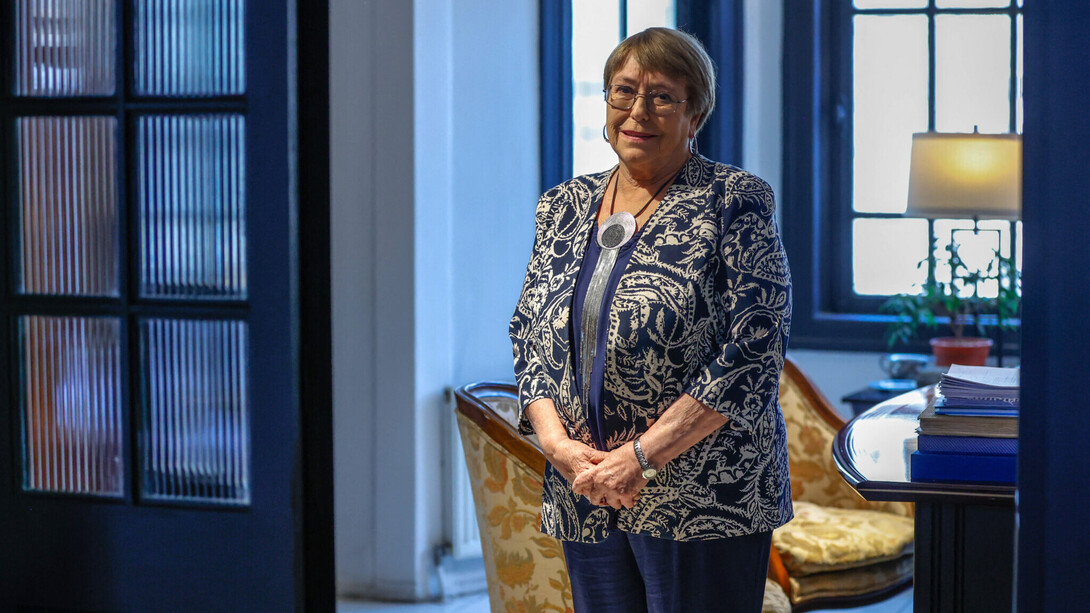
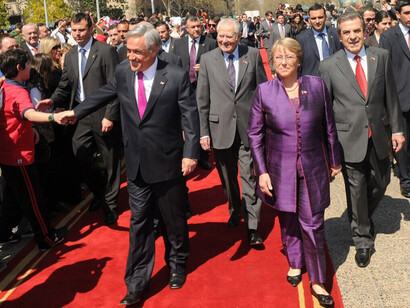
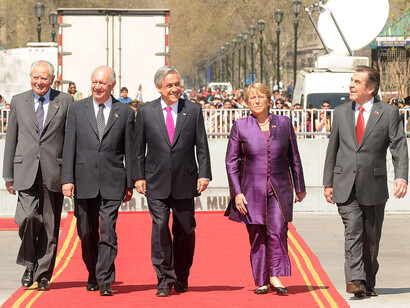
Michelle Bachelet is a woman who has experienced both adversity and resilience. While studying medicine in Chile, she was only 21 years old when she had to face the 1973 coup d'état and the arrest of her father, a distinguished Air Force general, who died in prison from a heart attack caused by torture. In 1975, she and her mother, Angela Jeria, were imprisoned by the DINA (National Intelligence Directorate) for almost two weeks in the sinister Villa Grimaldi. They were kept blindfolded and could hear the cries of tortured men and women. They were then sent to the Cuatro Álamos concentration camp. Michelle remained there for another ten days while her mother was being held for a month. Both were then expelled from the country and sent to Australia.
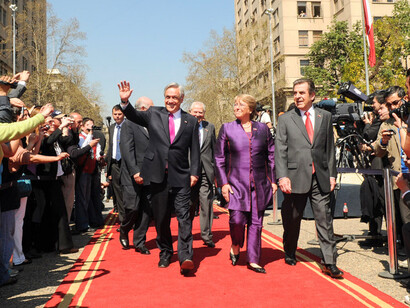
A pediatrician, Michelle Bachelet (73), became the first woman to be elected president of Chile in 2004. At the end of her term, she was appointed in 2010 by the then Secretary-General of the United Nations, Ban Ki-moon, as the first Executive Director of UN Women in New York, serving as Deputy Assistant Secretary-General until 2013. Between 2014 and 2018, she served as Chile's president for a second term. At the end of her presidency, she took office as the United Nations High Commissioner for Human Rights in Geneva, a position she held until 2022.
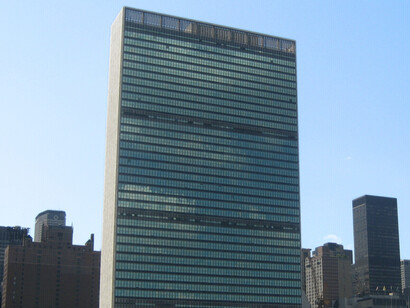
Bachelet is today the candidate officially supported by the governments of Chile, Brazil, and Mexico for the position of Secretary-General of the United Nations, to be elected at the end of this year. Other countries will undoubtedly join in to broaden their support. According to Article 97 of the organization’s charter, the General Assembly must approve the candidate recommended by the Security Council.
The Security Council is composed of 15 countries, only five of which have permanent status and the right to veto: China, the United States, France, the United Kingdom, and Russia. In other words, these countries must agree on the candidate. Two unwritten rules could pave the way for Bachelet: the rotation of continents and the fact that, in the 80-year history of the United Nations and its nine secretaries-general, no woman has ever held the position. The last four were Boutros Boutros-Ghali (Egypt, 1992–1996), Kofi Annan (Ghana, 1997–2006), Ban Ki-moon (South Korea, 2007–2016), and the current Secretary-General, António Guterres (Portugal), whose term will end on 31 December 2026.
Who will Bachelet be competing against? Although this is not in the statutes, the understanding is that the Secretary-General should remain in the hands of Latin America, while respecting the rotation of continents. The official candidates registered from the region are Rafael Grossi (64), an Argentine political scientist and diplomat in the Argentine foreign service, who is also the former director general of the International Atomic Energy Agency (IAEA), based in Vienna. He was re-elected to this position in 2023. Another candidate is Costa Rican economist Rebeca Grynspan (70), who was vice president of Costa Rica from 1994 to 1998 under President José María Figueres.
In 2021, she was elected Secretary-General of the United Nations Conference on Trade and Development (UNCTAD). Ivonne Baki (75), who was born in Ecuador and is also a Lebanese national, has also formalized her candidacy. Her nomination has the backing of the Lebanese government. Ecuador has not yet given its support. Baki studied art in France and administration in the United States. She was Ecuador's minister of foreign trade and held diplomatic posts as Ecuadorian ambassador to France and the United States.
Like Michelle Bachelet, Gryspan and Grossi have extensive experience in the United Nations. While new candidates from the region may still emerge, the work of seeking the endorsement or support of Latin American governments, as well as the rest of the world, has already begun and will intensify in the coming months. This campaign will take place in multilateral forums and regional organizations such as CARICOM (Caribbean Community), OAS (Organization of American States), and CELAC (The Community of Latin American and Caribbean States).
Important organizations in the rest of the world include ASEAN (Association of Southeast Asian Nations), which brings together ten Asian countries; the African Union, which groups fifty-five states; and the twenty-seven countries that make up the European Union, one of which, France, is one of the five permanent members of the Security Council.
The candidates have an enormous amount of work to do, and securing the support of influential countries such as India, the United Kingdom, Canada or Arabic’s community is vital.
One obstacle Bachelet must overcome is the resistance of ultra-conservative Chilean sectors who believe the new government of President-elect José Antonio Kast should withdraw its support when it takes office on 11 March. This merely demonstrates the extreme pettiness of minor politicians driven by resentment or a desire for revenge, and Kast will likely ignore them, as he must prioritize the national interest over domestic political contingencies.
How will the five permanent members of the Security Council act? We do not know, but Donald Trump's second presidency and his desire to change the world order and the United Nations have shaken the world stage. This organization has been weakened in recent years due to its leadership and structural problems that have accumulated over time and correspond to a world that is completely different from that of 1945, when it was created at the San Francisco Conference.
For example, Africa had only three independent countries at the end of World War II, whereas today it has 55. Similarly, Europe had around 30 countries, whereas today it has 51. The United Nations was founded by 51 countries, whereas today there are 193 member states. India, the world's most populous country and an economic and nuclear power, achieved independence two years after the United Nations was established, yet it is not a member of the Security Council.
Since the inception of the United Nations, permanent members of the Security Council have violated the rules of the Charter without facing any sanctions. Throughout its 80-year existence, these members have acted militarily without the consent of the Security Council or applied the veto to protect their own interests or those of their allies. The General Assembly's massive and almost unanimous resolutions, many of which are repeated year after year, have no effect and are merely symbolic, demonstrating how far removed from global public opinion the organization’s leaders are. All of this has contributed to the delegitimization of the United Nations and its mandate.
The preamble to the Charter states that 'we the peoples, determined to save succeeding generations from the scourge of war, which twice in our lifetime has brought untold sorrow to mankind'. Today, humanity once again faces the danger of a conflagration whose consequences are impossible to measure. Global public opinion has grown distrustful of an institution that fails to address the serious problems and challenges facing humanity, such as climate change, food shortages, migration, and humanitarian crises, to name but a few.
The Sustainable Development Goals (SDGs), solemnly proclaimed in New York in 2015 and intended to be achieved by 2030, have not been fulfilled. Peace and security are under serious threat today, requiring leadership capable of initiating a new dialogue between powers and countries still held hostage by unresolved problems dating back to the 20th century, which continue to cast a shadow over the future of new generations. They will have to end the conflicts to face the new challenges that threaten human life and the planet.
Michelle Bachelet will have to answer questions from several of the 'big five', some of whom have had issues with her in the past due to her willingness to fully exercise the mandates assigned to her in accordance with the Charter. Her moral and political integrity and her deep commitment to respect for human rights, democracy, and international law are beyond question. She is recognized and valued globally for her simplicity, charisma, friendliness, and closeness to the people, which has elevated her status across all continents.
There is no doubt that the United Nations needs to be reformed, and countries recognize that this requires the political will of those in power. Reforming the United Nations necessarily involves reforming the Security Council and rationalizing its functioning and high budgets. The strong, consistent leadership of a woman who has overcome the greatest adversities a person can face could open the way for dialogue on sensitive issues such as engaging with permanent members of the Security Council to democratize the organization and adapt it to 21st-century realities.