English
 Español
 Français
 Deutsch
 Italiano
 Português
Power is the ultimate aphrodisiac
(Henry Kissinger)
All a political leader wants is for citizens to mark one name on one piece of paper every four years. That is singlehandedly the most difficult thing to do. Any communication is aimed towards that goal. One of the best ways to do that is to make the citizen either love a candidate enough to select their name or hate the others enough not to select their name. Essentially, a clash of emotions.
While no emotion is more intense than love, few things can rile up the masses more than political fervor. My beloved region is famous for the bombastic, rocambolesque, and mesmerizing oratory of its most often than not populist leaders. A lot of these have been accompanied by their couples in equally powerful positions. Latin America shows us that romance mixed with ideological zeal can create long-lasting political movements.
Geographic peculiarity
History loves power couples. No, not the celebrity couple on the covers of tabloids. Real power couples have real power. Some historical couples got their power from violence, like Bonnie and Clyde. Some from their cultural capital, like Sartre and de Beauvoir. Some got legitimized power from political leadership.
Cleopatra and Caesar created the greatest military alliance ever by falling in love and holding scary amounts of power. Theodora was the power in the shadows of Justinian and had a hand in authoring his Codex, which lawyers study to this day. Isabella of Castile and Ferdinand of Aragón unified Spain and later changed the world when they financed an enigmatic Genovese sailor to expand Spain into the Americas. Perhaps that is the reason why Latin Americans have a fascination with power couples.
Latin America is portrayed in the media as a land of love. The romantic adventures of characters like El Zorro and other Latin Lover archetypes have shaped the perception of the region for generations. Melodramatic soap operas and explicit music make it seem like intense emotions are the norm. Just think of the stark contrast in the media between Latin Americans with the cold and distant stereotype of Eastern Europeans to understand my point.
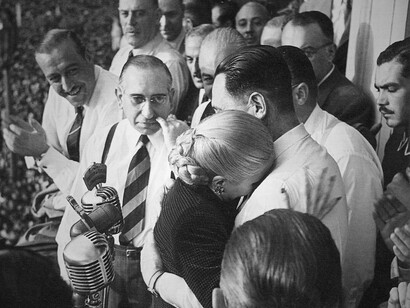
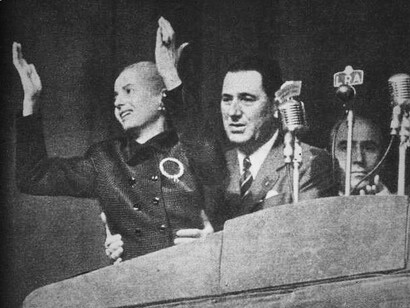
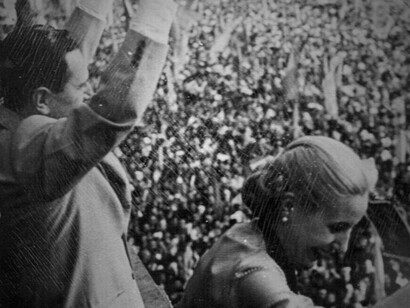
The ultimate power couple was the Peróns of Argentina. Juan Domingo Perón is the founder of justicialismo or peronismo and was elected three times for the presidency. Both his second and third wives, Eva and Isabel, held different positions in his government. Evita is romanticized for her social work and ideological influence on the movement prior to her early death in 1952. Isabelita was both first lady and vice-president when Perón died in 1974, which made her president until she was deposed in a coup in 1976. At the time of writing, she is away from politics and living quietly in Madrid.
A populist leader must have a charismatic persona. Their larger-than-life greatness transmits the superiority of their doctrine. A powerful partner provides the opportunity to appeal to different demographics. Usually, one tries to complement the other in an effort to personify their ideology for whichever demographic is targeted.
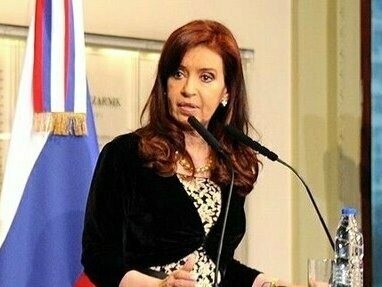
Oddly enough, Argentina created another superpower couple in the Kirchner marriage. The movement of kirchnerismo is the left-wing split of peronismo. The Kirchners have made politics a family affair and claim to be the real scions of Perón. I have already written about the implications of politics with the image of a dead leader1. Nestor Kirchner became president in 2002 and was followed by his wife, Cristina, in 2007. His untimely death in 2010 made her the standard bearer of kirchnerismo and got her reelected. The opposition then won one election, and she later became “vice president” for puppet president, Alberto Fernández.
This kind of power-sharing agreement in authoritarian-populist contexts currently exists in Nicaragua. If Latin America as a whole flies under the radar of the media, the Ortega family in Nicaragua “leads” a dictatorship that is low profile enough even for the irrelevance of Latin America. While most people hear about sanctions on Venezuela and the Cuban embargo, this Central American nation doesn't elicit much suspicion except for those in the know. Nicaragua receives a lot of tourists attracted by its green and wellness offers. Surfing, coffee fields, hiking, and cigars make the country a wonderful destination. They even have daily flights to and from the US with different airlines. This is all a front of normalcy for what happens inside.
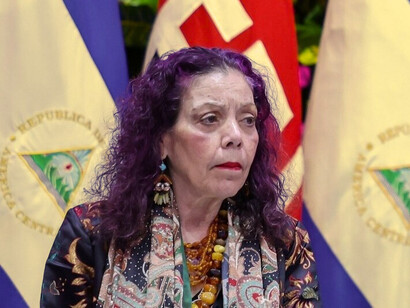
President Daniel Ortega led a guerrilla war in the 80s that first took him to power before calling for elections. After 17 years in the opposition, he orchestrated multiple reforms and used legal mechanisms to slowly yet firmly give himself and his party more power. Most of his tactics consist of one-sided administrative loopholes and bush league lawfare. Opposition politicians are barred from running for office via “court” rulings. These include the shameless jailing of most of the opposition politicians in the last election. Dissent has been silenced via “laws” against freedom of speech, which censor the media and close down newspapers, TV channels, radio stations, and websites. This way, Ortega has won election after election. Congress just rubber stamps all of his wishes, and the Judicial branch legitimizes all of his acts. All the while, Ortega has been gradually giving power to his wife, Rosario Murillo, who has a reputation for black magic and witch powers. In February 2025, she was even named “Co-President”, whatever that means.
Romance doesn't die, it gets reelected
More democratic or slightly less authoritarian examples are also to be found elsewhere in Latin America. The current president of Honduras, Ximena Castro de Zelaya, is the wife and former first lady of ex-president Manuel Zelaya. I have not had access to their prenup, but many assure First Gentleman Manuel is the one calling the shots behind the scenes.
Machismo aside, the former President of Panama, Mireya Moscoso, was married to three-time president Arnulfo Arias. I don’t know what is crazier about the Arias family: that Arnulfo was deposed by coups all three times he was president, or that his brother was also president two times. The wife later also becoming president just sounds extra to me.
Nepotism definitely plays a role in LatAm politics, but sometimes the lack of nepotism can result in even dirtier moves. Dirty laundry should be washed at home. Still, an honorable mention must be made to those first ladies who were agile political operatives themselves but were not able to re-book a stay at the presidential palace.
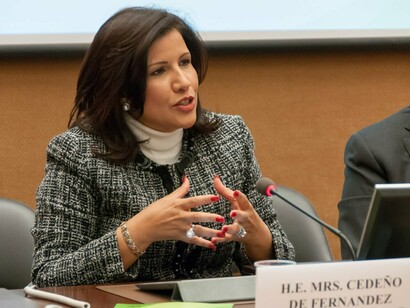
Margarita Cedeño was married to three-time Dominican president Leonel Álvarez. Her charisma made her a media darling when catering to the female and disenfranchised vote. She later became vice president to the successor and former vice president during her husband's government, Danilo Medina. She then divorced Leonel and ran unsuccessfully for the party endorsement. Leonel later split from the party as well.
In the 1990s, Perú lived its own story of political family drama. Susana Higuchi, First Lady of President Alberto Fujimori, divorced him at the height of his power and ran against him in the next elections. Although a high court suspiciously nullified her candidacy, she would later win a seat in Congress. Their daughter, Keiko, has unsuccessfully run for president three times.
All in all, Latin America certainly has strong women. Outside of the region, even the most ambitious first ladies stop short of the highest office. The ruthless Elena Ceaușescu was shot on live TV beside her husband. The Iron Butterfly of the Philippines, Imelda Marcos, won seats to Congress until 2010. Her son is now President. In the US, the most famous and powerful woman in politics was able to build back from her husband’s scandals. Hillary Clinton held every single job in American politics, rising from being a volunteer Goldwater Girl all the way to Secretary of State, but couldn’t make it to the top office. Had she been Hilaria de Clinton, history would be different.
There is no way to know for certain why Latin American first ladies gain so much power. My guess is that traditional political communication strategies backfire. Standard strategy sees them as a tool for making their partners seem compassionate and caring. The ceremonial nature of the role makes it too easy for their position to be used for politicking, electioneering, and cajoling, amongst other words out of use. This is in tune with the notion of the “weaker sex” by appealing to elderly and young voters. The strategy works in the sense that the first lady is positively associated with the administration and becomes an asset. It backfires in the long run once she wants a share of power and becomes a party in herself to the detriment of the administration. The first lady can be an even colder and bolder political animal than the president.
There truly is a great woman behind every great man, and we all want to post Instagram stories tagging our “partners in crime”. I’m not saying I'd like to get into politics pero, any singles reading?
Notes
1 Frankenstein politics: the propaganda of the dead on Meer.