English
 Español
 Français
 Deutsch
 Italiano
 Português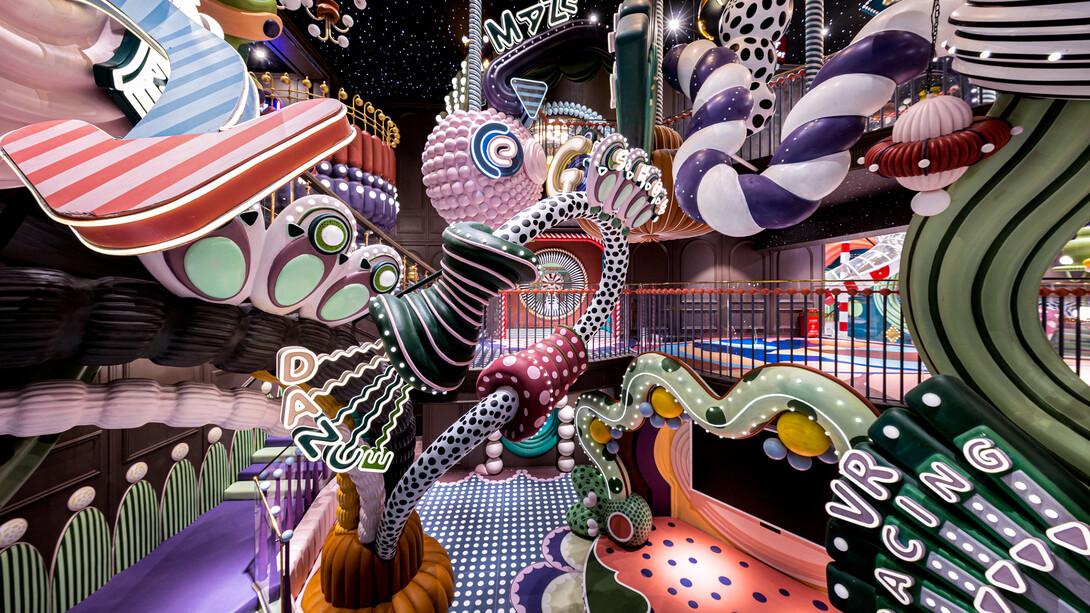
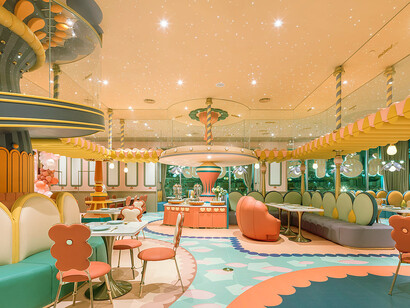
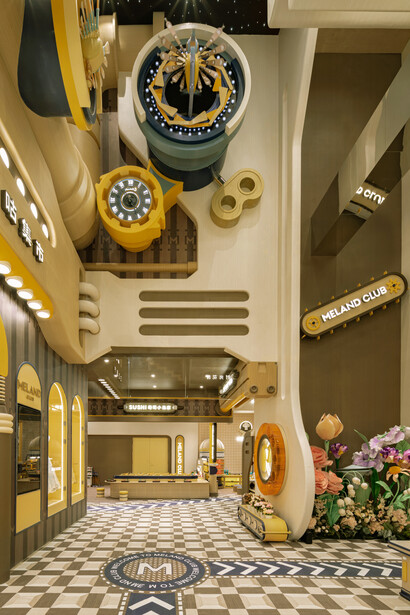
In the heart of Shenzhen’s bustling Uniwalk Shopping Mall, the Meland Club emerges not just as an indoor playground but as a fully immersive “fairy-tale garden” built for exploration and imagination. The design studio X+Living, under Li Xiang’s creative leadership, transformed over 6,000 m² across two floors into a surreal landscape that blends fantasy, architecture, and education. Here, children—and adults—step into a world where mechanical butterflies flutter overhead, seasonal gardens come alive, and every corner sparks wonder.
A “Garden of Seasons” reimagined
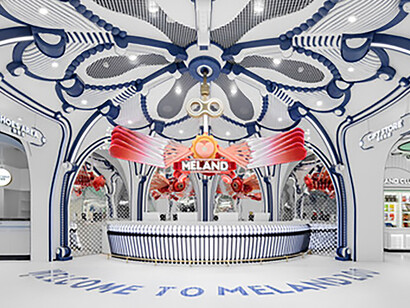
Rather than conventional play zones, Meland Club is structured as a narrative landscape based on four seasons. As soon as visitors enter, they’re greeted by an atrium teeming with spring motifs—flowers, bees, and ladybugs—assembled in deconstructive formations that feel both magical and architectural. These surreal elements are carried through the interiors, guiding families through a sequence of visual impressions and sensory experiences.
Grand gesture: mechanical butterflies and spatial drama
One of the standout features is a colossal mechanical butterfly suspended above the reception. Its rhythmic wing movements and delicate mechanics create a sense of ceremony. Using this form as a structural motif, the designers enshrined it in the club’s interior steel framework and dome architecture—elevating it from spectacle to spatial identity.
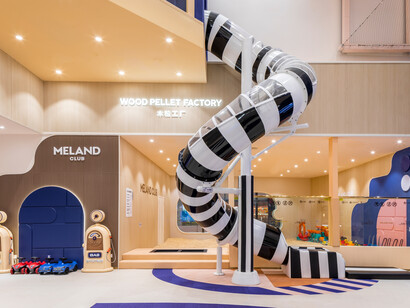
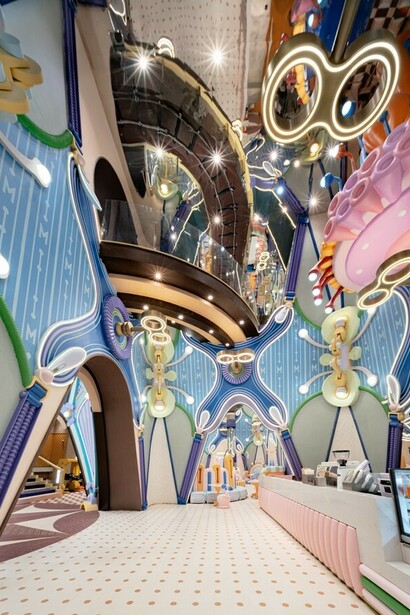
Beyond that, the design harnesses vertical space through a three-tiered platform arrangement, maximizing multi-level exploration within the tall double-height interior. Visitors move through layered vantage points, combining panoramic views with close-up architectural surprises.
Materials, color, and structural poetry
Meland Club blends dramatic stage lighting with harmonized wood tones, crafting a color system that balances vibrancy with emotional depth. Wood accents soften the bold palette, creating a dreamscape rooted in warmth—even amid imaginative excess.
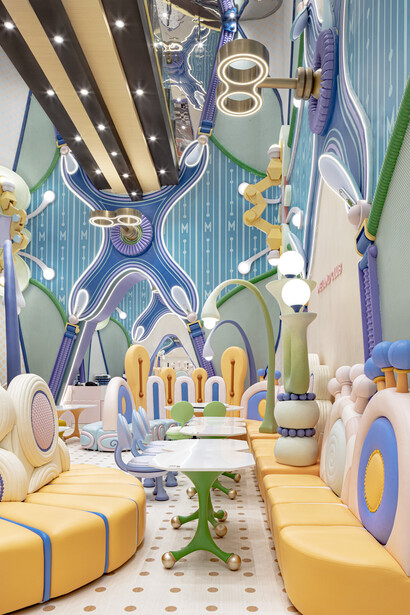
Three-dimensional installations—giant coral-like forms hanging from the ceiling, giraffes peeking through walls, whimsical furniture growing like organic sculptures—amplify the surreal fantasy. These designs not only occupy visual space but also merge narrative and architecture into one cohesive realm.
Functional fairy tale: play with purpose
Meland’s fantastical environment is underpinned by carefully integrated functional design. Plant-like elements conceal storage; flower-shaped seats double as lounging areas; suspended installations hide lighting—each detail serves both aesthetic and practical roles.
The flow between dynamic and static zones is meticulously organized: quieter areas like DIY rooms and dress-up zones sit above more active sections featuring rotating slides, ball pits, and climbing structures. This thoughtful zoning supports smooth family movement and varied play experiences.
Thematic signifiers and emotional resonance
Subtle thematic motifs reinforce the overarching narrative. Clocks appear throughout, symbolizing the fleeting nature of childhood and reminding visitors to savor every moment. Life-sized cartoon dolls serve dual roles as signage and playful décor, anchoring imagination in design logic.
Education and conservation themes also permeate the design. Sessions feature imagery of 60 extinct animals embedded in decorative scenes, inviting reflection on environmental protection through experiential storytelling.
Multi-sensory design: engaging more than sight
Meland’s experience goes beyond visuals. Music, scents, lighting, and even circulation contribute to the ambient narrative. Each themed zone has its own olfactory signature and soundtrack, enabling families to feel fully immersed in changing atmospheres—from spring’s freshness to autumnal warmth.
Community & social value: a space beyond play
Meland Club is not only a destination for children but also a cultural hub for families. Parents find themselves engaging with design as much as their children, often joining activities, workshops, and shared play sessions. This dual focus strengthens intergenerational bonding, turning leisure time into collective memory-making.
The spatial openness encourages interaction among families, cultivating a sense of community within the mall context. In this way, Meland transcends being a mere commercial attraction and becomes part of the city’s evolving social fabric—where play is both an individual journey and a shared cultural experience.
Cultural context: play in contemporary China
Meland Club isn’t simply scaled-up play equipment—it represents the evolution of urban leisure. With e-commerce reducing foot traffic in malls, spaces like Meland act as destination venues for family socializing. Play becomes an anchoring experience drawing visitors for hours rather than minutes.
For parents in rapidly growing Chinese cities, these environments merge imaginative stimulation with safety and convenience—fulfilling both emotional and practical needs.
Design as emotional infrastructure
Meland demonstrates how interiors can be emotional architectures—designed to provoke awe, foster imagination, and facilitate connection. It reframes “playground” as a cultural experience, not just a place for physical activity. The mix of surreal forms, narrative symbolism, and thoughtful flow invites multi-generational enjoyment.
Conclusion: dreamscapes as design futures
Meland Club stands as a visionary case study in immersive, experiential design. It transcends traditional architecture and touches the realm of emotional storytelling. By merging playful aesthetics, structural innovation, and purposeful planning, it shows us how childhood fantasies can be translated into tangible, inhabitable spaces. In doing so, it reveals the powerful role design can play in shaping not just environments but the very experiences that define them. The project ultimately illustrates how contemporary architecture can move beyond function into meaning, enriching daily life through shared stories, symbolic encounters, and unforgettable atmospheres.