English
 Español
 Français
 Deutsch
 Italiano
 Português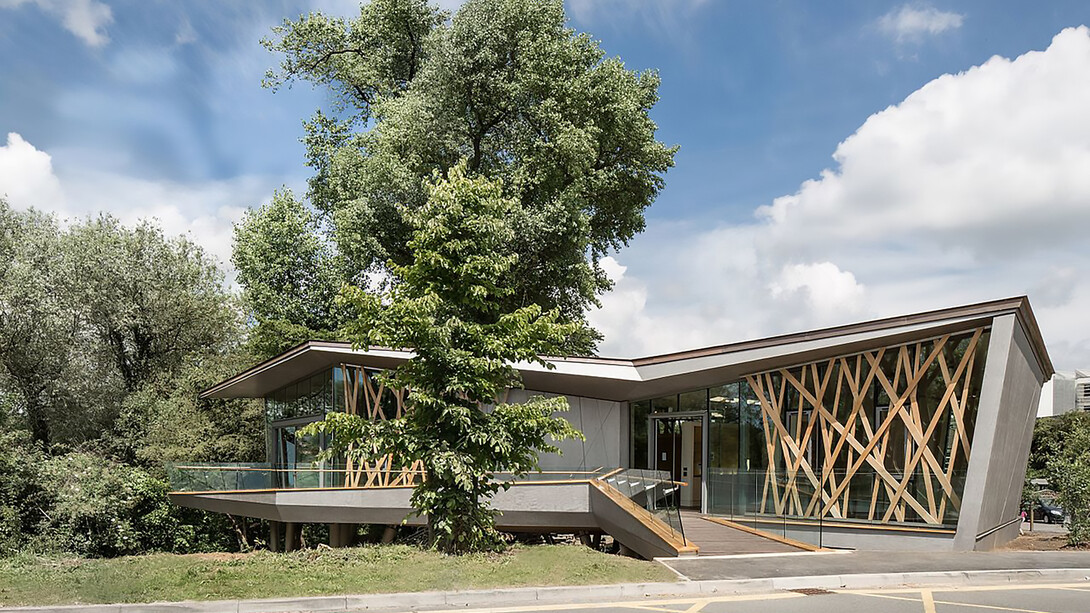
Maggie’s Centres, operating across the United Kingdom with 26 locations, represent a distinctive support model developed for people living with cancer. Rather than providing medical treatment, these centers focus on addressing the emotional, psychological, and social needs of patients, as well as those of their families and friends. Within this framework, the physical environment is not treated as a neutral backdrop; instead, architecture and interior design become central strategies that actively contribute to care and well-being.
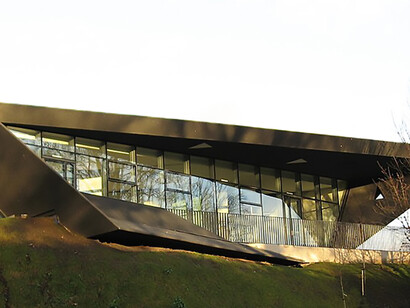
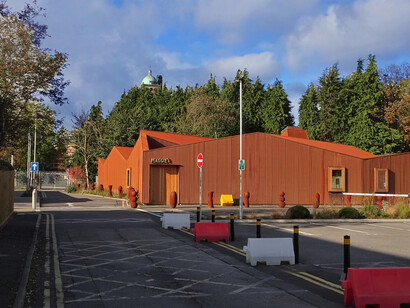
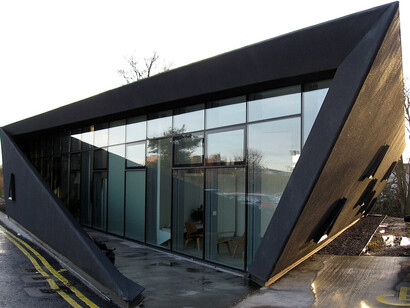
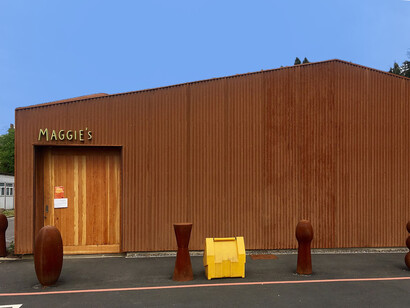
Although most Maggie’s Centres are situated within hospital grounds, they consciously distance themselves—both spatially and atmospherically—from conventional hospital architecture. Instead of reinforcing the stress-inducing, institutional character typically associated with clinical settings, these spaces cultivate calm, familiarity, and a sense of refuge. In doing so, Maggie’s Centres establish a new spatial typology within healthcare architecture: a hybrid environment that exists between home, social space, and care facility.
Healing architecture and the meaning of space
The architectural approach of Maggie’s Centres aligns with the principles of healing architecture, which argue that buildings should not only fulfill functional requirements but also support the psychological well-being of their users. From this perspective, interior architecture moves beyond aesthetic concern and becomes a deliberate tool for generating comfort, emotional security, and a sense of control.
Understanding Maggie’s Centres is therefore critical in demonstrating how interior architecture can contribute meaningfully to care processes—not merely by improving visual quality, but by reducing stress, encouraging social interaction, and supporting emotional resilience. In these centers, space is not a passive container; it actively shapes experience, behavior, and perception throughout the cancer journey.
The role of research-based design: evidence-based design (EBD)
Maggie’s Centres are widely regarded as exemplary applications of Evidence-Based Design (EBD) in both architecture and interior design. EBD advocates for design decisions grounded in scientific research, user experience, and measurable psychological and physiological outcomes rather than intuition alone.
Academic studies highlight how Maggie’s Centres are frequently used as case studies in architectural education, where students engage in literature reviews, precedent analysis, and contextual research. These processes demonstrate that the spatial decisions within Maggie’s Centres are not arbitrary but systematically informed by empirical knowledge. For interior design practice, two key implications emerge: first, the necessity of defining user needs through rigorous pre-design research; and second, the importance of integrating proven psychological and physical impacts into spatial decision-making.
Space and psychology: biophilia and the healing environment
Maggie’s Centres address user needs not solely through physical function, but through emotional and psychological well-being. Central to this approach are the concepts of biophilic design and the healing environment. Biophilia refers to the innate human affinity for nature, while healing environments aim to translate this connection into intentional spatial strategies.
Research shows that the extensive use of natural light, strong visual and physical connections to outdoor landscapes, views of greenery, and human-scaled interior volumes significantly reduce stress levels. The continuity between interior and exterior spaces helps counteract feelings of disorientation and alienation often experienced in clinical environments.
Meta-analytical studies reveal that biophilic principles are applied systematically across Maggie’s Centres. Views toward nature contribute to calmness, while plant integration and daylight improve spatial perception and emotional comfort. These elements function not merely as aesthetic enhancements but as psychological support mechanisms within the cancer care process.
Spatial experience and interior design strategies
Domestic atmosphere and social connection: rather than replicating clinical interiors, Maggie’s Centres intentionally create domestic environments. In many centers, the kitchen occupies a central spatial role, acting as a social anchor where visitors can gather, talk, and maintain everyday routines. These shared spaces allow users to exist as social individuals rather than solely as patients, reinforcing a sense of normality and belonging.
Light, color, and materiality: studies emphasize the importance of natural light, soft color palettes, and warm materials in shaping the interior atmosphere of Maggie’s Centres. Timber, natural plasters, and textured surfaces introduce warmth and sensory richness, fostering calmness, autonomy, and hope. Materiality thus becomes a key mediator of emotional experience, deliberately countering the sterility of conventional healthcare interiors.
Continuity with nature: gardens, walking paths, and landscape-integrated interiors are defining features across Maggie’s Centres. These spaces provide opportunities for movement, reflection, and social engagement while reinforcing the therapeutic relationship between interior architecture and nature. The seamless integration of landscape and interior design forms a core component of the healing environment.
Maggie’s centers as support spaces beyond the clinic: research indicates that Maggie’s Centres succeed not only as architectural projects but also as user-centered care environments. Their capacity to offer safe, private, and welcoming spaces; to strengthen social support networks; and to provide psychological relief distinct from clinical settings underpins their effectiveness.
Through these qualities, Maggie’s Centres illustrate how interior architecture contributes to healthcare not simply by improving physical comfort, but by enhancing overall quality of life through spatial experience.
Conclusion: a new paradigm for healthcare interiors
Maggie’s Centres challenge the prevailing perception of hospital interiors as cold, neutral, and purely functional. Instead, they propose a paradigm in which emotional and psychological effects are integral to spatial design. Academic research consistently demonstrates that domesticity, connection to nature, and social spaces are fundamental components of healing environments.
In this context, Maggie’s Centres offer compelling evidence that interior architecture within healthcare settings can function not merely as a design discipline but as an active participant in care, recovery, and emotional well-being.