English
 Español
 Français
 Deutsch
 Italiano
 Português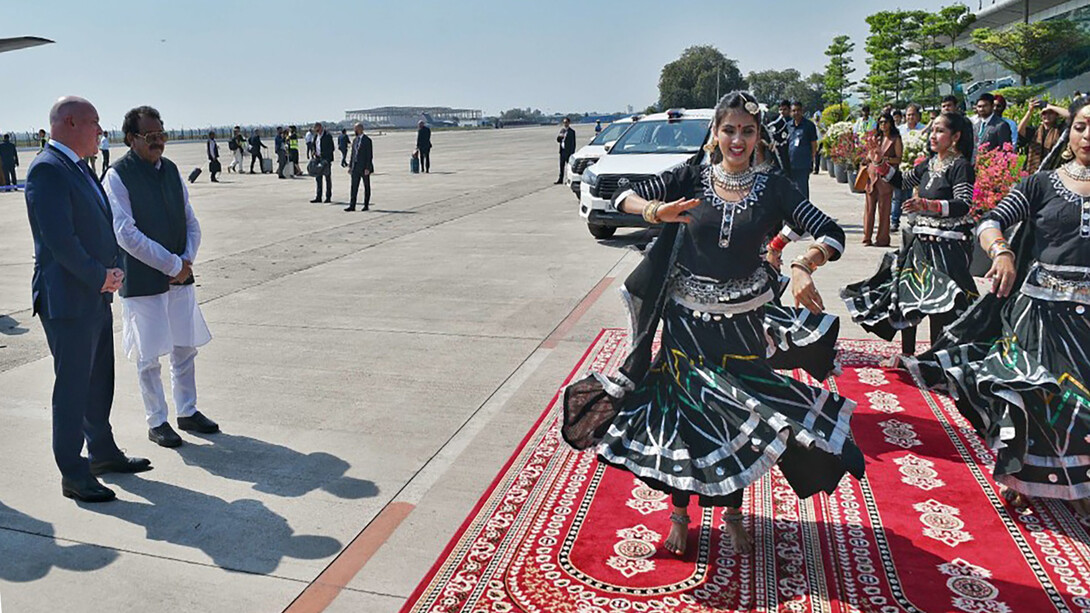
In a landmark visit aimed at strengthening diplomatic and economic ties, New Zealand Prime Minister Christopher Luxon embarked on a five-day official trip to India from March 16 to 20, 2025. This visit signifies a pivotal moment in the relationship between the two nations, focusing on enhancing cooperation across various sectors, including trade, defense, education, and cultural exchange. Luxon’s visit underscores the growing recognition of India as a key partner in the Indo-Pacific region and highlights New Zealand’s interest in expanding its engagements with the world’s fastest-growing major economy.
Reviving free trade agreement (FTA) negotiations
A cornerstone of Prime Minister Luxon's visit was the announcement to resume negotiations for a comprehensive Free Trade Agreement (FTA) between New Zealand and India. The discussions, which had been stalled since 2015, have been revitalized with a shared vision to deepen trade ties and expand economic opportunities. The renewed FTA negotiations aim to achieve balanced outcomes that enhance supply chain integration and improve market access for both countries. If successful, the agreement could significantly boost economic ties, bringing benefits to key industries such as agriculture, technology, and renewable energy.
Economic implications and trade growth
The potential The FTA holds significant promise for both economies. India's Commerce Minister, Piyush Goyal, expressed optimism that the agreement could boost bilateral trade tenfold over the next decade. The focus areas for expansion include agriculture, critical minerals, pharmaceuticals, and tourism.
Currently, bilateral trade between India and New Zealand stands at approximately $1.7 billion annually. New Zealand exports primarily dairy products, meat, and wood to India, while India supplies pharmaceuticals, textiles, and IT services to New Zealand. With India’s growing demand for high-quality dairy and agricultural products and New Zealand’s interest in expanding its tech and services industries, an FTA could create immense opportunities for both countries. The signing of such an agreement would also signal New Zealand’s intent to diversify its trade partners beyond China and Australia, its two largest trading partners.
Another key economic area of focus during the visit was investment collaboration. New Zealand investors are keen to explore India's booming technology and startup ecosystem. Similarly, Indian companies are looking at expanding their presence in New Zealand, particularly in the areas of IT, renewable energy, and education. Luxon’s delegation included top business leaders from New Zealand who engaged in high-level meetings with Indian counterparts, further strengthening commercial ties.
Defence and security cooperation
Beyond economic collaboration, the visit underscored a mutual commitment to strengthening defence and security ties. India and New Zealand signed agreements to enhance cooperation in maritime security, intelligence sharing, and joint military training exercises. Given New Zealand’s strategic location in the Pacific and India’s growing naval presence in the Indo-Pacific, the two countries share common interests in ensuring regional stability and securing maritime trade routes.
Luxon highlighted New Zealand’s commitment to working closely with India on regional security challenges, including counterterrorism and cybersecurity. The two countries also discussed increased cooperation in defence technology and explored the possibility of joint defence production initiatives. With India’s rising role in global defence manufacturing and New Zealand’s interest in modernizing its defence forces, this partnership holds considerable potential.
Educational and cultural engagements
Education and cultural exchange were also prominent themes during the visit. Approximately 8,000 Indian students are currently enrolled in New Zealand institutions, making India one of the largest sources of international students for the country. Discussions were held on expanding student exchange programs and easing visa restrictions to facilitate greater academic mobility. New Zealand also expressed interest in partnering with Indian universities on research initiatives in areas such as climate change, artificial intelligence, and sustainable agriculture.
During his visit, Prime Minister Luxon paid homage to India’s rich cultural heritage by visiting the Swaminarayan Akshardham Temple in New Delhi. He participated in traditional ceremonies and acknowledged the contributions of the Indian community in New Zealand. The visit to the temple was symbolic of the strong cultural and people-to-people ties between the two nations. Luxon’s gesture was well received in India, reinforcing New Zealand’s commitment to strengthening cultural diplomacy.
Strategic significance and future prospects
The timing of this visit is particularly noteworthy as both countries seek to diversify their trade partnerships amidst shifting global economic dynamics. New Zealand’s proactive engagement with India aligns with its strategy to reduce economic dependence on a few key trading partners and tap into India’s rapidly growing economy.
For India, strengthening ties with New Zealand offers an opportunity to enhance its presence in the Pacific region and collaborate on critical global issues such as climate change, sustainable development, and food security. Given that both nations have strong commitments to environmental sustainability, discussions were also held on joint initiatives in renewable energy and climate change mitigation.
The visit also opened the door for collaboration in the sports sector, particularly cricket, a sport that binds the two nations. With both India and New Zealand being dominant cricket-playing nations, there is potential for increased sporting exchanges and partnerships between their respective cricket boards.
Prime Minister Christopher Luxon’s visit to India marks a significant milestone in New Zealand-India relations. The commitment to resume FTA negotiations, coupled with enhanced cooperation in defense, education, and cultural exchanges, reflects a shared vision for a robust and multifaceted partnership. This visit not only strengthens bilateral relations but also sets the stage for long-term collaboration in multiple sectors.
As both nations navigate the complexities of the global landscape, this renewed engagement symbolizes a mutual aspiration to foster prosperity, security, and cultural understanding for the benefit of their peoples. With promising developments in trade, defense, education, and cultural diplomacy, Luxon’s visit lays the groundwork for a stronger and more dynamic New Zealand-India partnership in the years to come.