English
 Español
 Français
 Deutsch
 Italiano
 Português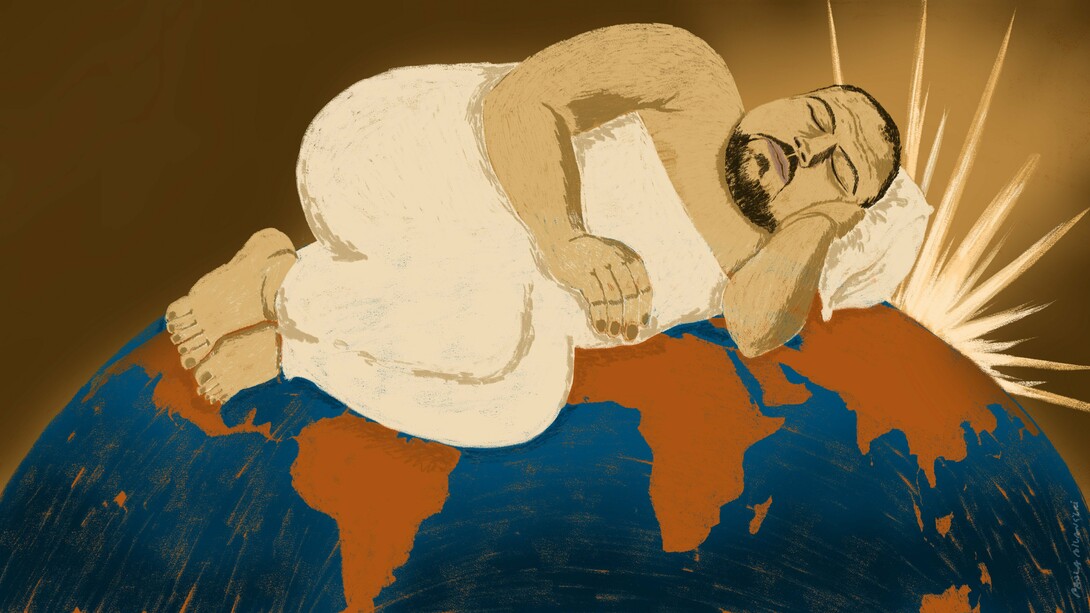
When I first visited China in 1990, I did not imagine that, in addition to being a rich professional experience, it would also be a profound human experience. That visit, complemented years later by another trip for a separate United Nations assignment, allowed me to gain an important understanding of a country that was then in the early stages of a sweeping development process that continues, relentlessly, even today.
Two weeks before my first trip, I had been having lunch in Washington at the home of my friend Dr. Albert Sabin, who developed the oral polio vaccine. When I told him about my trip, he asked me to contact on his behalf the wife of Dr. Ma Haide, who had died in 1988 and who had been one of Mao Zedong’s closest physicians. Dr. Ma Haide’s original name was George Hatem, and he was born into a Lebanese-American family in New York State. After graduating as a physician, Dr. Hatem, along with his colleagues Lazar Katz and Robert Levinson, traveled to Shanghai, where he established his medical practice and changed his name to Ma Haide.
Disillusioned by the corruption in Shanghai, he closed his medical practice and went to Yan’an to provide medical care to Mao Zedong’s troops. One of his first patients was Mao Zedong himself. At that time, there were fears that the Chinese leader was suffering from an incurable disease, and one of Dr. Hatem’s tasks was to confirm or deny the rumor. His opinion was especially valuable because he was a foreign doctor. Not only did Dr. Ma Haide deny that Mao had a fatal illness, but he also assisted his troops until their eventual victory over the nationalists in 1949, when he became a public health official in Mao’s government. Thanks to Dr. Ma Haide’s efforts, leprosy was eliminated in China, and many venereal diseases were far more effectively controlled—work for which he received the renowned Lasker Award in the United States.
The price of progress
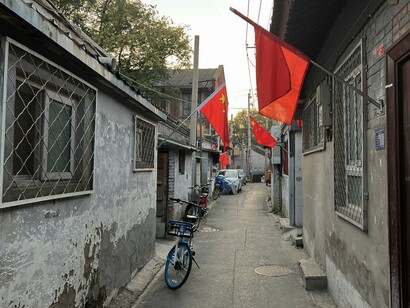
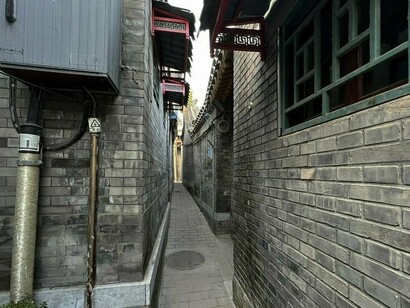
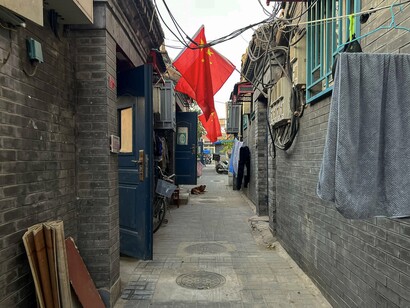
Knowing her husband’s background, I was naturally very interested in meeting his wife, Zhou Sufei, who was a distinguished artist. I called Mrs. Zhou Sufei, a famous artist and film director, as soon as I arrived in Beijing. When I told her I was coming on behalf of Dr. Sabin, she immediately invited me to tea at her home the next day. This visit allowed me to observe up close the dramatic urban changes taking place in Beijing. She lived in a siheyuan, the name for a type of traditional Beijing residence, several of which are connected by narrow alleys called hutongs.
The siheyuan has a large central courtyard where children play, and communal activities take place. However, since the mid-20th century, the number of these residences has begun to decline dramatically, and only a few remain in Beijing. They are now like historical relics of bygone times, inexorably replaced by gigantic skyscrapers. The change is not only urbanistic, however. An entire communal way of life is slowly being replaced by the anonymous existence of modern high-rise buildings.
When I arrived at her home, Mrs. Zhou Sufei was waiting for me with her secretary, an unusually tall man with very cordial manners. Mrs. Zhou Sufei, by contrast, was a relatively short but very attractive woman who even then retained an intriguing beauty. We spent an extremely pleasant time together, and it was evident how much affection and admiration Mrs. Zhou Sufei had for Dr. Albert Sabin. The living room where they received me had typical Chinese furnishings—heavy, dark wooden furniture in excellent taste. For me, it was a privilege to be in one of those historically significant homes at such a key moment in the urban transformation of China’s great capital.
When I left, still suffering from jet lag—made worse by a delicious liquor served by Mrs. Zhou Sufei—as the taxi carrying me back to the hotel wound through Beijing’s narrow alleys, I reflected on the major changes that were about to unfold in that country, which at that time was just at the beginning of a dynamic and inexorable economic surge.
The dragon’s footsteps
With an area of 9.6 million square kilometers, China is the second-largest country in the world in land area and, depending on the definition used, the third or fourth in total area. The country is also home to one of the oldest civilizations on Earth. After Japan’s defeat in the Second World War, the Chinese Communist Party defeated the Nationalists and established the People’s Republic of China in Beijing on October 1, 1949.
Beginning with the economic reforms of 1978, the country became the fastest-growing economy in the world, with average growth rates of about 8 to 9 % over the last 30 years. Since 2008, the People’s Republic of China has been the world’s second-largest economic power by Gross Domestic Product (GDP), surpassed only by the United States, and it is the world’s largest exporter and second-largest importer of goods. However, in per capita terms, China ranks 71st, revealing the enormous disparities that exist within the country—disparities that Mao Zedong’s revolution had sought to eliminate forever.
One example of these disparities is the consumption of goods once considered luxuries. For instance, automobile production was approximately 1.6 trillion U.S. dollars in 2023—a phenomenon parallel to the growing preference for cars over the traditional bicycle. To this, one must add a 20.8% increase in the fast-food industry and record-breaking sales of champagne and cognac. According to Forbes, China (including Hong Kong) has 516 billionaires, placing it second worldwide, compared to the U.S., which has 902.
China’s environmental problems
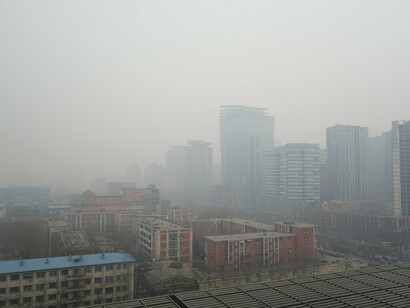
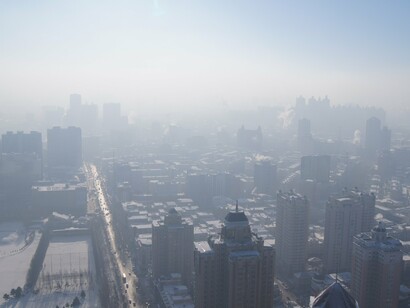
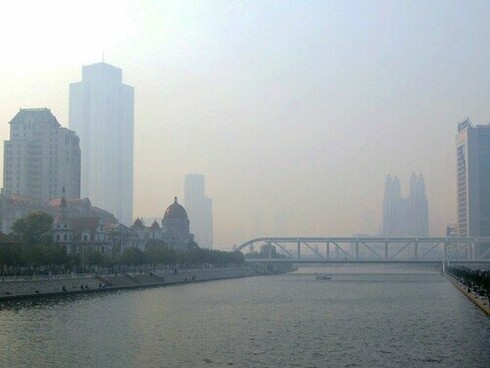
China’s rapid economic development has had serious consequences for the environment, and therefore also for public health. The country is currently home to 16 of the 20 most polluted cities in the world, and it is estimated to be the second-largest emitter of carbon dioxide. In Beijing, one in three people owns a car, and the city is estimated to have almost eight million vehicles.
Air pollution in China’s major cities is considerable. This is due not only to toxic emissions from cars but also to the burning of coal as an energy source, which is highly polluting. Pollution—of both air and water—affects the entire population, but especially children and the elderly. Children are particularly vulnerable because their immune and detoxification systems are not yet fully developed.
Currently, China has only 7 percent of arable land, and this land is shrinking at a rate of one million hectares per year due to rapid urbanization. As a result, the country must import large quantities of grains such as soybeans and wheat, as well as resources like copper, aluminum, cement, and oil, of which China is the second-largest importer in the world.
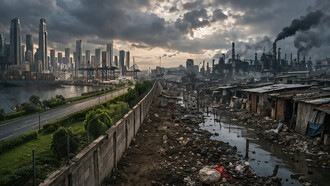
There is no denying that China’s economic reforms have benefited millions of people, providing many with a better quality of life. Paradoxically, the extensive use and overuse of natural resources have resulted in environmental degradation, with serious consequences for the health of the population, particularly those living in the largest cities.
Nevertheless, Chinese authorities are making major efforts to control the high levels of environmental pollution. And Chinese companies, after having saturated their internal market with solar panels, wind turbines, and batteries, are now exporting their products to developing countries.
Today, when it seems impossible to stop the dizzying pace of China’s economic development—despite the serious social and political problems facing the country’s government—it is useful to remember Napoleon Bonaparte’s remark about China: “China is a sleeping giant. Let her sleep, for when she wakes, she will shake the world.” Napoleon already knew.