English
 Español
 Français
 Deutsch
 Italiano
 Português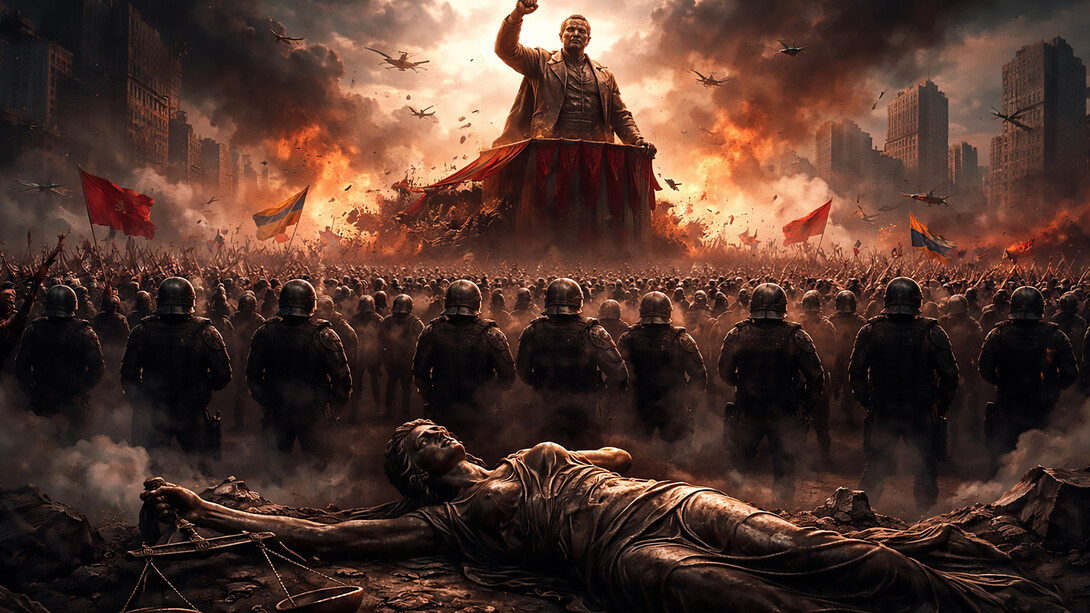
Democracy is backsliding. Authoritarianism is on the rise around the world. Authoritarianism has been underway across the globe for the last 30 years and is here to stay. And it is as dynamic and evolving as any other form of politics. Authoritarianism (the rule of one), as well as the other two, the rule of the few (oligarchic or feudal) and the rule of the many (liberal). Authoritarianism denotes any political system that concentrates power in the hands of a leader or a small elite that is not responsible to the people. Authoritarian leaders tend to exercise power arbitrarily, with no regard for constitutional norms and morality.
The authoritarian leadership style requires one individual to make all the decisions for others without any input or advice. Authoritarian regimes restrict the liberty of their citizens or use propaganda to attempt to shape public opinion. The fact about the dividing line between authoritarianism and democracy is that it is not always a self-evident break but rather an overlapping continuum. The ancient Athenian understanding of democracy involved the direct participation of all citizens in the political system. The modern version is representative democracy, in which citizens elect professional politicians to do the governing for them.
Democracy means more than voting every 5 years, but free and fair elections. And the next point is that elected officials must be accountable. Dictatorships may prevent the elections from being fair by intimidating the opposition. And another important characteristic of democracy is equality: the state must respect each individual equally, and all citizens have fundamental rights. In many authoritarian states, there is significant social and economic inequality, and the judiciary is too weak and the army too politicized to guarantee equality of all citizens before the law. According to Freedom House's report, only about 20% of the global population currently lives in 'free' countries, and 84 out of 195 countries are classified as 'free,' 'partly free,' or 'not free.'
Authoritarian regimes—and the norm for most of human history has been non-democratic governments, whether by monarchs, chiefs, aristocrats, empires, military regimes, or one-party states. Dictators promise they can solve every problem if only they're granted supreme power. Authoritarianism is on the rise globally, marking a decline in worldwide freedom and democratic norms. This trend involves the erosion of democratic institutions and the concentration of power in the hands of leaders who reject political plurality and accountability. Countries are becoming less democratic. Over 70% of the world's population lives under some form of authoritarian rule or in countries that are becoming less democratic.
In the 21st century, we are witnessing an authoritarian, anti-institutional, anti-pluralist wave that poses serious risks to constitutional democracies. The main risks today come from far-right populism and its division of society into 'Us,' the pure, decent, conservative people, and 'Them,' who represent the cosmopolitan, the corrupt, and the liberal elites. The erosion of democracy today comes from elected political leaders who, once in power, begin to progressively deconstruct the pillars of democracies. Democracy has failed to deliver its promises of prosperity and equal opportunities for everyone. Authoritarian populism is advancing in countries like China, the U.S., Germany, France, Italy, the U.K., and others.
Today in the United States, the general public does not feel that they have relevance or a voice in the electoral system. And no one is satisfied with their electoral system. And overall, the popular belief is that politics revolves more around the interests of politicians themselves rather than the interests of society. In contemporary Europe, Belarus and Russia are widely considered to be full authoritarian regimes. Within the European Union, Hungary is described as a ‘competitive authoritarian,’ having experienced significant democratic backsliding (Poland). Europe has seen the rise of a number of authoritarian populists who rely on winning mass support among the ordinary people. Only in Hungary and Italy did authoritarian populist parties reach the highest position on their own merit.
The spectrum of authoritarian regimes is haunting Europe; authoritarian influence in the European Union primarily targets individual member states, not European institutions. Several Western European countries have seen rising far-right parties and democratic concerns…. A right-wing coalition in Italy, Brothers of Italy, with Giorgia Meloni, a national conservative, Germany’s AFD (Alternative for Germany) with Alice Weidel, a right-wing populist, France’s National Rally with Marine Le Pen, Austria’s far-right extremist FPO (Freedom Party of Austria), and the Sweden Democrats, a nationalist far-right populist political party (with the previous links to neo-Nazism), all reflect nationalist trends, stricter immigration and integration policies, criticism of multiculturalism, and challenges to democratic norms across Europe.
The Chinese regime is likely to rely on a combination of hard and soft power directed at the national and personal levels to gain allies in Europe. Hostile foreign states are therefore more likely to target individual member states and politicians in order to have an impact on European foreign policy. Member states with the most to gain from cooperation with China are the most likely to back Chinese interests in the EU. The Russians’ appeal is much broader, rooted in economic and ideological factors. Russia has been highly successful in portraying itself as a superpower economically, militarily, and politically. This ensures that the far-right and the far-left see it as a counterweight to U.S. influence, liberalism, and the Western alliances as a role model. And this is the reason why some mainstream forces argue for a reset of the relationship with Russia.
Russia’s financial and natural resources can also help disrupt EU unity on action against the Kremlin. The EU should strive for a clearer-cut strategic plan and regulation for engagement with authoritarian regimes. The United States is sliding toward a more 21st-century model of autocracy’s competitive authoritarianism—a system in which parties compete in elections, but incumbents' abuse of power systematically tilts the playing field against the opposition. According to the Freedom House Index, the vast majority of U.S.-based political scientists think that the United States is moving from liberal democracy to a form of authoritarianism. In his first weeks back in office, President Donald Trump has already moved strongly in the direction of authoritarianism. He is directing politicized investigations against rivals, and he is seeking to unilaterally seize control over spending from Congress.
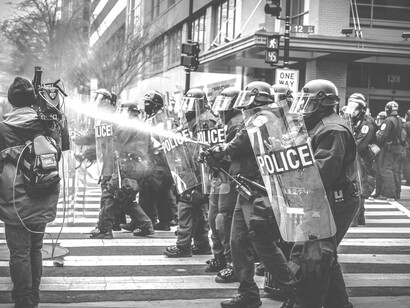
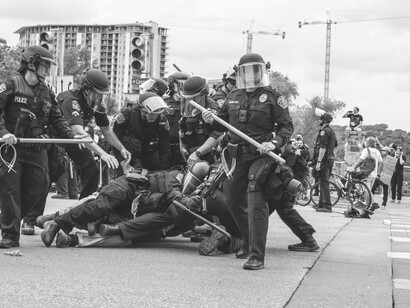
Actions by the American administration (executive orders affecting democratic institutions, reduced funding for organizations aiding marginalized communities, and restrictions on protest rights) are seen as threats to civic freedoms. The government is arresting and deporting people for criticizing government policy. The U.S. National Security Strategy claims to protect U.S. interests globally but narrows its focus to the Western Hemisphere and domestic issues; Europe and Asia receive secondary treatment. The strategy revives a quasi-Monroe Doctrine, asserting a U.S. dominance in the Western Hemisphere. Russia has been widely characterized as an authoritarian capitalist state where political opposition is suppressed, and power is concentrated in the executive.
Authoritarian populism needs to have some social group to blame...diversity is to blame, which has become the cause of accidents. Progressive values in democracies have enabled significant progress in the rights of some marginalized communities (Afro-descendant, LGBTQI communities, and people with disabilities), and this progress diminished the power of traditional hegemonic sectors (in the U.S.). Divisions in societies between populations, regions, globalists, and nationalists have emerged. Rising authoritarian populism and its deepening moral, political, and social implications have already led to severe consequences in the world and will impact us for years to come. Many democratic regimes enhanced their capacity to monitor and control the words and actions of citizens with CCTV, electronic payment systems, personal GPS-enabled devices, and biometric control.
Authoritarian cooperation is shaping the global order. Authoritarian countries are more prone to conflict, instability, and repression, and most of them are producing a world that is less safe, less free, and less prosperous. The willingness of authoritarian states to manipulate politics across borders has grown with their economic and military power, and their ability to do so has expanded with advancements in digital technology. Technology represents the most significant new threat to civil liberties in modern times. Digital platforms created for free speech purposes have helped authoritarian states to surveil, track, and control their populations, and these platforms are used for intelligence services. Digital became political, protecting and helping to maintain authoritarian stability.
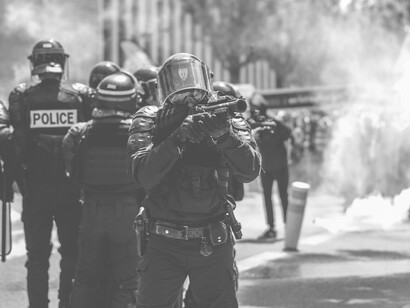
Digital platforms often serve as a perfect tool for disinformation and surveillance. The new liberal model of the state is authoritarian, with tight state control of the media, severely limited human and civil rights, expanded police powers, prisons, torture, and tight control of migration. Authoritarian populism puts formal democracy in peril, and as long as this regime is allowed to operate, it will cause further erosion to democracy and the justice system, increasing the attack on the livelihood of the unorganized poor.
The majority of the citizens are indifferent and obey orders, and are not doing what they are morally supposed to do. They are no longer citizens but passive instruments of the state machine. American historian and philosopher Hannah Arendt shared anxieties with this formal polity by stating, ‘Never has our future been more unpredictable; never have we depended so much on political forces that can’t be trusted to follow the rules of common sense and self-interest—forces that look like sheer insanity if judged by the standards of other centuries.’ Democracy has not fulfilled the promises it made. So, many people no longer identify with values like equal opportunities, dignity for all, substantive freedom, and many others haven’t benefited from those values.
The core attributes of authoritarianism are rejecting democratic rules of the game, denying the legitimacy of opponents, tolerating or encouraging political violence, curtailing the civil liberties of opponents, and breaking down social cohesion to divide and rule a society. Authoritarian systems demonize opponents and independent media, reward loyalists and punish detractors, and dehumanize opposition or groups to justify violence against them. Use fearmongering and hate speech to consolidate in-group identity and solidarity. Make people feel they are powerless to change things…and solutions will only come from the top. Today’s authoritarian governments are led by figures often emerging through single-party rule, military seizures, or ‘hybrid’ tactics that blend democracy with autocratic control, consolidating power by suppressing dissent, controlling media, and weaponizing state institutions.
Authoritarian leaders used populist rhetoric and exploited fears, eroding democratic norms to maintain control, often under the guise of strong leadership or national interest. There are countries led by dictators, and these regimes are dictatorships, where the incumbent only allows elections as long as they keep winning, and would refuse to step down if they lost. Dictatorships are authoritarian or totalitarian and can be classified as civilian, military, or royal. The modern-day dictatorships are North Korea, Burma, Saudi Arabia, Uzbekistan, Sudan, and others. To push back against authoritarianism, people should form large, diverse, cross-partisan, and cross-ideological pro-democracy fronts or movements with a shared vision, strategy, and clear, concrete demands. Build the capacity of pro-democracy coalitions and movements to prioritize larger collective goals. To invest in opportunities for intra- and intergroup dialogue, develop empathy and understanding, and build trust by working together to combat authoritarian practices.
Diversify the range of nonviolent tactics, protests, rallies, sit-ins, walkouts, consumer boycotts, labor strikes, and not doing what authoritarians expect and want. Engage institutions, unions, media, professional associations, and security forces in pro-democracy mobilization. There must be the participation of civil society, media, and at least part of the political class to succeed, because the courts are not capable of resisting authoritarian populism worldwide. The struggle for human rights in authoritarian regimes is not merely a legal or political issue but a profound ethical challenge. It demands the concerted effort of international organizations, governments, and civil society to promote and protect these rights. The world is facing a time of darkness, more arrogance and less justice, with more might and less right. And our efforts as citizens, intellectuals, and workers are to keep the light on and to push history in the right direction.