English
 Español
 Français
 Deutsch
 Italiano
 Português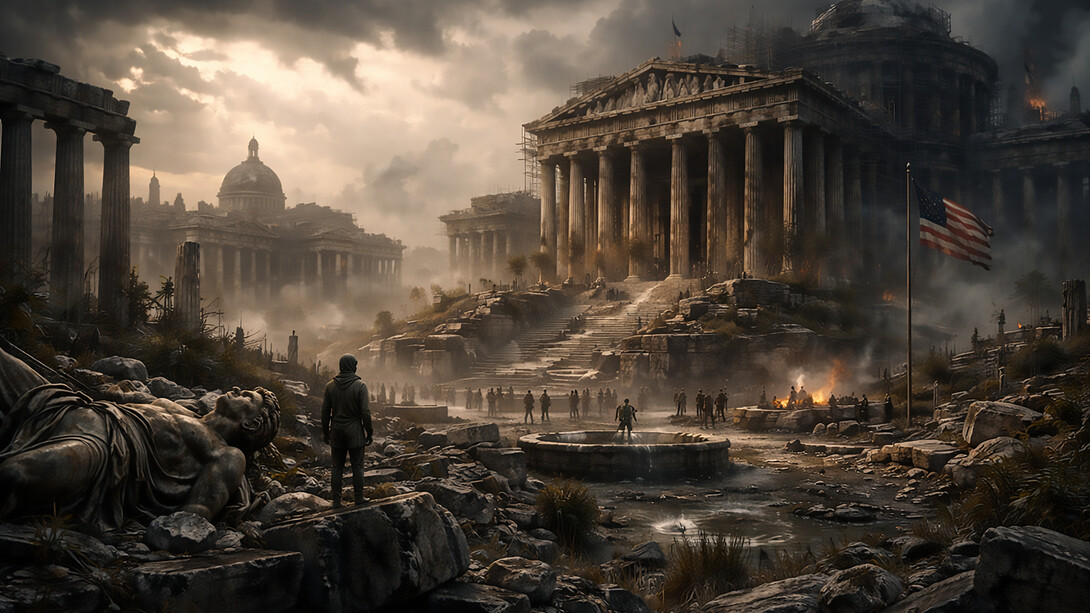
There are periods in history when the concept of civilization captures the attention of historians and social scientists. About a century ago, Oswald Spengler, Arnold Toynbee, and Pitirim Sorokin were the most distinguished names in this field. At the end of the last century, postcolonial studies and Samuel Huntington, with his Clash of Civilizations, marked a return of interest in the idea of civilization, albeit with opposing purposes: postcolonial studies criticizing Eurocentrism and Huntington defending it against Chinese and Islamic threats. Despite all their differences, these studies shared a central idea: competition, rivalry, and succession between civilizations. And the West was always at the center of attention.
In more recent times, the theme of civilization has emerged in a new context: in the way civilization, whatever it may be, defines its relationship with nature. This is undoubtedly the theme of the present and the future. And until a few years ago, we were convinced that, given the imminent ecological collapse, the presence of this theme was irreversible. But suddenly, thanks to the Donald Trump phenomenon and everything that makes him the opening news story in most of the world, the theme of civilization/nature relations has disappeared again, and, in its place, the theme of rivalry between civilizations has returned to the political agenda under different names, such as rivalries between imperialisms, US-China conflict, and the struggle between democracies and autocracies. In this text, I do not intend to enter into the civilizational debate in all its dimensions. I will limit myself to a specific problem.
Our time marks the beginning of a civilizational period that I refer to, inspired by the work of Arnold Toynbee, as petrification. It is a Western debate. Petrification is a period of prolonged decline in which a given civilization ceases to respond to challenges, loses creative and spiritual energy, and assumes rigid forms of hierarchy. Petrification can postpone the moment of disintegration and dissolution. Even admitting that, in the past, each civilization, following its path of birth, growth, maturity, disintegration, and dissolution, ended up being replaced by an external enemy that it designated as barbarism, I believe that what is called Western civilization is today in a state of petrification.
It is a state that, although it seems dominated by a dizzying pace, is in fact a period of stagnation. Stagnation is not the result of immobility. Rather, it is the result of a fierce struggle between the remaining civilizational energies and the barbaric energies that civilization itself has created. In other words, decline does not stem from an external enemy that, in the past, was generally referred to as barbarism. Rather, it stems from an internal barbarism that, like cancer, wages a relentless war against the life of civilization. The best definition of this type of petrification is given by the ancient Greek playwright Menander, when he stated, “Things rot because of evils that are inherent in them.”
Eliminating all possibility of civilizational innovation
The petrification of Western civilization takes a specific form. Internal barbarism consists of not giving the slightest opportunity to any innovative or creative energy that arises within it, as long as the minority in power sees it as a threat. The smaller the minority, the more likely it is to see great threats in actions that are not threats, or, if they are, they are challenges that a non-petrified civilization would respond to creatively.
To limit myself to the most recent period, the following cases have something in common: Cuba (1959-), Chile (1970-1973), Iran (1979-), Venezuela (1999-), and Gaza (2006-2026). In all these countries, there have been attempts, some more daring than others, to build an alternative to neoliberal capitalist orthodoxy, both in economic and political terms. In all of them, these attempts have been neutralized, boycotted, and repressed by hostile external forces.
Cuba
Cuba began as a revolutionary democratic alternative and quickly transformed itself into a socialist and internationalist alternative. The peoples of Africa, especially Angola and Mozambique, will never be able to repay their debt to Cuba, both in terms of achieving independence (Angola, Battle of Cuito Canavale) and in terms of building generations of young people educated to continue the task of independence (Mozambique and the hundreds of poor children who attended the Island of Education in Cuba). Cuba has never been able to develop its political and social agenda without attempts at suffocation by the US. The first sanctions date back to 1962, prohibiting almost all trade and financial transactions. They were tightened over the decades, with the Torricelli Act (1992) and the Helms-Burton Act (1996), which expanded the extraterritorial nature of the sanctions.
There were several attempts at invasion. The main attempt to invade Cuba was the failed Bay of Pigs invasion (April 1961), a CIA operation with Cuban exiles to overthrow Fidel Castro. There have been hundreds of attempts to assassinate Castro, some involving poisoned cigars, diving suits infected with tuberculosis, and explosive ballpoint pens. The Mafia was sometimes recruited to carry out the assassination, which has always failed. As everything has always failed, US imperialism now wants to make life on the island impossible, condemning its inhabitants to darkness, hunger, and death from preventable disease through a total blockade that includes the supply of oil. This means the total suffocation of the island, a new Riviera in the making, this time competing with Miami, where the remaining Cubans are condemned to be slaves to five-star hotels and luxury condominiums.
We will never be able to know the potential of Cuba's innovative project, which originally drew its ideology from the Bandung Conference and the Non-Aligned Movement (neither Western capitalism nor Soviet socialism). Cuba has lived for more than seventy years under the harshest system of sanctions and embargoes, which only saw some relief during the Barack Obama era.
Chile
Chile (1970-1973) was another far-reaching innovation in Latin America. While in Cuba the seizure of power had been violent and through armed struggle, in Salvador Allende's Chile the socialist project came to power democratically by winning the elections. If the American liberal ideology were sincere, there would be nothing to object to, since the Chilean socialist project came to power through the ballot box. It meant that armed struggle was not the only way to resist injustice and inequality. But the problem was not democracy; it was control of natural resources, especially copper.
That is why Henry Kissinger promised at the time that, in response to Chile's act of disobedience, the US would “make the Chilean economy scream.” And so they did, with boycotts and embargoes, with the indoctrination of the military, and with CIA infiltrations that promoted strikes, notably that of truck drivers, which brought the country to a standstill. As Allende did not have a majority in Parliament, he resorted to the laws of the brief socialist democracy of 1932 (nationalization of copper mines). Faced with such internal and external attacks, Allende was unable to implement his program. He fell on September 11, 1973.
Iran
In 1979, Iran freed itself from the puppet monarch Shah of Persia (Reza Pahlavi), who had been installed in power by a CIA coup against Mossadegh in 1952. It was a popular revolution that brought a religious leader, Ayatollah Khomeini, to power. Whatever one's assessment of this political revolution, it is important to note that, from the outset, it was subject to embargoes and sanctions by the US, which greatly limited the possibilities for the development of this political innovation at the end of the 20th century. The Iranian theocracy did not completely eliminate elections (unlike the Persian Gulf states), promoted scientific and technological development, and sought to create zones of influence outside Iran through religion (the Shiite Islamic movement).
Over the years, there have been several movements, especially by women, to deepen democracy and eliminate sexual discrimination. But all protests were exploited and, in part, provoked by foreign secret service agents: MI6 from the United Kingdom, the CIA from the United States, and Mossad from Israel. The most recent riots, due to a deliberate speculative attack on the Iranian currency, were legitimate forms of protest that were exploited and intensified by external political forces. It is now known that many of the deaths of protesters were caused by agents of MI6, Mossad, and the CIA. None of this prevented the European Union from recklessly and servilely declaring Iran's Revolutionary Guard a terrorist organization. Once again, the mechanisms of internal evolution of innovations were blocked or infiltrated to prevent any creative evolution of the Iranian proposal. We do not need to agree with it to wish that its evolution were due to internal dynamics and not external infiltration.
Venezuela
Hugo Chavez was responsible for the most progressive and internationalist political innovation in Latin America at the end of the 20th century and the beginning of the 21st century. After an attempted coup in 1992, Chavez was elected president of Venezuela in 1998 and ruled the country until 2013.
During this period, Chávez not only implemented policies that significantly improved the lives of the vast majority of the population (the misiones) but also altered the geopolitics of the region, making it more independent from the US, supporting regimes hostile to the US (such as the supply of oil to Cuba), and creating regional cooperation institutions such as CELAC, UNASUR, ALBA, the Bank of the South, and Telesur. In addition, he was a staunch supporter of South-South cooperation, opening Latin America to closer relations with Africa, China, and Russia. He sought to combine representative democracy with participatory democracy through communal power. Again, one does not have to agree with all the innovations, let alone those that followed Chávez's death.
I myself criticized them at the time. The important thing would be to let Venezuelans develop measures to correct any excesses of the regime. And, in fact, a democratic opposition was created, which the US sought to divide in order to benefit the most extremist and least sovereignist currents, as it had done in Syria and so many other countries. They even proclaimed as the legitimate president of Venezuela a deputy who once decided to declare himself as such in a square in Caracas. And, to the astonishment of staunch liberal democrats, this “appointment” was ratified by the European Union.
Especially after the death of Hugo Chavez, Venezuela was subject to multiple economic sanctions that cost the country the emigration of millions of Venezuelans. Once again, the internal dynamics of the regime's evolution were perverted by external influence. With no concern for Venezuelan democracy or the fate of emigrants scattered across the continent, Donald Trump ordered the arrest of the legitimate president of a sovereign country and had him taken to New York to be tried under US law. It was the quickest way he could find to control Venezuela's oil and minerals and thus prevent China from gaining access to them.
Gaza
The 2006 Palestinian parliamentary elections were won by Hamas (74 of the 132 members of the Palestinian Legislative Council). Everyone attentive to the Palestinian cause was aware of the corruption of the Palestinian Authority controlled by Fatah. The elections were considered free and fair by international observers. But soon the so-called Western world, under pressure from Israel and the US, mobilized to prevent Hamas from taking power. The story is well known. Shortly thereafter, Hamas was reduced to controlling the Gaza Strip, which was turned into the world's largest concentration camp. If we analyze Hamas' political program, it is not very different from that of European social democracies. These were political proposals that would certainly improve the living conditions of Palestinians.
It was not possible to put them into practice because Israel controlled every detail of life in the Gaza Strip, who could enter and leave, and what could enter and leave. They even defined the “humanitarian minimum diet,” which calculated the calories that Gaza's inhabitants needed to survive. Many everyday consumer items in Israel were banned in the Gaza Strip. Youth unemployment reached 60%. For them, who were the majority of the Palestinian population, there was neither present nor future.
In the face of this scandal, there was a media silence around the world. The only talk was of the normalization of Israel's relations with Arab countries through the Abraham Accords. No one spoke of the Gaza concentration camp. We know that Hamas questioned the existence of the State of Israel. But what staunch Democrat can today defend the existence of the State of Israel after the genocide in Gaza? After all, the State of Israel was created to exist alongside and on an equal footing with the Palestinian State, which, incidentally, contained the majority of the population of Palestine. In the light of international law and the law of war, the State of Israel is today a pariah state responsible for genocide and ethnic cleansing, documented by the intentional killing of thousands of children, who would have been the future of Palestine.
What do such different cases have in common?
What they have in common is the impossibility of any of these political innovations to implement their proposals without adverse external interference. I repeat, we do not necessarily have to agree with them. But we also cannot disagree with them because, in fact, they have never been put into practice. The dominant minorities in the world that I call imperialists began their work of boycott and repression very early on, announcing to a complacent public opinion that the experiment would fail. And of course it had to fail, given everything they did to make it fail. Imperial minorities are always right because they (almost) always have the power to transform reality in order to prove themselves right. Policies diverge, but the results converge. What is the difference between razing the buildings of Gaza and killing Palestinians and making life impossible in Cuba, starving Cubans to death or forcing them to throw themselves into the sea at great risk of drowning?
The repression of any innovation that poses a threat to the minorities that dominate the world creates the rigidity that I have called, following Toynbee, petrification. We can say that petrification worsened exponentially after the end of the Soviet Union. As hard as it may be for dogmatic anti-communists and Cold War warriors to accept, the existence of the USSR was, for eighty years, the guarantor of the vitality of Western civilization. With its demise, the petrification of so-called Western civilization has intensified to such an extent that it may itself collapse. When the entrepreneurs of petrification fail to petrify everything they identify as a threat, they will end up petrified themselves. That will be the moment of disintegration and dissolution. Whether this requires a Third World War is an open question.