English
 Español
 Français
 Deutsch
 Italiano
 Português
The concept of security includes foreign policy analysis, regional studies, and so on. The crisis sub-title, however, cannot be considered separate from security studies. These two areas have traditionally centered on the state, and analyses have been state-centered. When considered in this context, moments of crisis in international relations are often seen as areas that characterize areas of inter-state economic, political, or military problems and find meaning under the umbrella of security. Especially with the end of the Cold War, state-centered crises and security perceptions began to be replaced by people-centered debates.
Of course, state-based analysis was a priority, but a different window was opened, and everything that interested the person started to enter through it. For example, human rights and humanitarian law issues occupied the top of the agenda with the efforts of the media and international non-governmental organizations. These new developments also offered a new basis of legitimacy to armed interventions. NATO's Kosovo operation in 1999 was legitimized for humanitarian reasons.
The Modern international system is founded on the principle of ‘sovereignty'. Since the Treaty of Westphalia, and generally agreed upon, the international system has an anarchic structure of sovereign and equal states with no central police or governmental power (Osiander, A. 2001). Thus, the concept of sovereign and equal states, which first emerged in Europe, spread throughout the world over time. Some researchers suggest that they could not have predicted the Arab Spring. Because, as is widely believed, because of the autocratic structures of the Middle Eastern countries and the obedience of their people to such forms of government, the idea of a wide-ranging popular uprising remained absurd.
Political structures are identified in the literature as failing states, not as a challenge to the current international system or a threat to its existence; on the contrary, they should be seen as a phenomenon that sustains the current international system and gives rise to its existence. Furthermore, it should not be ignored that this phenomenon is reproduced every time. Because the definition of a failed State necessarily brings with it the definition of a successful state. As a result of this necessity, the ongoing progressive understanding does not lose its habitat.
The Modern system of states requires sovereign and equal states. The Modern state claims to have a monopoly on the use of force on its territory and can feel all the institutionalization necessary to govern simultaneously and intensively all over its country. In terms of our subject matter, Libya in particular, in general, when the whole Middle East perspective is taken into account, the result is the constant tension between the modern and the non-existent.
This conceptualization is codified as a cause of existence, not a threat to the central capitalist countries that claim to be modern, in other words, capable of fulfilling the requirements of statehood (Morton, A. D. 2005). In classical terms, the common aspect of security conceptualizations is the security of the ‘state’, which is defined as the principal actor of foreign policy. In the anarchic international system, it is recognized that the most rational way for states to ensure their security is to increase power (Powell, R. 1994).
Especially with the end of the Cold War, state-centered security perceptions began to be replaced by people-centered approaches. In other words, besides the classic state security issues, the security issues that human beings are involved in have occupied the agenda of international politics. For example, we were entering a new era in which non-state actors created security problems as a result of genocide and massacre attempts, large-scale migrations and, on the other hand, refugee problems, mass problems in transportation to water or food, and the descent of armament into the local area, which we witnessed especially in post-Cold War African countries.
As a result of changing circumstances, new methods or reinterpretation of old methods have also been brought to the agenda regarding the management of crises. In this sense, there are some instruments used in global policy to prevent, manage, and solve crises and conflicts, such as the provision of arms control and disarmament, international law, international organizations, peacekeeping operations and humanitarian intervention, sanctions, and democratization.
The effects of the Arab spring on Libya
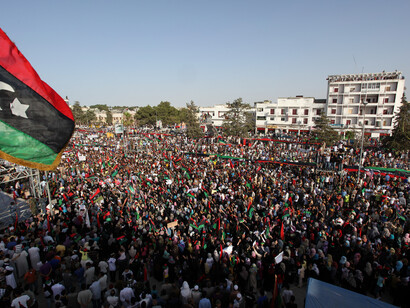
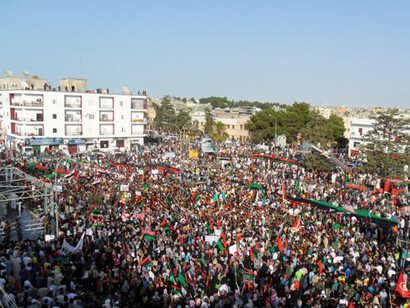
The insurgent movement that started in Tunisia on December 17, 2010, has spread throughout the Middle East in a very short period and has removed many leaders, especially in Egypt and Tunisia, from their seats. It was not thought that setting him on fire by a Tunisian peddler named Mohammed Buazizi would have caused events that would have deeply shaken the entire Middle East. Many people trying to explain and understand the Arab Spring have often raised the demand of the masses for freedom in the liberal sense.
However, the disparity in divisional relations, the decline in people's income levels, and the consequent disappearance of social justice should be analyzed as important factors. The point to note here is that the demonstrations in Libya differ at some point from the events in Tunisia or Egypt. In Libya, Gaddafi himself symbolizes the self-styled regime itself. The fall of Gaddafi, who turned Libya into Jamahiriya, means the fall of the self-styled regime itself.
The fact that the modern state and its features have not been properly settled and that nation-building has not been realized in the modern sense is among the most important reasons for the power vacuum in post-Gaddafi Libya. The legal regulation for the use of force in international law prohibits states from using or threatening to use force in their international relations. However, there are two exceptions to this general framework. These exceptions are Article 51 of the UN Charter 7 of the UN Charter with the right to self-defense as stated in Article, enforcement measures, including the use of force, will be taken by the UN Security Council under its section. In Libya, two resolutions adopted by the UN Security Council are on the agenda when it comes to military intervention in Libya.
Accordingly, on 26 February 2011, the UN Security Council adopted Resolution 1970 condemning the violence against civilians and violence against civilians in Libya, as well as the existence of massive and widespread human rights violations (Gifkins, J. 2016). The Security Council has taken the humanitarian situation into its center and considers the human rights violations committed by the Libyan government against civilians as a crime against humanity. The resolution called for an immediate halt to human rights violations and for the Libyan government to do all it could.
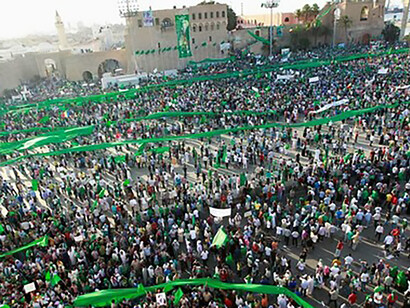
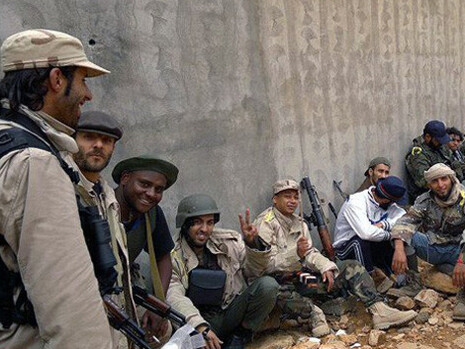
As the UN Security Council resolutions show, the international community has taken a stand in favor of the expected regime change in Libya. With the contribution of international intervention, the 42-year Gaddafi era in Libya ended after Gaddafi was captured and killed in Sirte on 20 October 2011. After the overthrow of Gaddafi, the authority gap that formed throughout the country has not been solved even today. The country's tribal structure and regional relationship networks have led the country into inextricable instability. The anti-Gaddafi revolutionary movement was stepped up by NATO bombardment, succeeded with the capture and killing of Gaddafi, and at least it was declared a success.
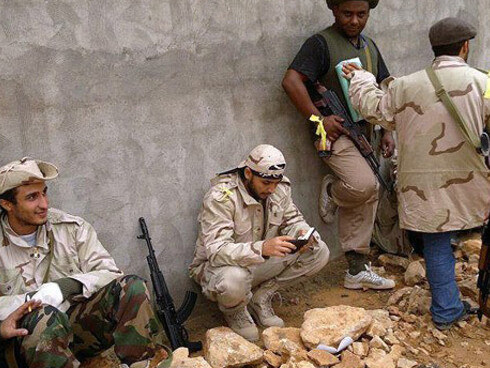
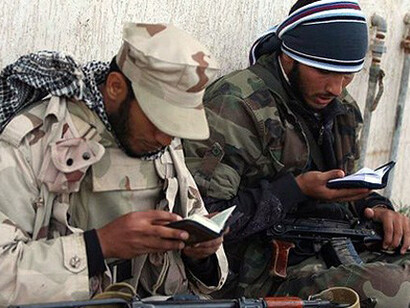
After 42 years of rule, Libya was expected to achieve an ideal structure that would be freer and capable of performing state functions in the post-Gaddafi era (Hove, M. 2017). But the overthrow of Gaddafi not only ended the regime, it also displaced the state apparatus. The first confrontational atmosphere of the post-Gaddafi era occurred between the pro-Gaddafi militia forces and the revolutionary ranks. This led Libya into a whirlpool of armed conflict at the beginning of the revolution. Instability and the inability to meet common values are among the major factors that deeply affect Libya, which is in transition.
Efforts to rebuild the state in Libya were leading to a division of power. The authority gap formed by the death of Gaddafi has been tried to be filled by some units that are historically incompatible with each other and are constantly competing (Hove, M. 2017). These units are listed as transitional governments, revolutionaries, political parties, and non-government organizations. Likewise, the failure of the attempts to form a government in Libya and the resulting two-parliament structure are the visible repercussions of the inability to fill the power vacuum. So much so that the sharp polarization of society lies behind the political formations and political decision-making mechanisms taking place in Libya.
The distinction between the parties that carried out the revolution and the former regime supporters also reflected the political division of the state. The political and military camp in the country opened the door to international intervention; a new environment was emerging in Libya where countries that wanted to intervene supported any side. At the same time, UN-led international efforts to achieve peace and reconciliation were taking place.
The most important UN-led reconciliation step is the ‘Libyan Political Treaty' signed in Shikrat, Morocco, in December 2015. The treaty was intended for more than one purpose. The first step was to stop the conflict by achieving a national consensus. On the other hand, the fight against ISIS and other terrorist organizations, which have gained ground visibly since 2015, was expected to be intensified in order not to be interrupted or even strengthened. Most importantly, however, the establishment of the cohesion government was being signed so that national reconciliation could be achieved.
For a civilian and legitimate government to be established in the country and for the institutions to become operational, the United Nations has decided to hold general elections in the country on 10 December 2018. However, disagreements arose between Italy and France regarding the holding of the elections, and Italy was criticized for acting in a way that prevented Libya from stabilizing again. At the Palermo conference, hosted by Italy, Serraç and Hafter met, and it was decided that the elections would be postponed until 2019.
National and international actors who had a share in continuing internal turmoil have deprived the country of a stable central government and economic development. It also complicates problems such as irregular migration. In particular, European countries such as Italy and France, which have historical links with the North African region and the coast of the Mediterranean, are very interested in Libya's future.
The coup d'etat general, who solidified his dominance in the southern part of the country in early 2019, has been on the renegotiation table with the mediation of the United Nations. However, shortly before the conference to determine a roadmap for Libya's future (April 4, 2019), Haftar-controlled forces launched an operation to seize the capital, Tripoli. With this operation launched, the coup d'etat general has clearly shown his desire for chaos and conflict to prevail in Libya, not a solution.
Delegates who played the role of the Gulf states, including some European countries such as France and Russia both open to military, financial, strategic, and diplomatic support, as well as Chad, Sudan, and Somalia from imported mercenaries, and militia groups caused the balance to shift rapidly to the side of Hafter. As a result, the search for order in post-Gaddafi Libya has still not concluded. The continuation of the civil war on the one hand, but the signing of the memorandum of understanding in the shadow of international efforts at the same time, shows how difficult the path to stability is. A longer period of effort will need to be made to resolve the current multi-actor situation.
References
Torricelli, R. G. (1986). The War Powers Resolution After the Libya Crisis. Pace L. Rev.., 7, 661.
Reykers, Y., & Smeets, N. (2015). Losing control: a principal-agent analysis of Russia in the United Nations Security Council's decision-making towards the Libya crisis. East European Politics, 31(4), 369-387.
Osiander, A. (2001). Sovereignty, international relations, and the Westphalian myth. International organization, 55(2), 251-287.
Morton, A. D. (2005). The age of absolutism: Capitalism, the modern state system, and international relations. Review of International Studies, 31(3), 495-517.
Powell, R. (1994). Anarchy in international relations theory: the neorealist-neoliberal debate. International Organization, 48(2), 313-344.
Koenig, N. (2014). Between conflict management and role conflict: the EU in the Libyan crisis. European Security, 23(3), 250-269.
Gifkins, J. (2016). R2P in the UN Security Council: Darfur, Libya and beyond. Cooperation and Conflict, 51(2), 148-165.
Hove, M. (2017). Post-Gaddafi Libya and the African Union: Challenges and the road to sustainable peace. Journal of Asian and African Studies, 52(3), 271-286.
Khalifa Haftar: The Libyan general with big ambitions.
Why is Libya so lawless? (2020, January 23).