English
 Español
 Français
 Deutsch
 Italiano
 Português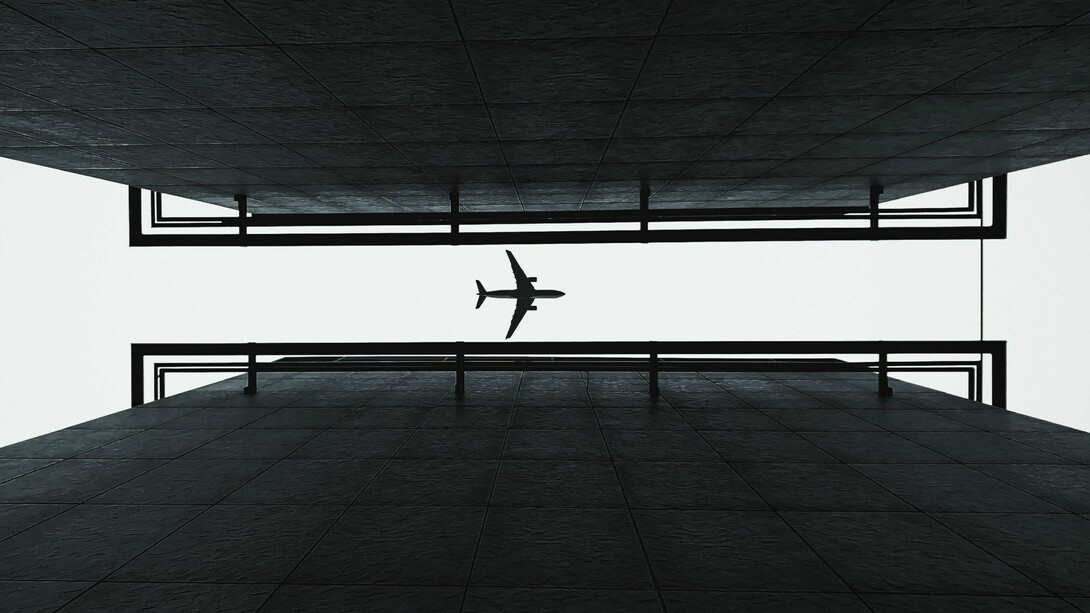
The silence before takeoff
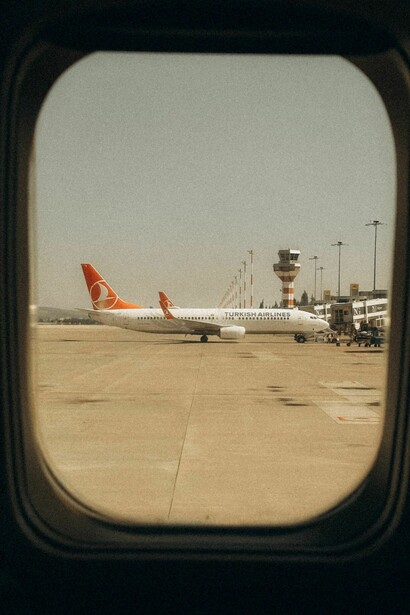
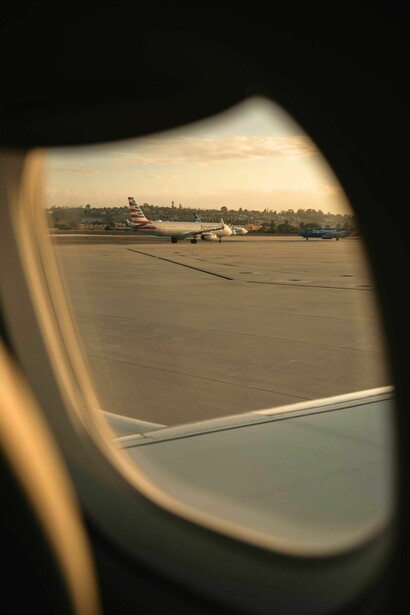
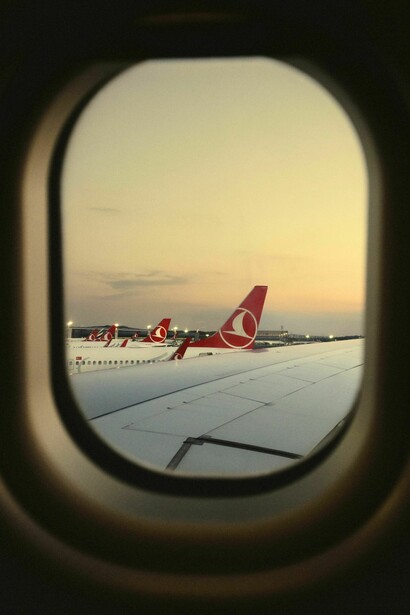
There is a particular silence that belongs only to airplane cabins before takeoff.
It is not the silence of peace. It is something more physical than that — the silence of a body that has decided, before the mind has finished the decision, that it will not exhale until the wheels leave the ground. I know that silence well.
It has a texture. It presses against the chest. It makes every ordinary sound larger than it should be: the click of a seatbelt, the closing of an overhead bin, the voice of a flight attendant asking someone to turn off a phone, the distant vibration of luggage being loaded beneath the aircraft. In another life, these are routine sounds. In that moment, they become measurements of risk.
You look around, and everyone else appears to be traveling. They are checking messages, adjusting pillows, searching for headphones. But you are not traveling. You are crossing a line that may or may not allow itself to be crossed. You are sitting inside a machine that promises movement while knowing that power, when it is afraid, can still reach into movement and stop it.
That is what dictatorship does. It does not merely govern space. It tries to govern time. It decides when a person may speak, when a person may remain silent, when a person may leave, and sometimes even when a person may breathe.
My life in America began before I landed in America. It began in that suspended interval between fear and departure, between the closing of the aircraft door and the lifting of the plane, between the country I was leaving and the country I had not yet reached. It began with a phone call.
The call came from a friend. The kind that does not begin with pleasantries, because pleasantries are a luxury for people who are not yet afraid. There was no long introduction. The message was short: you need to leave. Not as advice. Not as a concern. As a fact.
People who have never lived under that kind of power sometimes imagine repression as a dramatic event: soldiers, orders, doors broken open, men shouting. Sometimes it is that. But often it is quieter. It is a name placed on a list. A passport taken aside. A conversation held in a room without windows. A delay that becomes detention. A procedure that becomes punishment.
The regime of Nicolás Maduro has many instruments. One of them was the list.
At Maiquetía airport, the official counters are visible. They have signs, uniforms, stamps and procedures. They belong to the state as it presents itself to the world: bureaucratic, legal, traceable. But in a dictatorship, there is always another state behind the visible one. It operates in corridors, in pauses, in gestures. It does not need to announce itself because its power lies precisely in ambiguity.
SEBIN officers moved through the lines. They collected passports. They took them to separate offices and checked them against the names of those whose voices had crossed the invisible threshold between tolerated dissent and dangerous memory.
I stood in that line knowing what I knew. That is a particular kind of knowledge. It does not exist in the mind alone. It sits in the sternum. It alters posture. It makes the body read distance differently. How far to the gate? How many officers? How many seconds are there between a name being called and a life being interrupted?
The geometry of escape is not taught in schools, but every exile learns it.
Those who have seen the film Argo will understand the temporal geometry of what I am describing: the moment when the plane's doors close, the moment the engines begin their low vibration, the moment the aircraft starts to move — and still you do not breathe, because you know that a military vehicle can reach a runway before a Boeing lifts its nose.
You know this because it happens. It happened to Rocío San Miguel, a woman who had devoted much of her life to defending human rights in Venezuela. She was pulled from a plane and carried into political detention under charges that were not charges in the moral sense, but instruments — the juridical costume of persecution. Authoritarianism rarely admits what it is doing. It does not say, "We are afraid of your voice." It says, "There is an investigation." It does not say, "We need silence." It says, "There are charges." But those who have lived inside that grammar learn to translate it.
The plane moved. The engines rose. The country remained below. Then the nose lifted.
My wife and I exhaled.
The correction
Many who read this article title will think immediately of the American Dream. They are not wrong. The dream is real, though perhaps not in the way it is sometimes advertised. It is not merely the promise of prosperity, nor the story of the house, the job, the upward line drawn across a life. Those things matter, but they are consequences, not foundations.
The deeper American Dream is structural. It is the architecture of a nation built around the proposition that a human being possesses dignity before the state recognizes it. Those rights do not originate from the generosity of the government. That power must justify itself before liberty, not liberty before power.
For those fleeing countries where that proposition has been inverted, the United States becomes something precise and unexpected: a correction. A society where power still answers to the person, not the other way around.
I say this as testimony. When you have lived inside a system that decides who may speak and who must disappear, the word freedom changes permanently. It becomes spatial. It becomes the room you are given to think, to write, to disagree, to begin again. America gave that room to those who had been politically pursued. For someone arriving from regime suffocation, it is almost immeasurable.
But the dream carries a weight that the dreamer must accept. And that weight has a name: responsibility.
The question the corridor asks
On January 20, 1961, John Fitzgerald Kennedy stood before a nation and posed a question that was not really a question. It was a redistribution of moral responsibility:
Ask not what your country can do for you — ask what you can do for your country.
I have turned that sentence over many times since the morning I landed in the United States with my family — not yet knowing what path I would take, not yet ready to name what had happened to me. Political asylum was not my first instinct. It tied you to a country you could not formally leave behind while the process ran its course. It was, in some ways, a declaration of rupture that took time to accept. Meditating on it was part of the crossing.
Kennedy was speaking to citizens born into the constitutional covenant. But his words reach further. They speak to everyone who chooses to live within the moral architecture of this country — perhaps especially to those who choose it, because choice implies awareness, and awareness implies debt.
Political asylum is a temporary condition. It is shelter, not conquest. It does not ask the host nation to assume permanent responsibility for another government's failures. It asks for time. A corridor through which a person may move from the country that broke the terms of citizenship toward the country where citizenship, in the deepest sense, might again become possible.
That corridor asks its own question: what will you do with this time?
Before filing my petition, I sat across from a Vice President at Goya Foods, where I had worked. I informed him of what I was about to do — not to ask permission, not to seek institutional protection, but because honesty in that moment was a form of dignity. I was beginning a new road, I told him. One that would not impose on them the consequences of my decision. There are moments when a person must separate gratitude from dependence.
I left that meeting and filed the paperwork. And then I asked myself Kennedy's question.
I could not vote — I am not a citizen, though my grandfather was American. I could not practice law in the conventional sense. I could write. I could explain Venezuela. I could map the logic of repression and speak about how democracies decay. But I also understood that a life built only in opposition to what one has escaped remains trapped by the thing it opposes.
Exile cannot only be resistance. It must also be construction.
So I turned toward science and technology. Toward artificial intelligence and strategic modeling. Toward building something in the country that had given me shelter. Not because America demanded a payment, but because dignity demanded a response. There is a difference between receiving refuge and becoming useful within refuge. That difference matters.
The wound that travels
I have not stopped writing about Venezuela. I have not stopped analyzing the Evilness Cahoot — the dark compact — between the Maduro government and the structures that sustain it. For years, I have tried to describe not only the visible brutality of the regime, but also the architecture beneath it: the networks, the incentives, the criminal alliances, the institutional ruins dressed as sovereignty.
That kind of work has consequences. In a normal country, writing is participation. In an authoritarian system, writing is evidence. A sentence becomes a file. An article becomes a mark.
This is the irreducible tension of political exile: you leave a country in order to survive it, and then you discover that silence would allow it to continue inside you. You cross a border, but the moral conflict travels with you.
So you do not stop. But slowly, another understanding arrives: the fight cannot only be against. It must also be for. For Venezuela, yes. For the possibility that one day the word republic might again mean something there. But also for the country that opened a door when your own country closed every window.
When the National Interest exception to my visa was approved, I understood it as something more than an administrative decision. A bureaucratic process may be the most honest kind of statement a state can make — it says only what it is prepared to recognize. And in that recognition, I heard something simple: what I was building here had value. My presence was not only tolerated as a humanitarian necessity. It could be understood as a contribution.
That distinction matters deeply to those who arrive wounded by politics. The exile often fears becoming only a case, a file, a petitioner, a story of damage. But a human being cannot live permanently as an object of compassion. Compassion may open the door, but contribution is what allows a person to stand upright after entering.
The United States did not erase the politically pursued immigrant's wound. No country can do that. The wound travels. It appears in unexpected moments: in the news, in a phone call from someone still there, in the face of a child asking why we cannot go back, in the strange guilt of safety.
But the crossing changes the wound's meaning.
In Venezuela, my voice was a liability — a frequency the regime wanted silenced because silence, multiplied across enough citizens, is how dictatorship breathes. In the United States, that same voice becomes a contribution. A warning. A memory. One thread in the larger argument is that free societies make better use of human beings than repressive ones.
That is not a sentimental statement. It is a structural one.
Repressive systems waste human beings. They waste their intelligence, their dissent, their imagination and their capacity to build. They force talent into exile, loyalty into performance, thought into silence, and courage into prison. Free societies, by contrast, are strengthened by the very things dictatorships fear: argument, mobility, memory, innovation, the capacity of a person to begin again. America can receive a wound from another country and transform it into work, into testimony, into renewal.
That is the blessing.
To be blessed is to be entrusted
There is a theology embedded in the phrase "God Bless America". Most people hear it as a petition — a request made of divinity on behalf of a nation. But a blessing, properly understood, is not passive. It is not merely something received. It is also something assigned.
To be blessed is to be entrusted. To receive is to become responsible.
There is something else that must be said — something that belongs not to analysis but to lived experience. In these years in the United States, across every space of interaction — the neighborhood, my children's school, the workplace, the professional network, the institutions — I have never felt discrimination. Never a different treatment for being an immigrant. Never the subtle signal that I belonged to a lesser category of person.
That is not a small thing. For someone who left a country where the state itself decides who is worthy of dignity, to find a society where that question simply does not arise in daily life — where you are met as a person, not as a condition — is perhaps the most humanizing discovery of the journey.
It makes this nation greater than its politics. Larger than its debates. Wider than any single moment in its history.
Gratitude does not require blindness. On the contrary, gratitude requires seriousness. One does not bless a country by flattering it. One blesses a country by serving what is best in it. By strengthening the institutions that protect the person. By contributing to its prosperity. By defending the civic culture that allows disagreement without annihilation. By remembering that liberty is not self-executing — it must be renewed by those who benefit from it.
The immigrant who understands this does not ask only what America can provide. He asks what America makes possible through him. That is a different posture. It changes the moral geometry of arrival.
To arrive as a victim is human. To remain only as a victim is a diminishment — to stop mid-crossing. A person can be wounded without being defined by the wound. America, at its best, gives people the room to convert interruption into a beginning.
The citizen born here must ask Kennedy's question. The immigrant must ask it. The refugee, the exile, the entrepreneur, the scientist, the mother, the father — each from a different wound or hope — must ask the same thing:
"What can I do for this country?"
Not because the country is beyond correction. Because no country can remain free if those who benefit from its freedom become only consumers of its promise, a nation is not sustained by admiration. It is sustained by contribution.
The work that came after
So yes, on this Fourth of July, I think of the aircraft cabin. I think of the silence before takeoff. I think of the list, the passport, the machinery of fear and the geography of escape. I think of the moment the wheels left the ground, and the breath returned to my body.
But I also think of the work that came after.
The work of beginning again.
The work of turning refuge into contribution.
The work of transforming gratitude into responsibility.
And on every day that this extraordinary, perfectible, still-becoming nation gives me room to think, to write, to build, and to argue, I understand the blessing differently.
God Bless America.
And may those of us who shelter under that blessing remember what we owe it.