English
 Español
 Français
 Deutsch
 Italiano
 Português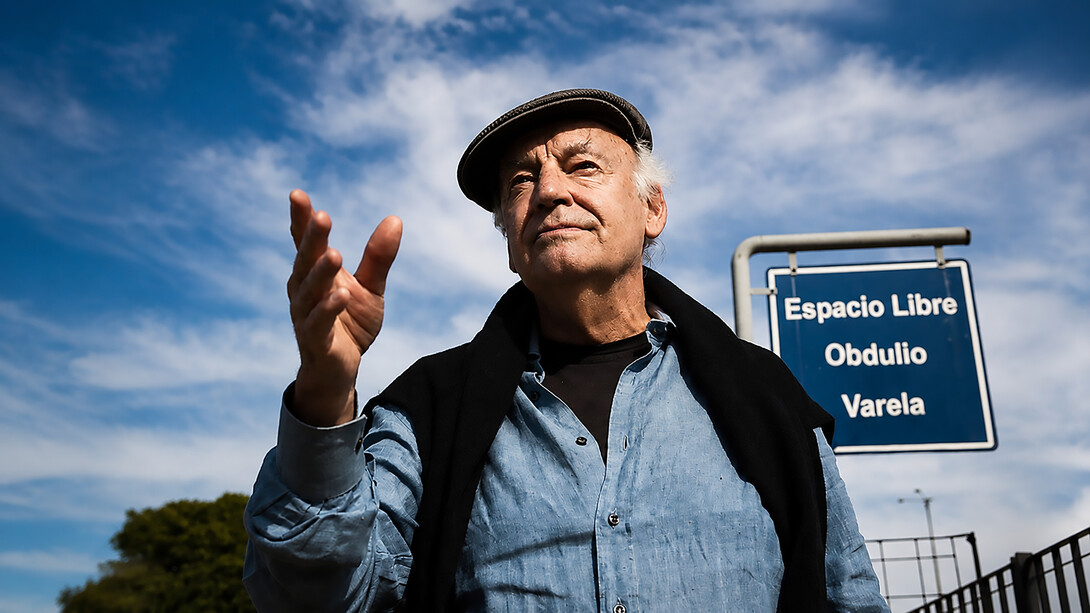
I came rather late to his writings. I was first attracted to his short essays rather than to his epic books. An inveterate clipper of key ideas, my folders are replete with his writings, and especially quotes that I use frequently in my own writings, because they fit what moves me. Here is a sample, drawn from years of attentive reading, personal reflection, and quiet admiration for his uncompromising voice:
Every day as I read the newspapers, it is as if I am attending a history lesson. Newspapers teach me by what they say and by what they do not.
In the colonial and neocolonial alchemy, gold changes into scrap metal and food into poison.
It would be a revolutionary step forward if recipient countries would challenge donors when offered aid that goes against their conscience or violates the rights of their people.
Almost all wars, perhaps all, are trade wars connected with some material interest. They are always disguised as sacred wars, made in the name of God, or civilization, or progress.
At the end of the day, we are what we do to change who we are.
If nature were a bank, they would have already saved it.
The walls are the publishers of the poor.
Underdevelopment is not a phase on the road towards development—it is the historical result of somebody else’s development.
Is democracy a luxury that not everybody deserves?
The vast majority of humanity just has the right to see, to hear… and to remain silent.
The militant French revolutionary Olympia de Gouges proposed The Declaration of the Rights of Women, including civic rights. In 1793 the guillotine chopped her head.
Utopia lies at the horizon. When I draw nearer by two steps, it retreats two steps. If I proceed ten steps forward, it swiftly slips ten steps ahead. No matter how far I go, I can never reach it. What, then, is the purpose of utopia? It is to cause us to advance (attributed to Galeano).
Being Chilean by birth and thus a native Spanish speaker, I find them in my first language and translate them into English. Little did Eduardo Galeano ever know that I have been spreading his seeds to other audiences in other tongues and will continue to do so. (Being the clipper I am, I always read both fiction and non-fiction with a pen at hand).
The news that Galeano was suffering from lung cancer was kept low-key. Thus, with great surprise and sadness, we learned about the passing of this giant. Much has been written about his style, a Renaissance mix that so brilliantly put facts and feelings fittingly together in a truly universal context. Add to this that his prose and verse are accessible and not for intellectuals only, so that many get at his genius.
The Uruguayan ethos
Galeano was born and grew up in Uruguay and lived most of his life there, apart from exile in Spain during Uruguay’s military regime. Thinking now also of the remarkable life of José Mujica, the Tupamaro ‘Robin Hood’ urban guerrilla who became President of Uruguay (see picture above), I wonder if there is something in the Uruguayan ethos that points to the essentials of life in our embattled planet.
Three times I watched President José Mujica’s moving address to the UN General Assembly in 2013. He began by saying, “I am from the South,” and spoke of Uruguay’s rise from being “the South, the bastard child of the British Empire.” (Britain’s imperial power in Latin America before and after independence from Spain and Portugal is a theme of Eduardo Galeano’s Open Veins of Latin America). He then said, “We have abandoned the immaterial gods and now worship the god of money.” He also warned of conferences that only benefit hotel chains and airlines.’ I was bound to wonder if Eduardo Galeano supported ‘Pepe’ as he drafted his speech. Maybe he did. But in any case, José Mujica and Eduardo Galeano both grew up and learned about life in Uruguay. Their vision, forged from their hard times, adventures, and courage, shows us what some of us are and what others of us are not in this cruel world.
Through his writings, Eduardo Galeano was and will remain a Latin American giant and a universal Gulliver. Here is a longer quote that speaks to me of him: “Every person shines with her/his very own light. There are no identical inner fires. There are big-fire and small-fire people; others have fires of all colors. There are people with serene fires and those with wild fires that fill the air with sparks. Some fires are dull; they neither shine nor burn. Yet other fires burn life with such determination that you cannot look at them without blinking. Those who come near get their light turned on.”
![Eduardo Germán María Hughes Galeano (Spanish: [eˈðwaɾðo ɣaleˈano]; 3 September 1940 – 13 April 2015) was a Uruguayan journalist, writer, and novelist widely recognized as both “a literary giant of the Latin American left” and “global soccer’s pre-eminent man of letters”](/attachments/d4eb193577126dff9d98dd754e590175dea5d7cb/store/fill/410/308/37812f7f7722f4aef8051351a99355b4af06936d32a6ec20970621620bc1/Eduardo-German-Maria-Hughes-Galeano-Spanish-edwardo-galeano-3-September-1940-13-April-2015-was-a.jpg)
![Eduardo Germán María Hughes Galeano (Spanish: [eˈðwaɾðo ɣaleˈano]; 3 September 1940 – 13 April 2015) was a Uruguayan journalist, writer, and novelist who was widely regarded as “a literary giant of the Latin American left” and “global soccer’s pre-eminent man of letters](/attachments/835949d72eaa09fe5c5af826f84ba4a2eeb805a7/store/fill/410/308/da895fb5f92ee2d38c55f44b291357ed96610d54528f250a185f0a181934/Eduardo-German-Maria-Hughes-Galeano-Spanish-edwardo-galeano-3-September-1940-13-April-2015-was-a.jpg)

![Eduardo Germán María Hughes Galeano (Spanish: [eˈðwaɾðo ɣaleˈano]; 3 September 1940 – 13 April 2015) was a Uruguayan journalist, writer, and novelist, celebrated as “a literary giant of the Latin American left” and “global soccer’s pre-eminent man of letters”](/attachments/487a2f1953db18d5f1797b2366ecdcf8eb7dfc83/store/fill/410/308/ea45ffd0ec901ac588234b312fccaf99e9bfffcd1086f78db8321789c2ab/Eduardo-German-Maria-Hughes-Galeano-Spanish-edwardo-galeano-3-September-1940-13-April-2015-was-a.jpg)