English
 Español
 Français
 Deutsch
 Italiano
 Português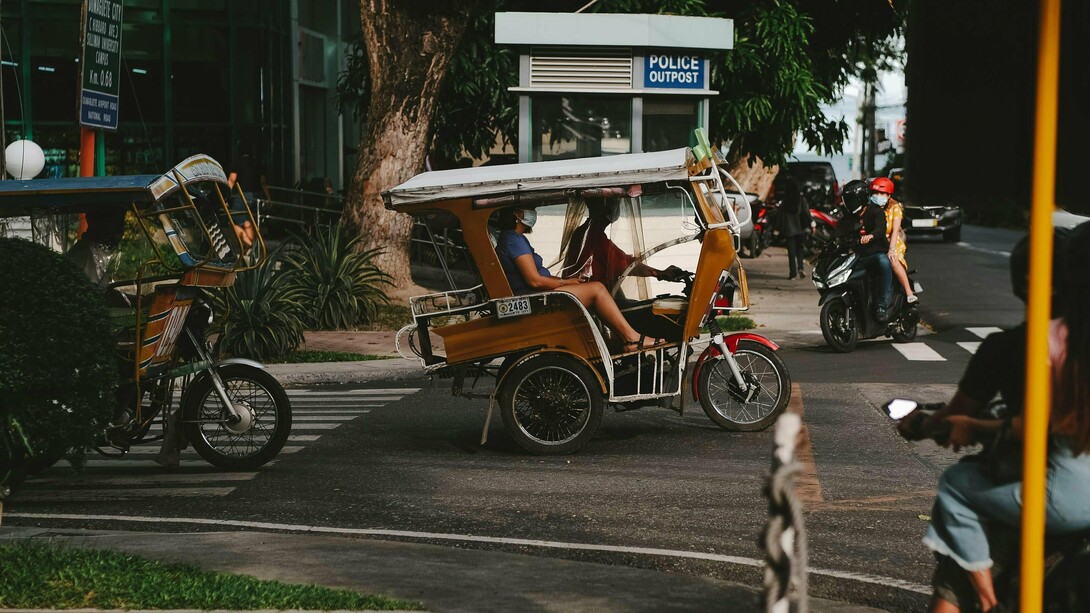
The Philippines has long been described as a land of abundance. Blessed with fertile soil, vast mineral deposits, rich marine ecosystems, and a strategic location in Southeast Asia, the country theoretically possesses all the ingredients necessary for sustained economic prosperity. Yet despite these advantages, millions of Filipinos continue to struggle with poverty, rising living costs, and limited economic opportunities. This paradox—of wealth in resources but scarcity in national progress—has deep historical, political, and economic roots.
To understand why the Philippines struggles economically despite its potential, one must examine centuries of foreign domination, decades of political corruption, structural weaknesses in governance, and global economic pressures that continue to shape the nation today.
A history of extraction and colonial exploitation
The Philippines’ economic challenges cannot be fully understood without acknowledging its colonial past. For more than 300 years, the archipelago was ruled by Spain. During this period, the primary goal of colonial administration was not the development of local industries but the extraction of resources and the consolidation of imperial power.
The Spanish colonial system imposed heavy tributes and forced labour known as "polo y servicio," which many historians describe as a form of institutionalized servitude. Economic structures were designed to benefit the colonial elite and the Spanish crown rather than the Filipino population. Land ownership was concentrated in the hands of religious orders and powerful families, a pattern that would persist long after colonial rule ended.
Following the Spanish–American War in 1898, Spain ceded control of the Philippines to the United States. The subsequent period of American rule, especially after the Philippine–American War, brought modernization in certain sectors such as education, infrastructure, and public administration. However, it also reoriented the Philippine economy to serve American industrial needs.
Raw materials such as sugar, coconut, hemp, and minerals were exported to the United States, while finished goods were imported back into the Philippines. This economic dependency limited the development of a robust domestic manufacturing sector. In effect, the Philippines became an agricultural supplier to a larger industrial power.
World War II brought another devastating chapter when Japan occupied the Philippines during the Japanese occupation of the Philippines from 1942 to 1945. Infrastructure was destroyed, industries collapsed, and the economy suffered massive losses. By the time the country gained independence in 1946, it faced the daunting task of rebuilding an economy that had been shaped primarily for external interests.
Post-independence challenges and political corruption
Independence offered hope that the Philippines could finally chart its own economic destiny. However, political instability and systemic corruption soon emerged as major obstacles to national development.
Over the decades, many Filipino leaders promised reforms, modernization, and equitable economic growth. Yet allegations of government plunder have repeatedly surfaced across administrations. Public funds intended for infrastructure, social programs, and economic development have often been misused or diverted.
Several corruption scandals have shaken public trust. From pork barrel controversies to infrastructure anomalies, billions of pesos have reportedly disappeared into fraudulent contracts, ghost projects, and inflated procurement deals. These issues continue to undermine government credibility and weaken institutions meant to safeguard public funds.
Ghost projects—government-funded initiatives that exist only on paper—have become symbolic of this problem. Roads, bridges, and development programs sometimes receive funding but never materialize on the ground. When these scandals are exposed, investigations often stall, prosecutions rarely result in convictions, and many of the officials implicated remain in positions of power.
For ordinary Filipinos, the consequences are severe. Funds that could have improved schools, hospitals, and transportation systems instead vanish into private pockets. The result is a persistent gap between government spending and visible national progress.
The tax burden and the question of public benefit
Taxation is a critical tool for funding government services and infrastructure. In theory, citizens pay taxes in exchange for public goods such as roads, healthcare, education, and social protection. However, many Filipinos feel that the taxes they pay do not translate into tangible improvements in their daily lives.
The Philippine tax structure has undergone reforms in recent years, including the Tax Reform for Acceleration and Inclusion (TRAIN) law, which aimed to simplify the tax system and generate more revenue for development projects. Despite these reforms, critics argue that the tax burden remains heavy, especially when combined with value-added taxes, excise taxes on fuel, and other consumption-based levies.
When citizens see little improvement in public transportation, healthcare access, or infrastructure quality, frustration grows. The perception that tax revenues are mismanaged or lost to corruption weakens public confidence in government institutions.
Infrastructure gaps and development delays
Infrastructure is one of the most visible indicators of national progress. Modern roads, efficient public transport, reliable power systems, and digital connectivity are essential for economic competitiveness.
Compared with many neighbouring countries, the Philippines continues to struggle with infrastructure gaps. Traffic congestion in major cities, particularly Metro Manila, costs billions of pesos annually in lost productivity. Public transportation systems remain fragmented, and many rural areas still lack adequate road networks.
When compared with countries such as Singapore, the contrast becomes even more striking. Singapore has developed one of the world’s most efficient public transport systems, world-class ports, and advanced urban infrastructure. Its strategic planning and consistent governance have enabled it to transform from a resource-poor island into a global financial hub.
The Philippines, by contrast, possesses far greater natural resources yet lags behind in infrastructure development. While recent administrations have launched ambitious programs such as “Build, Build, Build,” critics argue that implementation has been inconsistent and sometimes plagued by delays, cost overruns, or transparency issues.
Rising debt and questions about economic strategy
To finance infrastructure and development programs, governments often borrow money. Debt itself is not necessarily harmful if it funds productive investments that stimulate economic growth.
However, the Philippines has seen its national debt grow significantly in recent years. Government borrowing has reached trillions of pesos, particularly following the economic disruptions caused by the COVID-19 pandemic. While many countries increased borrowing during this period, concerns arise when debt-financed projects fail to produce visible economic returns.
If infrastructure remains incomplete or poorly implemented, the burden of repayment falls on taxpayers without delivering the expected benefits. This cycle fuels public scepticism toward government spending programs.
Inflation, wage stagnation, and currency pressures
Another major concern for Filipino households is the rising cost of living. Inflation has increased the prices of essential goods such as food, fuel, and electricity. Yet wages have not always kept pace with these rising costs.
Minimum wage levels in many regions remain relatively low compared with the cost of urban living. This wage stagnation forces many Filipinos to rely on multiple jobs or overseas employment to support their families.
Currency dynamics also play a role. The Philippine peso has weakened against major global currencies over time, making imports more expensive. Since the country imports large quantities of fuel, machinery, and industrial inputs, a weaker peso contributes to inflationary pressure.
Historically, there were periods when the peso held stronger relative value internationally. Over time, however, shifts in global markets, trade imbalances, and domestic economic challenges have reduced its purchasing power.
Global conflicts and energy price shocks
The Philippine economy is also highly vulnerable to external shocks. Because the country imports most of its oil, fluctuations in global energy prices have immediate domestic consequences.
Recent tensions involving Iran, the United States, and Israel have heightened geopolitical uncertainty in the Middle East—one of the world’s most critical oil-producing regions. Conflicts and supply disruptions often push oil prices upward, affecting economies worldwide.
For the Philippines, rising fuel prices translate directly into higher transportation costs, increased electricity rates, and more expensive food distribution. Inflation spreads across multiple sectors, placing additional pressure on households already struggling with limited income growth.
Some countries respond to energy crises with contingency strategies such as releasing oil reserves, implementing remote work policies to reduce fuel consumption, or temporarily adjusting work schedules to lower energy demand. Critics argue that the Philippines has been slower to adopt similarly comprehensive measures.
The path forward
Despite these challenges, the Philippines still holds enormous potential. Its young population, growing digital economy, strategic location in Asia, and natural resource base provide a strong foundation for future development.
Realizing this potential, however, requires meaningful reforms.
First, stronger anti-corruption mechanisms and institutional accountability are essential. Transparent procurement systems, independent oversight bodies, and swift prosecution of corruption cases can restore public trust.
Second, infrastructure development must focus on efficiency, quality, and long-term economic impact rather than short-term political gain.
Third, policies that support domestic industries, technological innovation, and sustainable energy development could reduce dependence on imports and strengthen economic resilience.
Finally, inclusive economic growth—where wages rise alongside productivity and opportunities expand beyond major cities—will be critical to improving the quality of life for millions of Filipinos.
Conclusion
The Philippines’ economic struggles are not the result of a lack of resources. Rather, they stem from centuries of colonial extraction, persistent governance challenges, uneven development, and vulnerability to global economic forces.
Yet history also shows that nations can overcome structural obstacles through good governance, strategic planning, and collective national effort. The Philippines stands at a crossroads: it can continue to grapple with the burdens of the past, or it can pursue reforms that unlock the full potential of its people and its resources.
The question that remains is not whether the Philippines has the capacity for progress, but whether its institutions and leadership will rise to the challenge.