English
 Español
 Français
 Deutsch
 Italiano
 Português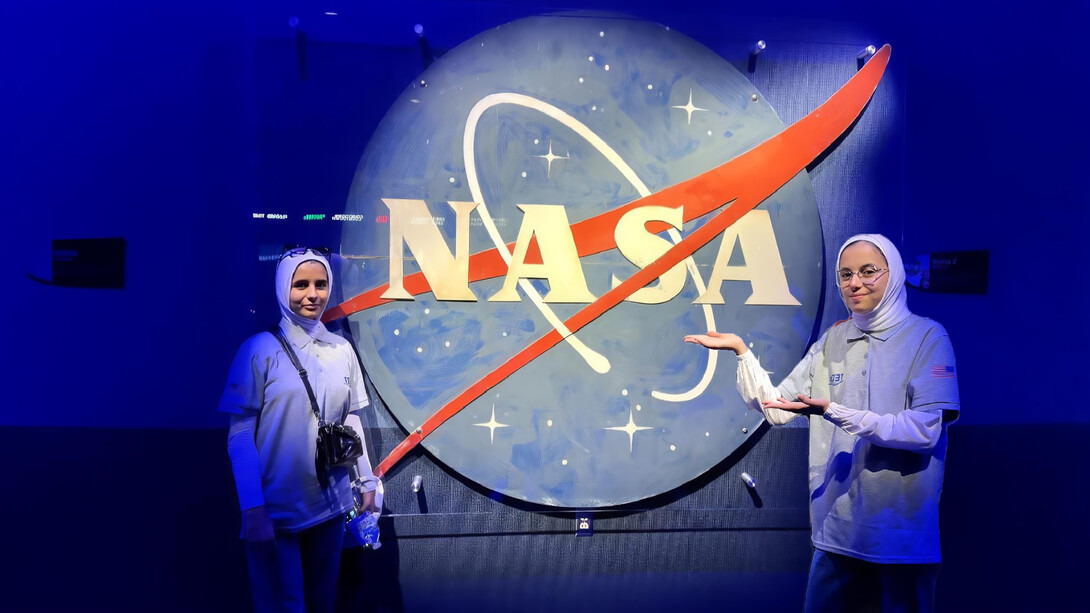
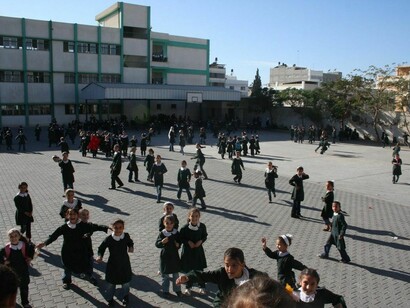
In Gaza, education has long been both a priority, with student enrolment rivalling that of other states in the region. Before the current war, more than 95% of children were enrolled in basic education (grades 1 to 10), with 44.3% of the population aged 18 to 24 registered in higher education programmes1 . The latter were distributed among 19 institutions, including 7 universities and 12 higher education colleges. Before October 2023, Gaza had a successful education sector with government- and UNRWA-run schools, free textbooks, and funding for school supplies2. At 97%, the literacy rate was one of the highest in the world.
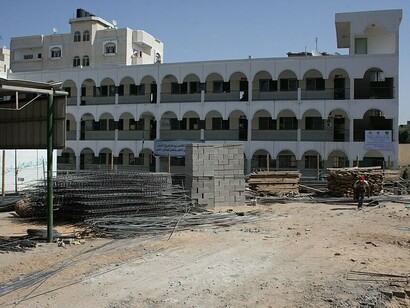
Today, that system has been pushed to the brink. Since October 2023, nearly all schools have been closed, leaving around 645,000 children out of formal education and most school buildings either damaged or completely destroyed2,3. In total, hundreds of thousands of students (including tens of thousands of university students) have seen their education abruptly interrupted.
And yet, across Gaza, students continue to learn, build, and imagine futures beyond these constraints. This article offers an interview with two such students: sisters determined to pursue computer science and artificial intelligence abroad, with the goal of improving the quality of life of everyday Gazans. Their journey from the classroom to independent development of practical tools represents a commitment to using technology for social good. From developing AI tools for people with hearing impairments to teaching programming to displaced youth, their work reflects both personal ambition and a broader vision shaped by the realities of life in Gaza.
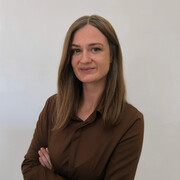
Lama and Yara Elnajjar, young programmers from Gaza with a strong passion for technology and innovation, were winners of the Tech Talent 2023 programme and currently serve as student ambassadors with Technovation. They are dedicated to using their skills to create impactful solutions that support their community and empower others through technology.
I first asked, when did you become interested in programming, and how did you start learning?
We first became interested in programming as children, driven by a dream to make a difference in our community. But the turning point came from a sudden, specific, and unforgettable moment. One day, while walking home from school in a crowded street, we suddenly heard a car horn blaring as a car approached quickly. Everyone instinctively moved out of danger except for one person who stayed still. In that moment, we realised he was deaf. Those few seconds of danger were completely silent to him. We asked ourselves, how could technology become an ear for those who cannot hear? That’s when the idea for our AI app for the hearing-impaired was born.
Can you tell me about the apps or tools you’ve developed?
We have worked on several socially impactful projects. One main project is the Nabheni app for deaf people, a smart application connected to a wearable device for people with hearing impairments, which detects important sounds and sends alerts to the user. We also developed Code for Future, an initiative to teach programming to displaced youth and students who have been out of school, helping them gain technical skills for the future. Our projects have earned international recognition, including WSIS Champions and Expo Malisa Asia, and we had the opportunity to travel to NASA through the Tech Talent programme by the Al Nayzak Foundation.
I understand you work closely with your younger sisters, who have the same passion for technology and interest in promoting social good. Can you share more about their work?
Our younger sisters are boundlessly creative. They developed an app called Power of Mind, which uses EEG technology to control devices through brainwaves, helping people with mobility disabilities interact more easily with their surroundings. It is truly inspiring to see our family use technology to make a real difference, and we constantly support each other in our projects and innovations.
What problems do your tech solutions aim to address?
Our projects aim to make daily life more inclusive and empowering. The Nabheni app helps deaf individuals detect sounds they cannot hear, improving safety and independence. Code for Future addresses gaps in technical education for displaced or out-of-school youth, giving them access to skills and opportunities that can shape a better future.
Can you share more about the Nabheni app? How does it work?
As we mentioned, the inspiration came from witnessing a deaf person unresponsive to danger because he couldn’t hear a car horn. The Nabheni app uses AI to detect sounds like alarms, doorbells, or someone calling the user’s name, then alerts them via smartwatch or phone notifications, turning environmental sounds into actionable information.
Tell me more about Code for Future. How did you come up with the idea, and what impact has it had?
We wanted to create a supportive space for displaced youth and students out of school who are interested in technology. Through Code for Future, participants learn programming, build their first projects, and gain confidence. Many continue learning and pursuing tech opportunities, demonstrating the programme's lasting impact.
We launched Code for Future on 20 July 2024 to support displaced youth interested in technology. The 4-month programme, divided between Flutter and Python, engaged around 50 students from displacement camps. Participants earned recognised Technovation certificates and built projects that serve the community, including a mobile app to remind elderly people to take their medication on time. Overall, the programme helped students gain skills, confidence, and motivation to continue learning and pursue opportunities in tech.
What challenges have you faced while pursuing your education, and how have you worked around them?
Studying in Gaza comes with many challenges. Frequent power outages and limited internet access make learning online difficult. Displacement and losing our home added uncertainty, and sometimes it was hard to charge devices or access resources. Despite these obstacles, we relied on self-learning, offline resources, and mutual support. Persistence, creativity, and teamwork allowed us to continue our education and keep innovating, turning these difficulties into motivation rather than barriers.
What are your goals for studying abroad, and why are you interested in Computer Science and AI?
We aim to gain advanced knowledge and practical experience in computer science and AI to develop solutions with real social impact. AI fascinates us because of its potential to solve meaningful problems, especially for underserved communities. Studying abroad offers access to better resources, diverse perspectives, and opportunities to innovate.
What do you wish people outside Gaza better understood about life there, especially for students?
We wish people knew that students in Gaza are ambitious, talented, and determined despite challenges. Many work hard to learn, create, and make a difference. Life here is not defined by limitations but by resilience and the desire to contribute positively to the world.
The story that emerged from my conversation with Lama and Yara is not just about their and their sisters’ talent but also of collective resilience. In a context where nearly all students have faced prolonged disruption – some losing the equivalent of years of schooling – continuing to learn has become an act of self-empowerment with the potential to help Gaza and Gazans rebuild.
Their work has been shaped and inspired by the everyday challenges they and their family have faced, including power outages, displacement, and limited access to internet and infrastructure. However, this work demonstrates how these constraints can also drive innovation. Through initiatives like Nabheni App and Code for Future, Lama and Yara are already translating knowledge into impact, addressing accessibility, education gaps, and inclusion within their community. Their aspirations to study abroad are as equally about personal advancement as they are about gaining the tools to expand this work further.
At a time when hundreds of thousands of students in Gaza remain cut off from formal education, their story is a reminder of what persists beyond the statistics: ambition, creativity, and a determination to build solutions even in the most difficult circumstances.
References
1 Saleh, Basri. “Education in Gaza.” This Week in Palestine, Feb. 2024.
2 Ibrahim, Refaat. “Gaza Had Educational Justice. Now the Genocide Has Wiped That Out, Too.” Al Jazeera, 19 Apr. 2025.
3 UNICEF. “At Least 30 Million Children out of School in the Middle East and North Africa.” Unicef.org, 23 Jan. 2025.
Meet the Elnajjar family.