English
 Español
 Français
 Deutsch
 Italiano
 Português
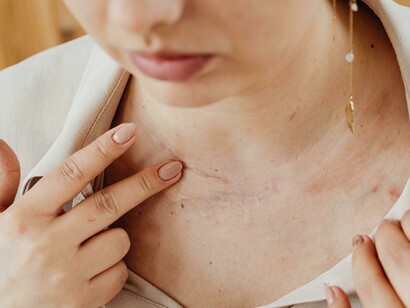
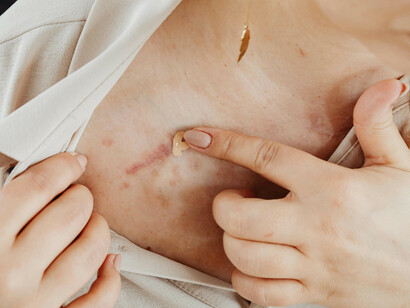
Often, toxic relationships go unnoticed. Mental, physical, and spiritual bruising occurs, which is hard to name and acknowledge at first. When the line is crossed, it turns violent, and the bruises become visible. By that time, the victim has already been manipulated far beyond the reach of friends or family. They often go into complete shock and create stories in their minds about how the predator is the only thing they have, as they have usually been isolated from their inner circle.
Distorted image: toxic codependent relationship
They had this image of their significant partner—the predator—in their head, which becomes distorted when that same hand raises and turns violent. Even after the first few incidents of domestic violence, the victim still tells themselves, “He loves me. I know he cares. He has changed. I can fix him. He is my everything, and I can’t live without him.”
Mature relationship: support with zero control
In a healthy, mature relationship, one should never feel they can’t live without their partner. You are a whole, independent person before you meet them, and you should remain even more independent when you are with them. A true partner should be your personal cheerleader who supports you through anything, not someone who controls you through everything.
Greater risk: the threats that are not empty
Once someone acknowledges domestic violence (DV), it becomes hard for the victim to break up or leave their partner. Research shows that victims of DV are at greater risk after they leave the abuser. Call Rape Crisis Ireland (24-hour confidential helpline). Freephone: 1800 77 88 88.
The predator may even throw a fit when the victim blocks them on social media, accusing them of things like, “You are cheating on me; you are talking to that guy.” The “guy” could be a distant friend or colleague whom the predator suspects—or even invents out of thin air to justify their insecurity and control.
The courage it takes for a victim of domestic violence (DV) to physically walk away is immense. A woman who files a report with the police must also request a protective order. If she has children, she is on edge all the time, worrying about their safety—fearing that they could be kidnapped or harmed by the predator, who may have already made threats against her family.
Abuse is not gender-specific
The predator may not always be a man. Research shows that men are less likely to be believed when they report their female partner being physically violent or abusive. Men are also less likely to file a report or call the police when their female partner is violent toward them. Just because men don’t report doesn’t mean domestic violence (DV) against men doesn’t exist.
People, in general, want to protect each other—one could say it is in human nature. To see the person who should protect and love you, regardless of gender, turn into something worse than an animal—I do not know how anyone could ever get over that. Once you see that side of a human being, how do you unsee it?
Dating safety: the lies predators tell victims to manipulate them
Lies about having a job, owning a house, or being debt‑free; lies about their criminal past, and more. They move from gaining the victim’s trust completely to instilling fear in them—threatening the victim with how they will hurt family members and worse.
Not knowing if the person you are planning to date has a domestic violence (DV) past is the worst. No one wants to date someone with a violent history. In the 21st‑century dating‑app era—with Tinder, Bumble, and the rest—we need more than their hobbies or how tall they are. We need to know if we are going to be safe dating them.
From DMing on any of the online dating sites, one may eventually be able to check the “Domestic Violence Register of Judgments,” once it becomes operational in Ireland under the Criminal Law (Sexual Offences, Domestic Violence and International Instruments) Bill 2025—“Jennie’s Law.” Thanks to the late Jennifer Poole’s family, friends, and the wider community coming together to fight the system, this is very bad news for all the predators hoping to hide their vicious cycle of domestic violence.
This is a major move by Ireland, acknowledging the severity of the domestic violence problem and taking the necessary steps to address it. This article is not just to recognize the hard work of the community but also to take a moment to mourn those who lost their lives at the hands of predators—individuals who entered the victims’ lives as someone who should have protected and loved them, whether the victims are alive or deceased.
To protect those who have suffered—and to prevent anyone else from suffering at the hands of a predator—Ireland’s active measures safeguard people from individuals with a history of domestic violence.
Let’s go through the section of the bill that talks about “The Register.”
Quoted directly from: “Creation of a Register of Judgments in Relation to Domestic Violence.”
(1) Where a person is convicted on indictment of an offense contained within subsection 6 as against a relevant person, the Court may, at its discretion and with the consent of the victim, publish a judgment outlining the sentence imposed on the convicted person to include such information as the Court deems necessary;
(5) In this section, a person is a “relevant person” in respect of another person if he or she—(a) is the spouse or civil partner of that other person, or (b) is not the spouse or civil partner of that other person and is not related to that other person within a prohibited degree of relationship but is or was in an intimate relationship with that other person.
(6) The relevant offenses under this section are:
- Murder.
- Manslaughter.
- Rape.
- Rape under section 4 of the Criminal Law (Rape) (Amendment) Act 1990.
- Sexual assault.
My thoughts on: (1)
The consent of the victim matters, which I understand from this, and it really should matter even before the court’s decision. What I have seen time and time again is that when the victim is deceased, their rights automatically go out the window, and the predator receives due process. It is important to remember that the deceased victim’s family members are also victims of the predator who took their family member’s life.
The victim doesn’t always receive the same level of consideration when informing the police, and the court may not receive adequate evidence. Thanks to texting, recorded conversations, and Snapchat GPS—all 21st-century technology—evidence on the predator can be gathered. Even then, the evidence does not always cut. Protective orders can only go so far in ensuring their safety.
Having a public register of predators’ names and their crimes would help keep victims and potentially vulnerable individuals informed, allowing them to verify before going on a first date and even avoid initiating contact. This could prevent unnecessary physical and mental distress. I can see how such a register could reduce the number of potential domestic violence cases before they even begin.
Quoted directly from: “Creation of a Register of Judgments in Relation to Domestic Violence.”
- (2) Where the relevant person is deceased or unable to confirm their consent, it shall be within the discretion of the Court as to whether it will publish a judgment under this provision.
My thoughts on: (2)
When the victim is deceased or unable to give their consent, it is left to the court to decide whether the offense is serious enough or if the intent was malicious. The court considers various factors before determining whether to add the predator’s name to “The Register.”
If the victim is deceased, I don’t see why the court should not automatically add the predator’s name.
From my perspective, the register feels more like a “Book of Shame”—if you end up on the list, you are worse than the scum of the earth. Every country should have such a register, and it should be accessible through all dating sites. The title should be “Red Flags” in bright red for anyone with a domestic violence history. You can date, but everyone should know what you have done. There should be no hiding from your past actions.
Quoted directly from:“Creation of a Register of Judgments in Relation to Domestic Violence.”
(3) A judgment published under this section shall be published by the Court Service as a judgment online under the heading entitled “Domestic Violence Register Judgments” (“the Register”);
(4) A convicted person may, after three years from the date of conviction of a relevant offense, and where a judgment has been published under this section, make an application to a court of the same jurisdiction as the sentencing court on notice to the Director of Public Prosecutions to have their judgment removed from the register. The Court shall have regard to any subsequent convictions of the applicant and/or any actions of rehabilitation undertaken by the applicant when considering such an application. The Court shall also have regard to the position and views of the victim in relation to such an application.
My thoughts on: (4)
Rehabilitation—come on, really? Some men and women pretend to have changed for more than three years just to marry or get close to the victim, only to continue domestic violence. In my opinion, the register should be permanent, lasting until the predator is very old, because you can never be certain if someone has truly changed. Research suggests that many perpetrators rarely change.
Targeting repeat domestic violence: assessing short-term risk of reoffending
“Individuals who reoffended more quickly were more likely to be involved in multiple incidents in a short period of time. Offenders with a history of domestic violence—particularly more frequent offending—and of breaching violence orders were more likely to reoffend.”
All research references are listed at the bottom of this article for the reader’s discretion.
Looking into Jennie’s law: understanding the domestic abuse register
I did my research on the case of Jennifer Poole only after I signed the petition "Protect Lives—Create Jennie’s Law: A Domestic Abuse Register for Ireland" on Uplift.
From signing the petition to watching every interview I could find of Jennie’s family and friends, I studied the timeline and the 13-month relationship with the predator and ended up with a similar conclusion to Jason, Jennifer's brother: if there had been a register, Jennifer most likely would have still been alive.
I learned about her two children and their father, from whom she separated in 2018—all of which I thoughtfully noted as I tried to grapple with the big question, the question that will forever haunt the families who have lost a loved one at the hands of a perpetrator: Why?
And then I stopped. The only way I could write this article was by playing loud music; there was no other way I could have done it. It reminded me of how Jennifer loved playing loud music in her car. Her brother, Jason, said in one of many interviews, “You knew it was Jennifer because you could hear the music before you saw her car.”
I hope Jennie’s Law provides people with information to make more informed decisions before dating someone with a history of domestic violence.
The first draft of this article was written on October 25th of 2025, with the final draft completed on November 9th of 2025. The introduction provides a general view of domestic violence and is not based on any one story or victim.
It then transitions into a deep dive into my own thoughts on the bill, ending with Jennifer Poole, whose family has taken a firm stand—a stance I, for all intents and purposes, fully support. All research papers are listed below for the reader’s discretion.
I just couldn’t move on to writing my next article on anything else. I hope I have covered all the bases and have not left anything out.
This article was written on 25th October 2025.
References
SafeIreland. (n.d.). Safe Ireland welcomes enactment of Jennie’s Law.
Department of Justice, Home Affairs and Migration. (2026). New laws to combat DSGBV pass all stages in the Oireachtas.
Uplift. (n.d.). Protect Lives – Create Jennie’s Law: A Domestic Abuse Register for Ireland.
Health Service Executive. (n.d.). Domestic, sexual and gender-based violence (DSGBV). HSE.
Department of Justice, Home Affairs and Migration. (2025, November). Minister Jim O’Callaghan secures government approval to progress the Criminal Law (Sexual Offences, Domestic Violence and International Instruments) Bill 2025.
Morgan, A., Boxall, H., & Brown, R. (2018). Targeting repeat domestic violence: Assessing short-term risk of reoffending (Trends & Issues in Crime and Criminal Justice No. 552). Australian Institute of Criminology.
Risk of Behaviors Associated with Lethal Violence and Functional Outcomes for Abused Women Who Do and Do Not Return to the Abuser Following a Community-Based Intervention.
Women’s Aid. (2023). Child Custody and Access in the Context of Domestic Violence: Women’s experiences and the response of the legal system.
O’Loughlin, C. (2023). Attitudes Towards Male Victims of Domestic Violence in Same-sex and Opposite-sex Relationships (Unpublished BA (Hons) dissertation). National College of Ireland.
Hine, B. (2020). “I have guys call me and say ‘I can’t be the victim of …’” — Experiences of male victims of domestic abuse calling a UK support helpline. Journal of Gender-Based Violence, 4(1), 137–154.
Forth, A., Sezlik, S., Lee, S. C., Ritchie, M. B., Logan, J., & Ellingwood, H. (2022). Toxic relationships: The experiences and effects of psychopathy in romantic relationships. International Journal of Offender Therapy and Comparative Criminology, 66(15), 1627-1658.
Morgan, A., Boxall, H., & Brown, R. (2018). Targeting repeat domestic violence: Assessing short-term risk of reoffending (Trends & Issues in Crime and Criminal Justice No. 552). Australian Institute of Criminology.