English
 Español
 Français
 Deutsch
 Italiano
 Português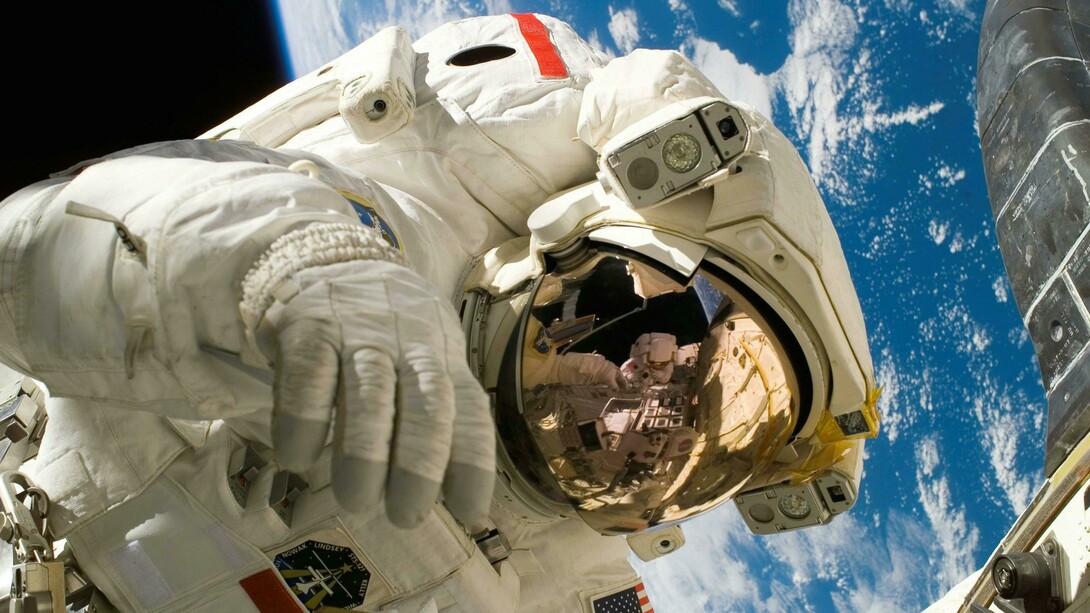
The profound ethical challenge of the Anthropocene is its scale: how can individuals comprehend the slow, catastrophic damage done to a planet too vast to grasp? Throughout history, the Sublime—that mixture of awe and terror inspired by limitless power—has defined our relationship with the natural world. Today, the most crucial sublime experience isn't found on a mountain peak or a stormy sea, but in the distant, critical perspective of Earth seen from space. This cosmic vantage point is a peak expression of the very "human exceptionalism and humanistic hubris" (Flisfeder 159) that initiated the Anthropocene crisis.
This perspective provokes a new form of awe: the Anthropocene Sublime, where amazement at our planet's beauty is instantly mixed with a sorrowful, crushing awareness of its fragility. Furthermore, this experience is often mediated by the technology that enables the journey—a key component of what theorists refer to as the Hysterical Sublime, which shifts the focus from the terror of nature to the awe and fear derived from advanced technology and its systems (Flisfeder 166). The following essay presents a reading of Samantha Harvey’s Booker Prize-winning novel, Orbital, through the lens of recent scholarly research on the Anthropocene and the crucial intake that literature offers this field.
Specifically, we will engage with Matthew Flisfeder's essay, "From Posthumanist Anaesthetics to Promethean Dialectics: Further Considerations on the Category of the Hysterical Sublime," to argue that Harvey uses the quiet isolation of the International Space Station to make the Anthropocene's ethical paradox inescapable. By translating the complex intersection of space exploration and climate crisis into a relatable human experience, Harvey compels us to trade the luxury of detachment for the immediate, urgent burden of planetary guardianship. Harvey's work functions less as a novel and more as a manifesto, utilizing aesthetic representation—the necessary medium of thinking—to structure and resolve demands for ethical action (Flisfeder 165).
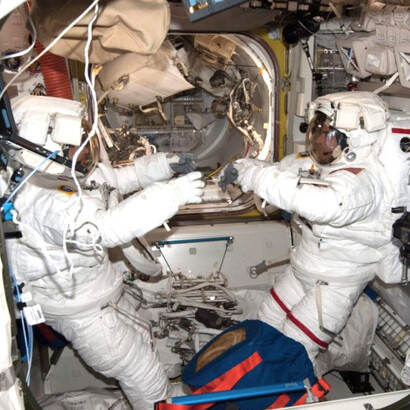
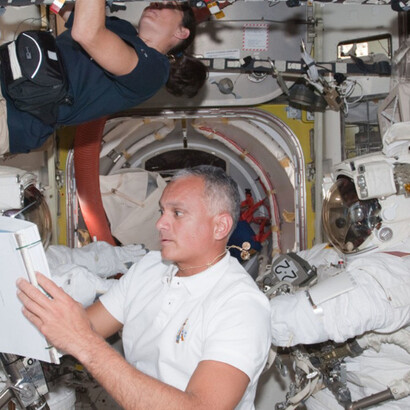
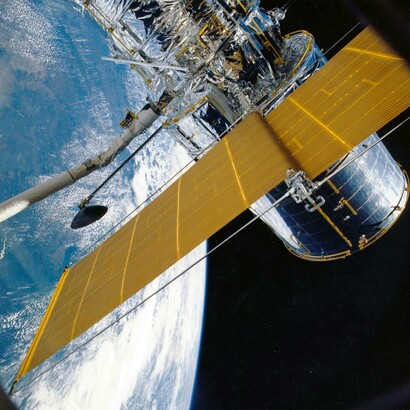
Samantha Harvey’s 2024 Booker Prize-winning novel, Orbital, is a profoundly introspective work centered on a single, seemingly unremarkable day in the lives of six astronauts aboard the International Space Station (ISS). Yet, from this distant vantage point—a place of quiet routine and constant peril—the novel mounts a powerful ethical and ecological inquiry. Harvey leverages the astronauts’ unique perspective to explore what their critical distance reveals about human life and its impact on the only home we have. The novel’s central thesis is that seeing Earth from space incites a new form of the sublime: one that provokes awe not only at the vastness of the cosmos but also at the fragility of our planet in the age of the Anthropocene.
In this way, Orbital functions as a poignant manifesto, using the physical separation of space to confront readers with their immediate, earthly responsibilities, thereby setting the stage for the ethical inquiries that follow.
The hysterical sublime: technology, awe, and the substitute fear
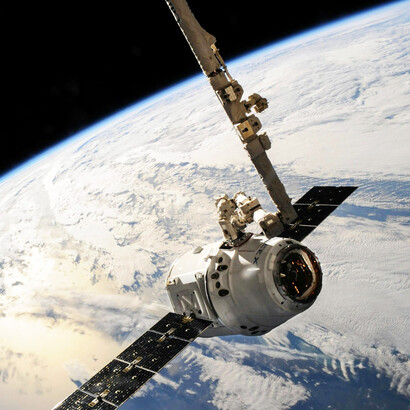
If the experience of the Anthropocene Sublime begins with the view from space, its ethical failure is rooted in the technological conditions that make the observation possible. The cosmic vantage point attained by the astronauts is less an encounter with raw nature and more an interaction with the Hysterical Sublime, an aesthetic category derived from the "awe, fear, and fascination felt from new technologies emerging out of advanced capitalism" (Flisfeder 166). The ultimate spectacle in Orbital is not the void itself, but the technological shield that permits the observation. Life on the ISS serves as a constant, stark reminder of this mediated existence: the astronauts are separated from "obliterated non-existence" (49) by a mere "four inches of titanium" (49). The metal shell of the space station, a monument to human ingenuity and expense, becomes a metaphor for the thin, life-giving atmosphere it hovers above, prompting the philosophical reflection that our lives are "inexpressibly trivial and momentous at once... We matter greatly and not at all" (121).
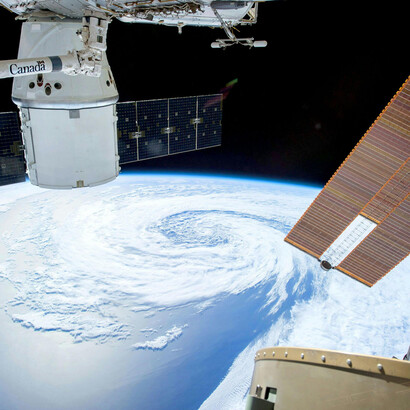
Crucially, the technological mediation fulfills the traditional function of the sublime, wherein pleasure is procured when one can "enjoy the dangers of nature from a safe and secure distance" (Flisfeder 164). This safe distance is structurally achieved in Orbital's depiction of a Category Four typhoon. From this detached vantage point, the phenomenon is initially framed as a sublime spectacle—a "planet made entirely of spinning cloud" (37) and a display of "defiance, strength, vivacity" (56). Yet, as theorist Frederic Jameson suggests via Flisfeder, this awe of technology often acts as a "substitute for the fears of the capitalist system" (166). In the novel, the immediate, visceral fear of micrometeoroids hitting the titanium hull subtly replaces the astronauts' more complex, underlying fear of the collapse of the earthly system, which is the true driver of the climactic disaster they are observing. Thus, the hysterical sublime facilitates a politically safe form of observation that threatens to replace meaningful action.
The Anthropocene and the delusion of escape
The technological detachment afforded by the Hysterical Sublime leads directly to a far more profound problem: the hubris that defines the Anthropocene. As Flisfeder's essay suggests, the contemporary crises are a direct result of "misguided conceptions of human exceptionalism and humanistic hubris" (159). Harvey uses the perspective from the ISS to dissect this specific form of hubris, first through the intensely emotional framing of Earth as the Mother—"a mother waiting for her children to return, full of stories and rapture and longing" (3)—and then by framing the environmental failure as the ultimate political failure.
The novel explicitly functions as a manifesto for the protection of earth, a call for action, directing its reproach at politicians who subvert planetary preservation through "noise and ego." This political critique leads directly to the ultimate act of Anthropocene hubris: the delusion of escape. The prospect of migrating to other planets—fueled by pro-space lobbyists and entrepreneurs—is imagined as a potential salvation, a new beginning: "Maybe against all the odds we'll migrate to Mars where we'll start a colony of gentle preservers..." (133). This vision of a Martian colony, which seeks to devise a new "planetary belonging," represents the ultimate ethical abdication.
The search for a "father" planet to compensate for the damage done to the "mother" is steeped in ethical ambiguity. The desire to secure planetary belonging on a new world is rendered by Harvey as a desperate flight from responsibility for the old one. Orbital thus critiques the imperialist rhetoric that defines human exceptionalism: the belief that humanity's dominion extends to the right to conquer a new environment rather than the duty to preserve the existing one, cementing the political and ethical failure that defines the Anthropocene.
Aesthetics as manifesto and call for planetary ethics
If the Hysterical Sublime risks producing political evasion through technological detachment, the novel's ultimate function as an aesthetic object is to provide the critical reasoning necessary to overcome this failure. Flisfeder notes that representation is the "necessary medium of thinking" (165), enabling a space to "structure and resolve demands for ethical action." Harvey achieves this by forcing the reader to grasp the core contradiction of the Anthropocene Sublime: the terror behind the spectacle.
The novel centers this aesthetic intervention on the Category Four storm, which initially appears as a majestic display of "defiance, strength, vivacity" (56). However, the narrator violently juxtaposes this detached awe with the devastating reality facing those in the Mariana Islands.
By making the reader aware of the terror behind the spectacle, Harvey facilitates the critical reasoning required to expose the moral flaw in the cosmic view, confirming that a truly ethical consciousness cannot afford the luxury of detachment. The novel, as an act of aesthetic representation, translates the complex intersection of space exploration and climate crisis into a relatable human experience, fulfilling the criteria for art to represent humanity to itself "in order to think and understand itself" (Flisfeder 165).
Ultimately, Orbital succeeds by using the quiet isolation of the ISS to amplify the urgent concerns of the Anthropocene. The novel explicitly critiques the delusion of planetary escape, portraying the concept of migrating to other worlds—explored as a potential salvation—as "maybe against all the odds we'll migrate to Mars where we'll start a colony of gentle preservers..." (133)—as a search for a "father" planet that is steeped in ethical ambiguity.
This search can only be read as a final, desperate flight from responsibility for the damage done to the "mother," thus critiquing the imperialist rhetoric that seeks to conquer a new environment rather than preserve the existing one. By translating the complex intersection of space exploration and climate crisis into a relatable human experience, Samantha Harvey urges readers to abandon the delusion of planetary escape and reconsider their attitude towards the natural world. The novel is a powerful call to action, demanding that we recognize the Earth not as a territory to be exploited, but as a fragile, life-giving miracle worthy of our immediate, collective guardianship.
References
Harvey, Samantha (2023). Orbital. Jonathan Cape.
Flisfeder, Matthew (2023). "From Posthumanist Anaesthetics to Promethean Dialectics: Further Considerations on the Category of the Hysterical Sublime" in Rethinking Marxism, A Journal of Economics, Culture & Society, 35:2, pp. 158–179.