English
 Español
 Français
 Deutsch
 Italiano
 Português
The human brain contains approximately 86 billion neurons, each connected to thousands of others through synapses, creating a network of staggering complexity that has long remained one of science's greatest mysteries. For decades, neuroscientists have dreamed of creating a complete map of every neuron and connection in a brain—a connectome that could reveal the fundamental principles of how consciousness, memory, and behavior emerge from neural activity. In 2024, this dream took a monumental step toward reality when scientists achieved something unprecedented: they mapped every single neuron in an adult fruit fly brain, creating the most detailed neural map ever constructed.
This breakthrough represents more than just a technical achievement; it marks the beginning of a new era in neuroscience where complete brain mapping could transform our understanding of intelligence, consciousness, and neurological disorders. The implications extend far beyond the laboratory, promising to revolutionize treatments for mental health conditions, accelerate artificial intelligence development, and potentially unlock the deepest secrets of human consciousness itself.
The fruit fly breakthrough: a complete neural blueprint
The completion of the adult fruit fly connectome in 2024 represents a watershed moment in neuroscience history. Led by an international consortium of researchers, this project took over a decade to complete and required cutting-edge imaging techniques, artificial intelligence algorithms, and unprecedented computational power. The adult fruit fly brain, containing approximately 140,000 neurons and 50 million synaptic connections, may seem modest compared to the human brain, but it represents an exponential leap in complexity from previous mapping efforts.
Prior to this achievement, the most complete brain map belonged to the tiny roundworm C. elegans, with just 302 neurons mapped in the 1980s. The jump from 302 to 140,000 neurons demonstrates the extraordinary technological progress in neural mapping techniques. The fruit fly brain controls complex behaviors including flight navigation, courtship rituals, learning, and memory formation—making it an ideal model for understanding how neural circuits generate sophisticated behaviors.
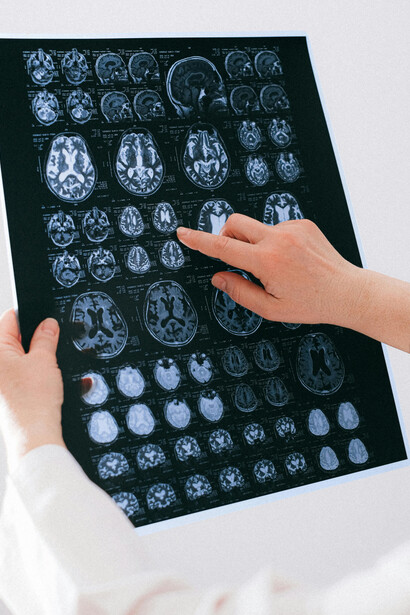
The mapping process involved slicing the fly brain into thousands of ultra-thin sections, each just 40 nanometers thick—thinner than a virus. These sections were then imaged using high-resolution electron microscopy, generating petabytes of data that required advanced artificial intelligence systems to reconstruct the three-dimensional neural architecture. The result is a comprehensive wiring diagram showing not just where neurons are located, but exactly how they connect to create functional circuits.
This detailed map has already begun yielding insights into fundamental principles of brain organization. Researchers have identified new types of neurons, discovered unexpected connection patterns, and begun to understand how specific neural circuits control behaviors like decision-making and motor control. The connectome serves as a reference atlas that researchers worldwide can use to understand how genetic mutations, environmental factors, or experimental manipulations affect brain function.
From microscopes to big data: the technology behind brain mapping
The technological revolution that made complete brain mapping possible represents a convergence of multiple cutting-edge fields, including electron microscopy, artificial intelligence, and high-performance computing. Modern brain mapping begins with sample preparation techniques that preserve neural tissue in exquisite detail while making it thin enough for electron beam penetration. Scientists use chemical fixatives and resin embedding to maintain cellular structures at the nanometer scale, followed by ultramicrotome sectioning that creates tissue slices thinner than soap bubbles.
High-resolution scanning electron microscopy forms the heart of the imaging process, with some instruments capable of achieving sub-nanometer resolution. These microscopes generate electron beams that interact with tissue samples to create detailed images of cellular structures, including cell membranes, synapses, and organelles. A single fruit fly brain requires approximately 100,000 individual microscopy images, each containing millions of pixels of information about neural architecture.
The computational challenges of brain mapping are staggering. Raw imaging data from a single brain can exceed 100 terabytes, requiring specialized storage systems and high-speed networks for data transfer. Processing this information demands artificial intelligence algorithms capable of recognizing cellular boundaries, identifying synaptic connections, and reconstructing three-dimensional neural structures from thousands of two-dimensional images. Machine learning systems must be trained to distinguish between different types of neurons, recognize synaptic vesicles, and trace neural processes across multiple tissue sections.
Cloud computing platforms and supercomputer clusters provide the computational power necessary for connectome reconstruction. The fruit fly project utilized distributed computing resources equivalent to thousands of desktop computers working continuously for months. Automated image analysis pipelines process raw microscopy data, while quality control systems verify the accuracy of neural reconstructions. Human experts provide oversight and correction for complex cases where automated systems struggle with ambiguous structures.
Data management and sharing represent crucial aspects of modern brain mapping projects. Standardized file formats and metadata systems ensure that connectome data can be accessed and analyzed by researchers worldwide. Interactive visualization tools allow scientists to explore neural circuits in three dimensions, while analytical software packages enable quantitative studies of network properties and connectivity patterns.
Neural networks: understanding the brain's information highway
The brain's neural networks represent one of nature's most sophisticated information processing systems, with principles that have inspired decades of artificial intelligence research. Understanding how biological neural networks encode, transmit, and process information requires detailed knowledge of both individual neuron properties and large-scale connectivity patterns. Complete brain maps provide unprecedented insights into these network architectures, revealing organizational principles that emerge only when viewing the entire system.
Neural networks in biological systems exhibit hierarchical organization, with local circuits processing specific types of information that feed into larger networks controlling complex behaviors. In the fruit fly brain, researchers have identified distinct modules responsible for visual processing, motor control, learning, and memory formation. These modules connect through specific pathways that allow information integration and behavioral coordination. The connectome reveals how sensory inputs are transformed through successive layers of processing to generate appropriate behavioral outputs.
Synaptic connections in neural networks show remarkable specificity, with individual neurons forming connections with particular partners based on molecular recognition systems and developmental programs. The strength and reliability of these connections determine how effectively information flows through neural circuits. Some connections serve as amplifiers, boosting weak signals, while others act as filters, suppressing irrelevant information. Inhibitory connections provide crucial balance, preventing runaway excitation and enabling precise temporal control of neural activity.
Network topology studies reveal that brain connectivity follows small-world principles, combining local clustering with global efficiency. Most neurons connect primarily to nearby neighbors, creating local processing modules, while strategic long-range connections enable rapid information transfer across distant brain regions. This architecture optimizes both computational efficiency and communication speed, allowing complex behaviors to emerge from distributed neural processing.
The discovery of specific circuit motifs—recurring patterns of connectivity—provides insights into fundamental computational principles. Feedforward loops amplify and sharpen responses, while feedback circuits enable memory formation and prediction. Lateral inhibition circuits enhance contrast and selectivity, while central pattern generators produce rhythmic outputs for behaviors like walking and breathing. These circuit motifs appear repeatedly across different brain regions, suggesting universal principles of neural computation.
The human challenge: scaling up to consciousness
Mapping the human brain presents challenges that dwarf even the monumental fruit fly project, with complexity differences that span multiple orders of magnitude. The human brain's 86 billion neurons form an estimated 100 trillion synaptic connections, creating a network roughly one million times more complex than the fruit fly brain. Current imaging and computational technologies would require centuries to map a complete human connectome using existing approaches, driving development of revolutionary new techniques.
Partial human brain mapping efforts focus on specific regions or reduced resolution approaches to make the problem tractable. The Human Connectome Project has generated detailed maps of white matter tracts connecting different brain regions, providing insights into large-scale brain organization. High-resolution imaging of small brain tissue samples reveals local circuit organization, while emerging techniques combine multiple approaches to build hierarchical maps spanning from synapses to entire brain regions.
Technological innovations specifically targeting human brain mapping include faster imaging systems, improved tissue preservation methods, and more efficient computational algorithms. Automated sectioning systems can prepare human brain samples more rapidly and consistently than manual approaches. Multi-beam electron microscopy systems capture images from multiple brain regions simultaneously, dramatically increasing throughput. Advanced artificial intelligence systems trained on fruit fly and other model organism data can more accurately reconstruct human neural circuits.
The ethical and practical considerations of human brain mapping extend beyond technical challenges to include questions about privacy, consent, and data sharing. Complete human connectomes would contain unprecedented detail about individual brain organization, potentially revealing information about personality, memories, and cognitive abilities. Establishing appropriate protocols for human brain mapping research requires collaboration between scientists, ethicists, and policymakers to ensure responsible development of these powerful technologies.
Despite these challenges, preliminary human brain mapping efforts have already generated important insights into neurological and psychiatric disorders. Comparing brain connectivity patterns between healthy individuals and patients with conditions like Alzheimer's disease, schizophrenia, or autism reveals how altered neural wiring contributes to symptoms. These findings provide targets for therapeutic interventions and improve understanding of disease mechanisms.
Medical frontiers: revolutionizing treatment through neural maps
Complete brain maps promise to revolutionize medical treatment by providing unprecedented detail about how neurological and psychiatric disorders alter neural connectivity. Traditional diagnostic approaches rely on symptoms and behavioral observations, often missing subtle changes in brain circuitry that occur years before clinical manifestations appear. Connectome-based diagnostics could enable earlier detection and more precise treatment of brain disorders, potentially preventing irreversible damage.
Alzheimer's disease research exemplifies the medical potential of brain mapping technologies. Current understanding suggests that protein accumulation disrupts specific neural circuits years before memory loss becomes apparent. Complete connectomes could reveal exactly which circuits are affected first, enabling targeted interventions to preserve critical connections. Therapeutic strategies might focus on strengthening vulnerable pathways or rerouting information through alternative circuits to maintain cognitive function.
Psychiatric disorders like depression, anxiety, and schizophrenia involve complex alterations in brain connectivity that vary significantly between individuals. Personalized connectome mapping could identify specific circuit abnormalities in individual patients, enabling precision medicine approaches tailored to each person's unique brain organization. Treatments might target specific neural pathways using focused stimulation techniques, avoiding the broad systemic effects of current medications.
Stroke and traumatic brain injury treatment could benefit enormously from detailed connectivity maps that reveal how damage propagates through neural networks. Understanding which circuits remain functional after injury enables more effective rehabilitation strategies that leverage intact pathways to compensate for damaged regions. Brain stimulation techniques could be precisely targeted to enhance recovery by strengthening alternative circuits.
Neurodevelopmental disorders, including autism and ADHD, involve altered brain connectivity patterns that emerge during development. Complete developmental connectomes could reveal how genetic factors and environmental influences shape neural wiring, providing insights into prevention strategies and early interventions. Understanding normal developmental trajectories enables identification of atypical patterns that may benefit from therapeutic support.
Artificial intelligence: when silicon meets synapses
The relationship between brain mapping and artificial intelligence represents a fascinating convergence where biological insights inspire technological innovation while computational tools enable biological discoveries. Complete connectomes provide unprecedented detail about how biological neural networks solve complex computational problems, potentially revealing principles that could enhance artificial intelligence systems. Conversely, AI technologies developed for brain mapping applications often find broader uses in machine learning and data analysis.
Current artificial neural networks, despite their name, bear only superficial resemblance to biological brain circuits. Most AI systems use simplified neuron models connected in regular architectures optimized for specific tasks like image recognition or language processing. Complete biological connectomes reveal the true complexity of neural computation, including diverse neuron types, complex connectivity patterns, and sophisticated learning mechanisms that could inspire next-generation AI architectures.
Neuromorphic computing represents an emerging field that attempts to build computer systems based on brain-like principles. These systems use analog circuits that mimic neuron and synapse properties, potentially achieving much greater energy efficiency than traditional digital computers. Detailed connectome data provides blueprints for designing neuromorphic systems that capture essential features of biological neural networks while remaining implementable in silicon technology.
Machine learning algorithms developed for connectome analysis often prove valuable for other applications requiring pattern recognition in complex, high-dimensional datasets. Techniques for identifying cell boundaries in microscopy images translate to medical imaging applications. Algorithms for tracing neural connections find uses in analyzing transportation networks, social media connections, and financial transaction patterns. The computational tools developed for brain mapping contribute to the broader artificial intelligence ecosystem.
The concept of artificial general intelligence—AI systems that match human cognitive flexibility—may require insights from complete brain maps to understand how biological systems achieve such remarkable adaptability. Human brains excel at learning from limited examples, transferring knowledge between domains, and maintaining stable performance across diverse environments. Understanding the neural mechanisms underlying these capabilities could guide the development of more robust and versatile AI systems.
Consciousness decoded: the ultimate frontier
Perhaps the most profound implications of complete brain mapping relate to understanding consciousness itself—the subjective, first-person experience of being aware, feeling, and thinking. Consciousness has long been considered one of science's hardest problems, with philosophers and scientists debating whether subjective experience can ever be fully explained by physical processes. Complete connectomes may provide the detailed biological foundation necessary to finally bridge the gap between neural activity and conscious experience.
Different theories of consciousness make specific predictions about neural architecture and connectivity patterns that complete brain maps could test. Integrated Information Theory suggests that consciousness corresponds to integrated information processing across neural networks, with specific mathematical relationships between connectivity patterns and conscious states. Global Workspace Theory proposes that consciousness emerges from competition between neural coalitions for access to a global broadcasting system. These theories generate testable hypotheses about which circuits should be active during conscious versus unconscious processing.
The relationship between brain connectivity and subjective experience remains deeply mysterious, but complete connectomes provide unprecedented tools for investigating these relationships. By mapping the same brain regions across individuals with different conscious experiences—such as synesthetes who experience cross-sensory phenomena—researchers might identify neural connectivity patterns that correlate with specific types of conscious experience. Comparative studies across species with different cognitive abilities could reveal evolutionary changes in brain organization that correspond to emerging conscious capacities.
Altered states of consciousness, including those induced by anesthesia, meditation, or psychedelic substances, offer natural experiments for understanding consciousness mechanisms. These states involve specific changes in brain connectivity that complete connectomes could map in detail. Understanding how different connectivity patterns correspond to different conscious states might reveal fundamental principles of conscious experience and potentially guide the development of therapeutic interventions for consciousness disorders.
The question of whether artificial systems could ever achieve consciousness remains hotly debated, but complete biological connectomes provide concrete targets for comparison. If consciousness depends on specific types of neural organization, then artificial systems would need to implement similar connectivity patterns and computational principles. This research might ultimately determine whether consciousness is substrate-independent or requires specific biological implementation details.
Future horizons: what lies beyond complete maps
The completion of the fruit fly connectome represents just the beginning of a brain mapping revolution that could transform neuroscience over the coming decades. Technological advances continue to accelerate, promising even more detailed maps of larger brains within increasingly shorter timeframes. Future mapping projects will likely target intermediate-complexity brains such as those of mice, zebrafish, and songbirds, each offering unique insights into different aspects of neural computation and behavior.
Dynamic brain mapping represents the next frontier beyond static connectivity maps, aiming to capture how neural circuits change during learning, development, and aging. Traditional connectomes provide snapshots of brain organization at single time points, but neural connections constantly change in response to experience and biological processes. Time-lapse connectome studies could reveal how specific experiences reshape neural wiring and how these changes support learning and memory formation.
Functional connectome mapping seeks to combine detailed anatomical connectivity with information about neural activity patterns during behavior. While structural connectomes show which neurons can potentially communicate, functional maps reveal which connections are actually used during specific tasks. This information provides crucial insights into how anatomical circuits generate behavioral outputs and how neural activity flows through networks during different cognitive operations.
Multi-scale brain mapping aims to integrate information across spatial scales from molecules to entire brains. Complete connectomes provide circuit-level detail, but understanding brain function requires knowledge of the molecular mechanisms that control neural activity, the cellular properties that determine neural responses, and the systems-level interactions that coordinate behavior. Integrative approaches combining connectomics with genomics, proteomics, and physiological measurements could provide a comprehensive understanding of brain organization and function.
The democratization of brain mapping technologies could enable distributed research efforts that collectively advance neuroscience understanding. Automated sample preparation systems, standardized imaging protocols, and cloud-based analysis platforms could make connectome generation accessible to research laboratories worldwide. Citizen science projects might engage volunteers in analyzing connectome data, similar to successful projects in astronomy and protein folding research.
Ethical considerations and societal implications
The power to map complete brains raises profound ethical questions about privacy, identity, and human enhancement that society must address as these technologies mature. Complete human connectomes would contain unprecedented detail about individual brain organization, potentially revealing information about personality traits, cognitive abilities, emotional tendencies, and even memories encoded in neural connections. Protecting this information requires new frameworks for neural privacy rights and data security protocols.
The potential for brain mapping to reveal or predict psychological characteristics raises questions about discrimination and social justice. If connectome analysis could predict predisposition to mental illness, learning disabilities, or behavioral traits, this information might be misused by employers, insurers, or educational institutions. Establishing legal protections against genetic and neural discrimination becomes crucial as these technologies advance toward clinical application.
Enhancement applications of brain mapping knowledge could create new forms of social inequality if access to cognitive enhancement technologies remains limited to wealthy individuals or privileged groups. Understanding how neural circuits support different cognitive abilities might enable targeted interventions to enhance memory, attention, or problem-solving capabilities. Ensuring equitable access to beneficial brain enhancement technologies while preventing coercive applications requires careful policy development.
The question of mental autonomy becomes particularly complex when dealing with complete knowledge of brain organization. If neural maps could predict or influence decision-making processes, this would raise fundamental questions about free will and personal responsibility. Legal systems may need to grapple with cases where detailed brain knowledge reveals factors that influenced criminal behavior or where brain interventions alter personality or decision-making capabilities.
International collaboration and governance frameworks become essential as brain mapping technologies advance rapidly across multiple countries and research institutions. Establishing common ethical standards, data sharing protocols, and research oversight mechanisms requires coordination between scientists, ethicists, policymakers, and international organizations. The global nature of brain mapping research necessitates collaborative approaches to ensure responsible development and application of these powerful technologies.
Conclusion: mapping the future of human understanding
The completion of the fruit fly connectome in 2024 marks a pivotal moment in the history of neuroscience, opening doors to understanding the brain with unprecedented precision and detail. This achievement represents more than a technological milestone; it signals the beginning of a new era where the fundamental mysteries of consciousness, intelligence, and neural computation may finally yield to scientific investigation. The implications extend far beyond academic research, promising to transform medical treatment, advance artificial intelligence, and deepen our understanding of what it means to be human.
The journey from fruit fly to human brain mapping will require continued technological innovation, substantial investment, and careful consideration of ethical implications. Yet the potential rewards justify these efforts: treatments for neurological and psychiatric disorders that target the root causes of disease, artificial intelligence systems that approach human cognitive flexibility, and, perhaps most remarkably, scientific insights into the nature of consciousness itself. As we stand at the threshold of the brain mapping age, we face both unprecedented opportunities and profound responsibilities to ensure that this knowledge serves the benefit of all humanity.
The neural networks that generate our thoughts, emotions, and experiences are finally beginning to reveal their secrets. Complete brain maps provide the foundation for understanding how biological systems create the rich inner worlds of conscious experience that define our humanity. As technology continues to advance and our knowledge deepens, we move closer to answering some of the most fundamental questions about mind, brain, and the nature of existence itself. The brain mapping revolution has begun, and its ultimate destination promises to transform not just neuroscience but our entire understanding of ourselves and our place in the universe.