English
 Español
 Français
 Deutsch
 Italiano
 Português
While I mostly write about cultural heritage, my articles for the next few months will centre around my second passion – astronomy. These articles will discuss the tidal locking of the moon to the earth (this piece), the physics of a supernova explosion, and an unconventional theory that suggests the Earth ‘stole’ its moon from Venus. Unlike cultural heritage, which is deeply embedded in our daily lives, these topics rarely (if ever) hold relevance for the average person. (But that doesn’t mean they’re not still fascinating subjects.)
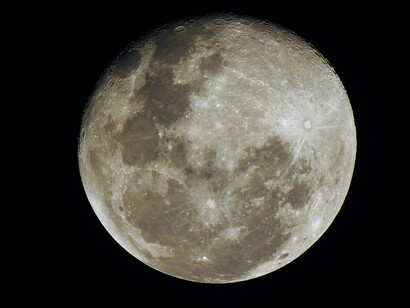
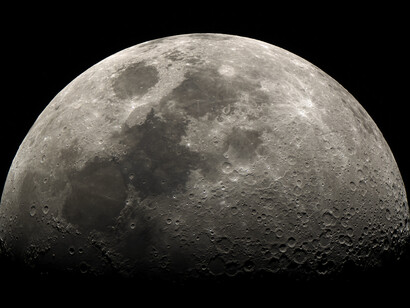
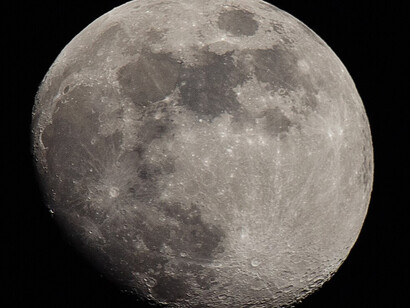
If you regularly observe the moon, you might notice that we on Earth only ever see the same side. Due to a phenomenon known as ‘tidal locking’, this side of the moon is always locked towards Earth due to a multitude of reasons, including the strength of the gravitational field itself, the evolution of our orbit, and the lengths of our two rotations. One of the most interesting aspects of this phenomenon is that the circumstances that led to the moon’s tidal locking to Earth will eventually, billions of years from now, result in the same locking of Earth to the moon. This means that the rotations of Earth and the moon will be perfectly synchronous, resulting in the same two sides perpetually facing each other. This is already the case with Pluto and its moon Charon.
The moon rotates on its axis every 24 hours: the same amount of time it takes it to circle the Earth. This is not a coincidence; this is the result of billions of years of lunar evolution into the slightly misshapen ‘sphere’ it is now. In fact, the moon is elongated, with a sort of handle on the side that perpetually faces Earth, allowing the gravitational pull of Earth to have something to grab onto (“Could you explain...”, 2016). The moon is shaped this way because of solid-body tides, which are similar to the way it affects the tides of Earth, but the Earth is affecting the solid mass of the moon, slowly sculpting it in a way that complements Earth’s rotation. Most of this shaping took place 3-4 billion years ago, when the moon was slightly closer to Earth, molten (and more malleable), and rotating on its axis faster (throwing more of its weight to the poles).
This same process affected Mercury when it was forming, leading it to become almost tidally locked with the sun (“Could you explain...”, 2016). Eventually it will be completely locked due to a combination of the slight deformation in its shape, ongoing solid-body tidal deformation, and an inclination to face its heavier side towards the body it orbits.
Once a celestial body (like a moon or planet) is tidally locked to another (like a planet or star), it is only a matter of time until the two bodies’ gravitational pulls cause them to lock synchronously, or rotate at relative speeds so the same sides always face each other. When this happens, it is generally called ‘gravitational locking’, because their “common center of mass … keeps the same side turned toward the other” (“Gravitational Locking”, n.d.). Facilitating this process, our moon is gradually drifting away from the Earth, increasing the length of its orbit. At the same time, the rotational period of the Earth is gradually slowing down, which leads astronomers to infer that the process of gravitational locking is beginning but likely will not be complete for a couple billion years (“Tidal Locking Could…”, 2011). In essence, tidal locking affects the shape of the moon by elongating it through solid-body tides, but the same effect is experienced (at a much lesser intensity) by the Earth.
Because the Earth is larger and heavier than the moon, it has a greater gravitational pull, but the moon’s gravitational pull is still present, only weakened. This results not only in the tides of Earth’s oceans but also in the body of Earth being distorted slightly. Tidal forces from an object with significant gravitational pull “will [actually] distort any body experiencing differential gravitational forces” (“Consequences of Tidal Forces”, n.d.), because the force necessary to hold the moon to Earth needs to compress it slightly as it maintains its hold. This distortion and evolution of the shapes of the two bodies is responsible for a small part of the heat within the Earth and moon, the same way a piece of metal will heat up slightly when bent repeatedly. This can have further effects on the body, like heating our oceans, increasing winds, and heightening its distortion during tidal locking.
There are several implications and interstellar applications of tidal locking that can be examined to predict its future effects on Earth and our moon, for instance, the locking between Jupiter and its moon Io, Pluto and its moon Charon, its effect on the habitability of a planet, and the consequences of the Earth hypothetically being locked to the sun.
The distortion of the moon’s surface (through solid-body tides) is also in effect on Jupiter’s moon Io. However, because Jupiter and Io are both so large, “the solid surface of Io is raised and lowered by perhaps hundreds of meters in each rotational period” (“Consequences of Tidal Forces”, n.d.). This is a different case than with our moon, because the core of Io is believed to still be molten, allowing it to change shape more readily.
The second instance of tidal locking is the synchronous locking of Pluto to its moon Charon. After billions of years of evolution and due to their small sizes, Pluto and Charon are perfectly locked in each other’s rotations, perpetually facing the same sides to each other (“Could you explain...”, 2016). Again, there are different circumstances at play than with our Earth and moon, because Pluto and Charon are closer in size to each other and are both very small, possessing little gravitational force to resist the tidal locking.
A third type of locking is of a planet to the star it orbits, which would result in one side of the planet being constantly lit while the other is perpetually in darkness (“Tidal Locking Could…”, 2011). Obviously, this would make one side of the planet much hotter than the other, significantly affecting its ability to support life. On planets with thicker atmospheres, the atmosphere could help to retain the heat and spread it around the planet, but planets with thinner atmospheres could actually see the air freeze, removing the atmosphere entirely (“Exoplanets could avoid…”, 2016). This kind of tidal locking occurs when a planet needs to stay close to its star (like an M-star, which is cooler, fainter, and smaller than our sun). The closer the planet is to the star, the stronger the effects of gravity, which can slow down the rotation time of the planet. In certain cases, the star can slow the rotation enough that the planet’s rotation time is the same amount of time it takes to orbit the star, synchronously locking the two.
When we observe the moon in our sky, it becomes clear that we always see the same face. As outlined, this phenomenon is not unique but reflects a broader process of gravitational interaction that slows rotation and reshapes bodies over time, producing synchronous rotation in planets and moons across the solar system. Tidal locking influences not just what we see in the sky but also the long-term rotational and orbital dynamics of planetary systems, with implications for tides, climates, and habitability on worlds both near and far. Eventually, billions of years from now, the Earth and moon will be synchronously locked, perpetually facing the same sides together. While we will not be around to experience it, it is a captivating idea to think about.
References
Clouse, C., Ferroglia, A., & Fiolhais, M. C. N. (2022). Spin‑orbit gravitational locking — an effective potential approach. European Journal of Physics, 43(3).
University of Tennessee, Knoxville, Department of Physics and Astronomy. (n.d.). Consequences of tidal forces.
Sten’s Space Blog. (2024, December 3). Could you explain what causes the Moon’s synchronous rotation?
Physics World. (2015, January 15). Exoplanets could avoid ‘tidal locking’ if they have atmospheres.
Redd, N. T. (2011, December 9). Tidal locking could render habitable planets inhospitable. Phys.org.
Gravitational Locking. (n.d.). Csep10.phys.utk.edu. Retrieved 11 January 2026 from University of Tennessee, Knoxville, Department of Physics and Astronomy. (n.d.). Gravitational locking (The effect of coupling).