English
 Español
 Français
 Deutsch
 Italiano
 Português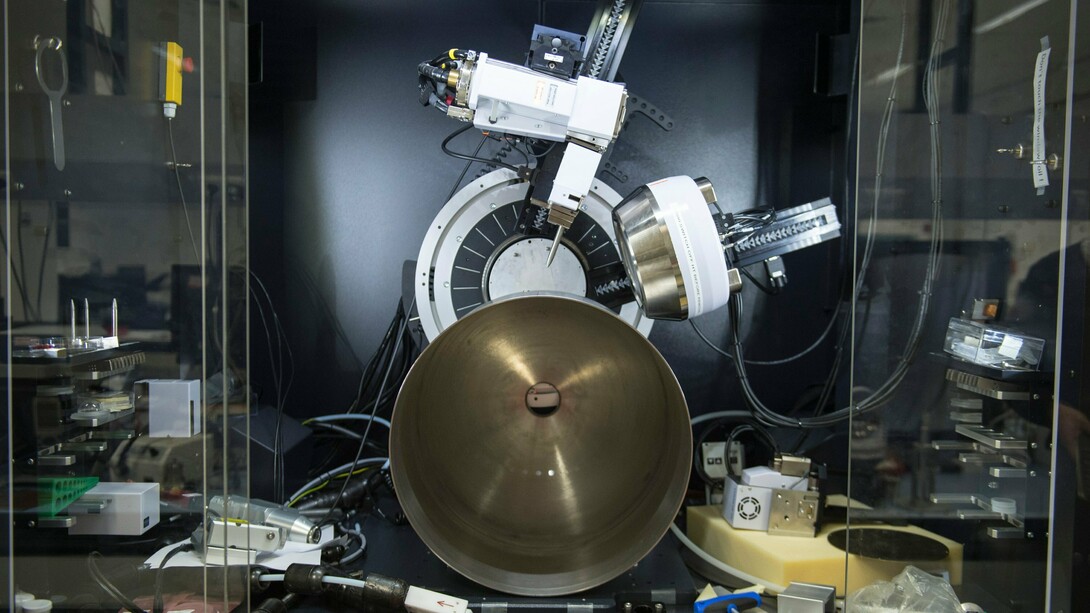
Residual stress is the unwritten specification of modern manufacturing and architecture. It is almost unavoidable, and its effect on a component’s long-term performance is critically important. However, unlike surface finish, dimensions, and material hardness, residual stress is rarely explicitly defined in engineering drawings.
While professionals design components to resist plastic deformation and fatigue cracks, they often fail to account for locked-in stress effectively. Although it is difficult to measure and specify, decoding is crucial for ensuring structural integrity and longevity.
Understanding the concept of residual stress
Residual stresses are the self-equilibrating stresses distributed within a metal object without outside forces. They are sometimes called “locked-in stresses " because they remain even after all the external loading forces are removed.
The three types are Type I, Type II, and Type II — macro, micro, and submicro. The first type is the average residual stress over a group of crystals in a material at the millimeter scale, the second looks at the variations between crystals, and the third concerns a single crystal, with respect to variations resulting from crystalline defects.
Every type of internal stress comes from a few sources. The first is nonuniform plastic deformation caused by machining processes such as cutting or grinding. They introduce permanent, uneven surface deformities at the submillimeter scale, resulting in localized stress concentrations.
Welding and heat treatment are also standard. They trigger phase transformations, which are changes in a material’s crystalline composition that happen when a metal is cooled or heated from an elevated temperature. Uneven expansion can create pockets of stress.
The benefits and drawbacks of residual stress
Internal stress can be beneficial and harmful. Tensile residual stress is characterized by a stretching effect, leading to elongation. Its compressive counterpart effectively squeezes a material. The former pulls the atoms of a material apart, while the latter pushes them together. Both produce a deforming force perpendicular to the object’s surface.
Stresses can be beneficial by enhancing strength, durability, hardness, or fatigue life. However, they are often responsible for various engineering problems, including delamination, stress corrosion cracking, and distortions.
At best, these changes make achieving the desired dimensions or tolerances challenging. At worst, they cause premature mechanical or structural failure. The most common outcome is reduced fatigue life1 led by tensile residual stresses. A structural engineering component can only withstand so many stress cycles before failure.
Tensile strength measures an object’s maximum resistance to being pulled apart by force. Stainless steel’s ability to stretch without breaking reaches 90,000 pounds per square inch2 (psi), while copper can only withstand 34,000 psi. Professionals can intentionally adjust material composition through alloying, grain refinement, or heat treatment to increase strength.
Since different metals have different thresholds, manufacturers and engineers should be mindful of internal stresses when building parts with alloys. In addition to tensile strength, they should consider properties like elongation, hardness, and coefficient of thermal expansion.
How different fields address locked-in stress
Residual stress in manufacturing can affect manufactured parts’ dimensional stability, resulting in warping or distortions during machining or use. Factories that produce an out-of-spec part will have to remake it, causing delays and incurring avoidable costs.
Engineers must consider residual stresses when designing components, especially those operating in corrosive environments or subject to repeated stress cycles. Although it is the “unwritten spec,” it is not enough to keep it in mind. Guesstimates can lead to inaccurate lifespan predictions and unexpected failures.
Residual stresses can influence the overall structural integrity and long-term performance of large buildings and bridges. Suppose architects do not collaborate with structural engineers to measure the locked-in stress of materials accurately. In that case, they face the risk of buckling, cracking, or a catastrophic failure, such as premature collapse.
How these sectors address internal stresses
While professionals can identify stresses at the macroscale by looking for visible cracks or surface deformations, they must use specialized instruments to measure nanoscale variations3 through vacancies or dislocation density at the atomic level.
The hole-drilling method is the most common destructive testing technique. As its name suggests, it involves drilling into a material and measuring the strain relief around the hole with a special strain gauge. Sectioning is another common method in which parts are cut into sections, and the resulting deformation is measured.
Nondestructive testing is more practical, although it may not be standard. X-ray diffraction measures a material’s lattice spacing, which relates to its stress state. These rays are high-energy and have short wavelengths, so they are excellent for probing crystalline structures.
Synchrotron radiation diffraction is similar but penetrates deeper, making it ideal for thicker components. This method generates a high-intensity X-ray beam4 with a synchrotron source to analyze a material’s crystal structure. It provides in-depth information about its atomic arrangement. Although more accurate, it is not widely available due to its higher cost.
Other advanced methods, such as neutron diffraction, face similar obstacles. Although they are highly effective, the instruments are pricey. This is why destructive testing methods like hole drilling are more common.
Addressing stresses before the design stage
Manufacturers can address locked-in stress before reaching the design stage by employing specific interventions during component shaping and finishing. Prestressing involves intentionally introducing residual stress to counteract applied loads, ultimately strengthening the material and increasing fatigue life.
Two common methods are stress relief annealing and vibratory stress relief. The first involves heating components to specific temperatures to mitigate stresses5, while the second strategically applies vibrations to redistribute internal stress. Professionals can also use shot peening or autofrettage to introduce beneficial compressive stresses intentionally.
By avoiding heat treatment mistakes and using advanced surface finishing methods, engineers and architects can further mitigate future engineering problems. Either way, they should design structures to be less sensitive to residual stress.
Building parts with the unwritten spec in mind
While residual stress is not a given, it is incredibly common and can be challenging to identify. Those who build devices, machines, or buildings with metals should be mindful of it during the planning, design, and production phases. Nondestructive testing methods can help them identify pockets of stress at the nanoscale level, informing their decisions.
Whether manufacturers are producing a metal panel for an airplane or civil engineers are planning to build a bridge, accounting for this type of stress is crucial. Their only other options are to develop without metals or accept premature structural failure. This highlights that nondestructive testing is clearly the superior choice.
Notes
1 Residual stress distributions and their influence on fatigue lifetimes at Science Direct.
2 Table of Properties - Metallic Materials at Seastrom Manufacturing.
3 Ultrasonic Angle Beam Calibration - Notches and Side Drilled Holes at NDT.
4 Synchrotron X-Ray Diffraction at Science Direct.
5 Stress relieving heat treatments for austenitic stainless steels at British Stainless Steels Association.