English
 Español
 Français
 Deutsch
 Italiano
 Português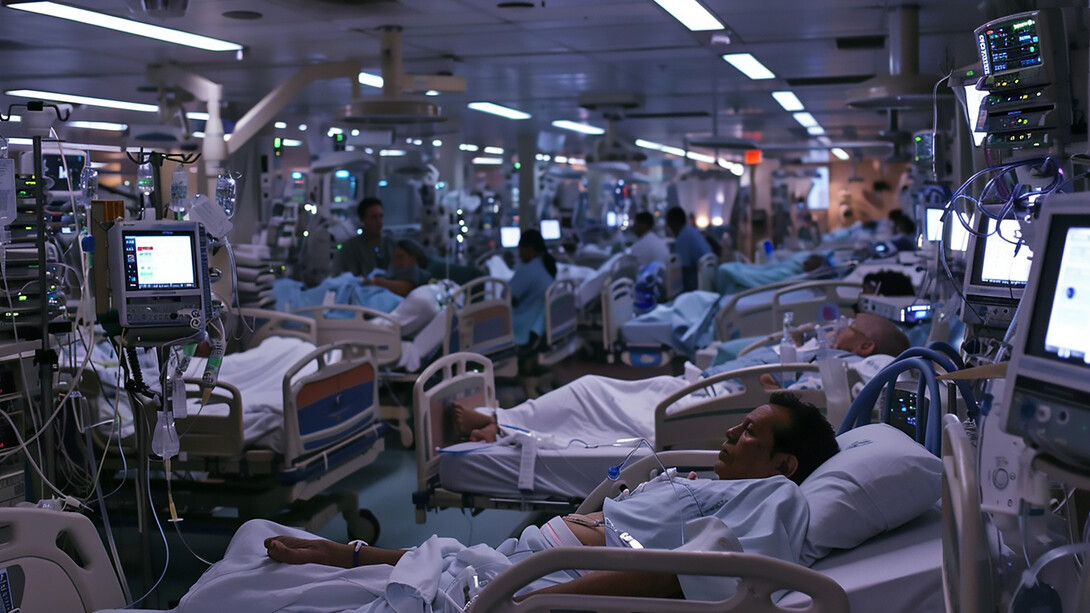
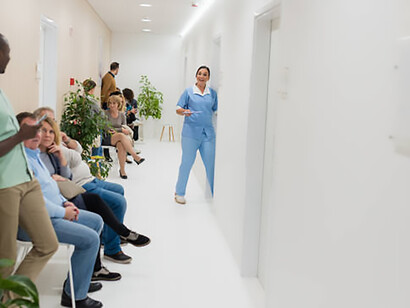
I walk through four narrow hospital corridors, each with more than five patients waiting in line for care. Doctors and nurses move quickly through the tight spaces, navigating stretchers, chairs, and families, trying to keep up with a steady influx of arrivals. Everything here runs on less—fewer nurses, fewer doctors—except for the number of patients: double, sometimes triple what the emergency department was designed to handle.
Walking these corridors feels like moving through Piccadilly Circus. The hallways pulse with movement, urgency, and tension, yet the wait remains. Porters carefully maneuver trolleys through the crowded corridors, threading between patients lying on stretchers or sitting beside loved ones.
Time here feels suspended, as if the corridors themselves are doors of perception—gateways to another dimension, almost like the shifting realities in William Black’s stories. Hours stretch, folding into one another: six, ten, even more than twenty-four, as patients lie in spaces originally meant only for transit. Ambulances arrive without pause, their sirens echoing down the hallways, while staff scramble to find enough trolleys and space.
Families and friends sit beside their loved ones, exhausted and anxious. A trolley circulates along the corridor, offering sandwiches, biscuits, coffee, and tea—freely provided to help soothe hunger and the anxiety of waiting for a nurse or doctor. It is a small gesture of care in a system stretched beyond capacity.
The cases have grown more complex. Mental health crises and drug-related emergencies appear to be on the rise, and police are more present than ever, accompanying both patients and, at times, suspects. The emergency department has become a stage where multiple crises intersect—medical, social, and legal—all demanding urgent attention.
This is a war without bombs. Its enemies are invisible, but they attack the body and the soul—both of patients and those who are there to fulfill the role of caring for the health of society. Doctors and nurses are on the front lines, facing an invisible assault of exhaustion, moral strain, and relentless demand.
Frustration here is daily and felt by everyone—patients, families, paramedics, and staff alike. It permeates the corridors, folding into every movement, every waiting moment, and every decision made under pressure.
This is one of London’s top-rated hospitals, yet its emergency department operates as if caught between calm and chaos. The corridors, once a passage, have become makeshift wards. Doctors and nurses perform their duties in cramped spaces, offering care wherever they can, while the clock ticks slowly for those waiting for attention. Here, the scale of the crisis is visible in the lines of patients, the constant arrivals, and the quiet determination of staff who must keep going despite impossible odds.
And yet, this hospital is not unique. Across the United Kingdom, hospitals are daily confronting the same dramatic reality—chronic frustration for tireless healthcare professionals and prolonged suffering for patients. “Corridor care,” ambulance delays, and overstretched staff are not anomalies; they are the routine in many A&Es, reflecting systemic pressures that show no immediate sign of relief.
Over the last decade, the pressure on A&E departments in England has escalated dramatically. From around 18.3 million attendances in 2012–13, the number rose steadily—reaching 27.4 million in 2024–25, an increase of about 27% (NHS Digital). On an average day, roughly 46,000 patients attend major A&E departments, with another 28,000 visiting minor facilities.
At the same time, performance against the national standard has collapsed. Where once the rule was that 95% of patients should be discharged, admitted, or transferred within four hours, now fewer than three in four (≈ 74%) achieve this target (NHS Digital). Thousands are left waiting in corridors, on trolleys, or even on the floor. Some patients endure waits exceeding 12 hours for admission, a reality that has become tragically common rather than exceptional.
The numbers tell a story of a healthcare system pushed beyond its intended capacity—but in these crowded corridors, the data becomes human experience. Every figure represents a patient lying on a trolley, a nurse stretching to care for ten, and a family holding vigil beside a loved one. The demand is structural, not incidental, and the lack of proportional growth in beds and staff has transformed temporary passageways into semi-permanent wards.
Hospitals operate in this suspended time, in a state of constant crisis, yet they remain the last bastions of care, dignity, and human resilience. Patients, families, and staff navigate a space where ordinary rules of time and capacity no longer apply—where waiting, vigilance, frustration, and compassion define every moment.
And now, with the arrival of winter, the number of patients is expected to rise—not only those seeking medical attention, but also people who know they can find temporary shelter from the cold within hospital walls.
In these corridors, the unseen battles of modern healthcare rage every hour of every day. The war is silent, relentless, and without medals, yet its toll is profound. Staff endure unimaginable strain, navigating chaos and exhaustion, yet they continue to deliver care, holding a fragile system together for the countless lives that depend on it. The collective applause that once echoed across the nation during COVID-19 is now silent, confined to the crowded corridors.