English
 Español
 Français
 Deutsch
 Italiano
 Português
The Moroccan-American Commission for Educational and Cultural Exchange (MACECE) promotes and facilitates academic and cultural exchange between Morocco and the United States through competitive scholarships for both citizens to study, teach, and conduct research in the other country. The commission plays a vital role in fostering mutual understanding between the two countries.
A board of six Moroccan and six American residents, all of whom serve without compensation, governs the commission. Board members are appointed, respectively, by the Moroccan Minister of Foreign Affairs and the U.S. Ambassador to Morocco, both of whom serve as honorary co-chairs of the Commission's board. The board meets several times each year to set policy and review the commission's activities. They also function as a selection committee to interview and choose candidates.
Fulbright programs in Morocco began in 1952 and were administered for many years by the U.S. Information Service (USIS). Between 1952 and 1980, 142 Fulbright scholarships were awarded to Moroccans. Many American Fulbrighters came to Morocco as lecturers, doctoral students, and researchers.
In 1967, a Cultural Relations Agreement was signed between the two countries "to encourage and further stimulate existing educational and cultural exchanges" and "to increase mutual understanding." Interest in educational exchange developed alongside increased American awareness of the diversity and richness of Moroccan history and culture, on the one hand, and Moroccan national development programs leading to graduate-level educational training in the United States, on the other.
Fulbrighters foster mutual understanding between the United States and Morocco
Fulbright provides the chance for international educational and cultural exchange experiences under the direction of the U.S. government and in collaboration with 160 nations worldwide. The cultural exchange between the Kingdom and the United States, two long-standing allies bound by a multifaceted and comprehensive strategic partnership.
The Fulbright Program has, for more than four decades, served as a fundamental bridge between Morocco and the United States, contributing to the promotion of understanding and cultural exchange. Through this program, which is a pillar of US public diplomacy, the two nations exchange knowledge and build enduring ties.
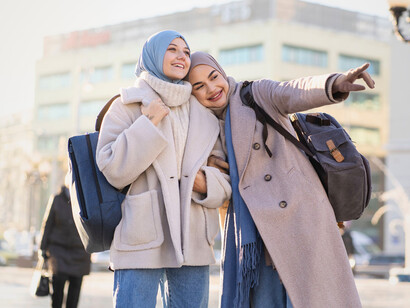
The impact of this exchange goes beyond research and academic collaboration, contributing to weaving rich ties between Moroccan Fulbright students and their communities in the United States, as well as between American Fulbright students and their communities in Morocco. Fulbright alumni serve as cultural ambassadors, helping to dispel stereotypes about certain cultures and regions and giving their American counterparts a true understanding of Moroccan culture and traditions, and vice versa.
The Moroccan-American Commission for Educational and Cultural Exchange's programs, through Fulbright, also support the educational reforms implemented by the Moroccan government. The Fulbright program provides a platform for the exchange of best practices, modern pedagogical techniques, and an expanded international network.
The impact of this program on economic opportunities in both countries: the governments of both countries have, for more than 40 years, reaped the benefits of this investment. Moroccan Fulbright graduates leave the United States with master's degrees, research publications, extensive pedagogical practice, and professional experience in multinational companies.
These programs also contribute to the formation of American leaders, as a number of American Fulbright recipients have become diplomats, government officials, leading academics, consultants, and businesspeople.
Morocco & USA health studies exchange cooperation
An exceptional learning experience is being offered through the student exchange program at the University Hospital in Fez, benefiting students of medical and paramedical fields. Balancing hands-on medical training with cultural immersion, this program brings a unique blend of education and personal growth. Today, through a Moroccan lens, follow the training journeys of Angelina, Robin, Adeba, and Nada.
With great passion and eagerness to learn, Adeba dedicates her training period to the Obstetrics and Gynaecology Department at Fez University Hospital. She attentively listens to explanations from specialists and makes a point of accompanying the medical team during their morning rounds with patients.
During her brief time in the Obstetrics and Gynaecology Department at Fez University Hospital, Adeba has gained significant professional and personal experience, as she herself describes it.
Angelina is a young woman passionate about medicine, aspiring to become a surgeon. She studies at the Preparatory School for Medical and Paramedical Professions in the United States, which provides her with a comprehensive education. Her training period in Morocco represents a valuable opportunity to explore and narrow down the medical specialties that truly captivate her.
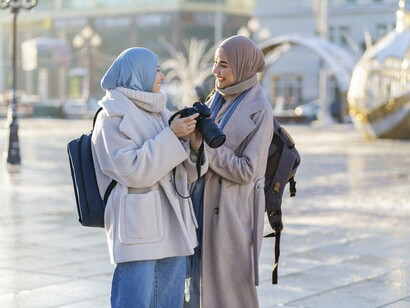
The medical exchange experience goes beyond the transfer of professional skills and knowledge; it also offers an opportunity to discover the culture of the host country.
The training paths of the American student delegation at Fez University Hospital are diverse, spanning multiple specialties. While Angelina is thrilled about meeting young Moroccan doctors who have supported her, we follow Robin to the Oncology Department, where innocence and childhood meet the essential psychological support for young patients and their families—a cornerstone for successful treatment.
The warmth of Moroccan culture, in both words and gestures, feels familiar to Robin, who is of Moroccan origin. Wrapping up our tour, we join Nada in the Ophthalmology Department.
With attentive steps and a constant smile, Nada explores the various equipment and devices used in patient examinations. From the examination room to the operating room, Nada gets an up-close look at surgical procedures—an opportunity she could only experience in Morocco.
The student exchange experience is rich and multifaceted, serving not only the trainee’s scientific and academic development but also contributing to the growth of their character, adaptability, and communication skills in an environment different from their own.