English
 Español
 Français
 Deutsch
 Italiano
 Português
The international order is undergoing a transition period that is rare in modern history, much like the period following World War II, when the world was rediscovering itself after the maps of power and the concepts of sovereignty, security, and influence had changed.
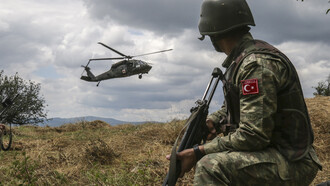
But the fundamental difference today is that the tools of conflict are no longer limited to tanks and aircraft but have moved to the fields of technology, economics, and information. Those who understand the inner workings of these matters realize that we are facing a new "Cold War”—multidimensional, not officially declared, but present in every international equation, from artificial intelligence to oil prices.
At this critical moment, it is our responsibility to visit regional hotspots in an attempt to understand the major shifts and ask the crucial questions.
The Middle East: fragile peace and a system on the verge of survival
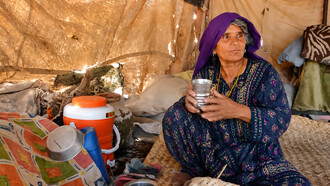
The 2025 Sharm El Sheikh Agreement, which stopped the bloodshed in Gaza, was a defining moment, not because it ended the conflict but because it revealed the fragility of peace. It is a peace closer to a truce between rounds of storm, as the roots of the crisis—from the absence of a Palestinian state to the continuing occupation—remain far from being truly addressed.
However, the most profound transformation in the Middle East lies not in war or peace, but in the very architecture of power. Small countries in terms of geography—such as the UAE, Qatar, and Israel—now possess tools of influence that exceed their traditional weight, thanks to their smart investments in energy, technology, and media.
Saudi Arabia, meanwhile, is rebranding itself as a pivotal force linking the economic ambitions of Vision 2030 with a return to balanced diplomacy on sensitive regional issues.
The most likely scenario is that the region is approaching the birth of a new Arab-Israeli security and economic order based on interests rather than slogans. However, the success of this system remains contingent on its ability to heal the Palestinian wound and contain Iranian ambitions within a stable regional balance of power.
Dragons versus eagles: China, the U.S., and the new strategic chessboard
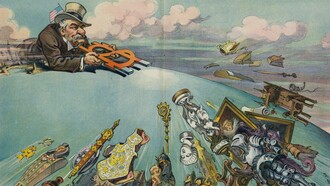
In this part of the world's strategic map, China stands alone today. Out of competition, so to speak, it not only competes with the United States but also seeks to redefine the very concept of global power. Its projects in artificial intelligence, semiconductors, and clean energy are not so much economic as they are new instruments of sovereignty that enable it to build a parallel system, more independent of the dominance of the dollar and the Western financial system.
Washington, meanwhile, is grappling with a dual imperial dilemma: how to deter Beijing in Taiwan and the South China Sea without being drained in the Middle East and Europe? It is a dilemma that every great power has faced when its capacity for control has gone above its reach.
Therefore, we are likely to see a calculated escalation in the form of strategic tests of nerves—maneuvers around Taiwan or deliberate maritime friction—through which China aims to normalize the idea of control without igniting a war, while Washington maintains a balance of deterrence without sliding into open confrontation.
Iran: pragmatism caught in an existential dilemma
Iran remains a complex puzzle in the regional equation—not because it is rebellious, but because it is an ideological-security project seeking to consolidate its influence from the Mediterranean to the Arabian Sea.
Tehran's nuclear policy is based on the principle of “approaching without touching”: approaching the nuclear threshold without actually crossing it, to maintain a deterrent that gives it negotiating weight and deters any pre-emptive strike.
The most likely scenario is that a new nuclear agreement is not only possible but necessary for both parties—Iran needs economic breathing room, and the US needs nuclear stability that allows it to focus on its major competitors in the Far East and Europe.
Africa and Latin America: silent arenas of hidden conflict
In Africa, especially in the Sahel region, the crisis goes beyond local security to a cold proxy war. Armed groups are transforming into cross-border networks, funded by regional and international powers to achieve undeclared interests.
The repeated coups in Niger, Mali, and Burkina Faso are merely a symptom of a deeper crisis—the collapse of the state and the weakness of its institutions in the face of foreign interference.
In Latin America, competition between China and the United States is returning to the forefront, not through guns but through investments and infrastructure.
China is extending its economic influence in Brazil and Colombia, while Washington is trying to regain the initiative in its “backyard,” where its ability to formulate a new discourse combining economics and values is being tested.
Strategic conclusion: a world without a centre, without poles, without safe havens
Multiple centres of tension mean multiple centres of decision-making. The world is no longer run solely from Washington, Moscow, or Beijing, but also from rising capitals such as Ankara, Riyadh, Tokyo, and Abu Dhabi.
Here, it is clear that medium-sized powers are shaping the equation. Superiority is no longer the exclusive preserve of those who possess weapons but of those who possess knowledge, technology, and the ability to tell the story.
Amid this momentum, a new world order is emerging from the womb of chaos. Yes, organized chaos, redistributing roles rather than eliminating them. To establish a post-hegemonic system, where major powers share responsibility and suspicion at the same time.
Until the end of 2025, the world will be tested more by will than by force. Those who read the trends before they become reality will shape the features of the coming system. What is happening today is not merely a shift in the balance of power but a transformation in the philosophy of the international system itself, from a logic of deterrence to one of interdependence, and from open confrontation to complex competition.