English
 Español
 Français
 Deutsch
 Italiano
 Português
In the whirlwind of wars, political conflicts, and divisions, it is difficult to discern the processes that are before our eyes. Digital spaces are shaping human interactions. First, the digital era has positive aspects such as the access to information in real time and many other benefits. However, we can’t deny the existence of negative aspects of the digitalization. The effect of technology is positive when it is used consciously and for human well-being. When technology is used limitlessly, recklessly, and unconscionably, it can destroy individuals’ morals and lives. And in parallel with the increasing scope of control of our movements and surveillance, which are the UN goals for a better world by 2030, and for our own good.
Economic inequality in the world is growing, and the proliferation of wars, increased controls, scanning documents, digitalization, and extensive data collection presented as necessary for security reasons, then as a means of control, have brought huge profits to companies that digitize our data, creating an invisible cage for all of us. In recent months more and more countries, including China, the EU, the UK, the US, Australia, and others, have introduced mandatory collection and digital scanning of fingerprints and facial photography upon entry, as if the biometric passports were not enough. And around three-quarters of all UN member states have introduced biometric documents, and the number of countries with digital IDs is growing. Accelerated digitalization in the area of movement and surveillance has advanced the most in China, while Finland was the first to introduce digital identity documents in 1999, and today there are around 130 countries.
The terms 'digital identity,' 'CBDC (Central Bank Digital Currencies),' and 'chat control' relate to different digital governance and technology initiatives, each with more unique implications for privacy, security, and government oversight. And there is a concern among critics regarding the potential of these technologies to be combined into a system with unprecedented surveillance capabilities. The underlying infrastructure of some digital identity systems could enable governmental surveillance and undermine the right to privacy if not designed with robust safeguards and could increase the potential of tracking and profiling.
The EU Digital Identity Wallet will be implemented and will be available to citizens, residents, and businesses by 2026. Chat control—EU regulation aimed at detecting and reporting child sexual abuse material (CSAM) online. And the most controversial aspect is the requirement for service providers to use client-side scanning or other prescription analysis, which would scan content on a user's device before it is encrypted, and this effectively undermines end-to-end encryption, creating a vulnerability that could be exploited by governments for broader surveillance and potentially leading to the end of online anonymity.
The concept raises significant debates about the future of digital freedom. Balancing act—The need to balance privacy with the need to prevent illicit activities like money laundering, terrorism financing, and online child exploitation. Integrating a traceability-focused CBDC (Central Bank Digital Currency) with a mandatory national or EU digital identity system combined with chat control that undermines encryption could create a system for monitoring both financial transactions and private communications, thus impacting fundamental rights to privacy and free expression. The EU promises easier and more digital use of EU citizens' savings but also is investing in a 'wall of drones' allegedly aimed at Russia to monitor all movements.
EU digital identity leads to profiling of people (e.g., who can easily rebel or who can be the leader), and such people could, for example, be restricted from accessing all networks by taking DNA data and forming a DNA index system. Without our consent, no one can have our DNA data; our DNA is the most intimate thing we possess. And there are no particular laws regarding its misuse. Also tracking our smartphones that record our movements and the use of credit cards, and up to the introduction of microchips. And from there, our complete surveillance is just one step away. Digitalization brings greater surveillance and also facilitates mass data trade. Digital networks, algorithms, and society focus on important challenges to democratic values posed by computational regimes, policing the freedom of inquiry and risks to the personal autonomy of thought. Digital networks allow surveillance by government and corporate entities. And there are over 11,700 active satellites in orbit around Earth, many of which are used for observation and surveillance purposes.
And each citizen’s daily ‘data exhaust’ can be used for manipulative and controlling ends by powerful institutional actors. Post-modern totalitarianism is vividly illustrated by China’s rapidly expanding projects of digital surveillance and social control. Social media and related digital tools (that enable people to search for, access, accumulate, and process information) have rapidly come to be regarded as a major threat to democratic stability and human freedom. Political analysts and human rights advocates use the term ‘digital gulag’ to describe a state system of total digital surveillance and social control. The ‘benefits’ of such a system are framed exclusively from the perspective of an authoritarian government seeking to control its population for its ‘own good.’ The primary objective is to regulate civic and political behavior by controlling access to rights and benefits.
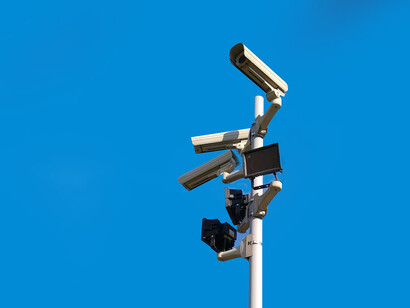
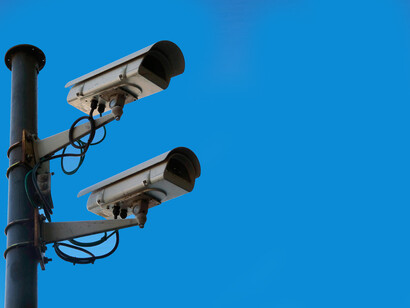
Digital systems enable pervasive monitoring of citizens’ activities, communications, and locations through apps, facial recognition, cameras, and data collection across various government and private databases (health, education records, and tax). Pervasive strategies can flood in organizations trying to manage individuals’ behavior, looking for the high performance of organizations. The consolidation of personal data into unified digital registries allows for efficient information exchange between state agencies using the process of identifying and punishing ‘undesirables.’ These features are considered severe human rights abuses that threaten autonomy, privacy, and democratic values. The digital ‘prison’ extends his idea to describe digital infrastructure that could potentially restrict personal freedoms and monitor behavior. Large corporations use the internet and social networks to collect data on potential users in order to create personalized advertisements.
Digital technology shapes our behavior. Digitalization influences, in some cases subtly, control human behavior through algorithms, daily activities, personalized feedback loops, and social interactions. Algorithms filter and prioritize content based on user behavior and preferences, creating 'filter bubbles' to influence decision-making. Features like 'likes' and notifications provide intermittent rewards that can foster compulsive device-checking habits and social media addiction. Algorithms support divisive content due to their focus on interactions, views, or clicks. But as individuals we have to use our human brains to take responsibility for ourselves, our reactions, the content we consume, and the content we put into the world. Data collection is primarily done to control our behavior and put us in a kind of digital prison and is also confirmed by the statements of the new head of the World Economic Forum and the CEO of BlackRock, Larry Fink, who once stated that people must be forced to change their behavior.
While Larry Ellison, the owner of Oracle and numerous media, stated, "Citizens will soon behave in the best possible way, because we are constantly watching them and recording everything that happens." Amazon, Google, Microsoft, and others have been collecting all kinds of data on the entire Arab population in the Gaza Strip for years... And only them? With software that tries to read emotions from the faces of residents on networks, by drones and cameras at checkpoints, all the data is used to feed artificial intelligence to select members of terrorist and other organizations. Providing a platform for a human behavior analysis to share vast knowledge on mind manipulation tactics by tech barons is invaluable and timely. The consequences are far-reaching. Digital chains—digital ID, CBDC, and chat control—are the blueprint for enslavement.
Relationship between digitalization and behavioral control...digital tools can have a positive impact, but their implementation requires a 'human-centered' and 'grace-based approach to ensure that they enhance human potential and well-being rather than leading to unintended negative consequences. The concept of 'grace' often refers to a call for more ethical, empathetic, and human-centric approaches to technology design and use to counter potential negative impacts and foster well-being and being human in a hyper-connected world with digital kindness. Digital grace is pouring benevolence into an outraged world. and provide a humanistic perspective on managing the effects of digitalization, emphasizing ethical and empathy principles and prioritizing human dignity and ethical standards and inclusivity over a profit-first mindset in the design and implementation of technology.
5G tech companies are prioritizing speed and profit over responsibility and quality. Conscious and purposeful use, instead of technology passively influencing us, 'digital grace' encourages us to be more conscious, sensible, and creative in the use of technology to improve relationships and well-being. The goal is to design interventions that support self-management and empower users, rather than control them. There was optimism that these dark forces could be contained and that democratizing effects of people connecting more freely and with diverse sources of information would outweigh authoritarian and criminal exploitation of the digital realm. Regulations and algorithms imposed by platforms limit autonomy in the digital domain (the Cookies quest).
AI workers, people who work behind the scenes, remind people that AI is not magic…and about the unreliability of the information and how environmentally damaging it is. The army of invisible workers behind have directly seen how these systems are cabled together, the biases, the rushed timelines, and the constant compromises. You, stop seeing AI as futuristic and start seeing it as fragile, emphasizing the idea that AI is only as good as what’s put into it, and what’s put into it is not always the best information. Not ‘doom and glum’ about technology, people don’t understand AI and see it as exciting and full of potential. AI is an ‘alien agent’ and is not trustworthy; we must build trust between humans.
Millions of superintelligent AI agents will interact with humans, and millions of AI agents will interact between them, and it’s unpredictable. Together we can control AI; if we don’t trust each other, AI will control us, and the world will be dominated by the most ruthless humans. We must build trust between humans. Trustworthiness at a large scale is built upon governments, courts, institutions, religions, corporations, and banks.
The technologies we developed always surpass us; trusting AI requires understanding its core logic. Let’s shift from trying to control AI to adopting it for our benefits. Unregulated AI will pose a threat to everyone and every nation. Tests have shown that LLMs (Language Learning Machines) are changing people’s beliefs. And as we know, privacy is a basic human right. Who will control and who will have the right to own all data about people? And who is Mark Zuckerberg to possess our data? And an AI agency, but whose agency? Proponents argue that with the correct approach and strong legal frameworks, these technologies can be implemented securely. And a robot is not ethical; it’s just a robot. And it’s better if we don’t buy new phones that have AI integrated in them and resist automatic updates that add AI integration, if possible, and do not tell AI anything personal. It is imperative to develop sufficient theoretical lenses and design approaches to humanize our informatic devices and environments.