English
 Español
 Français
 Deutsch
 Italiano
 Português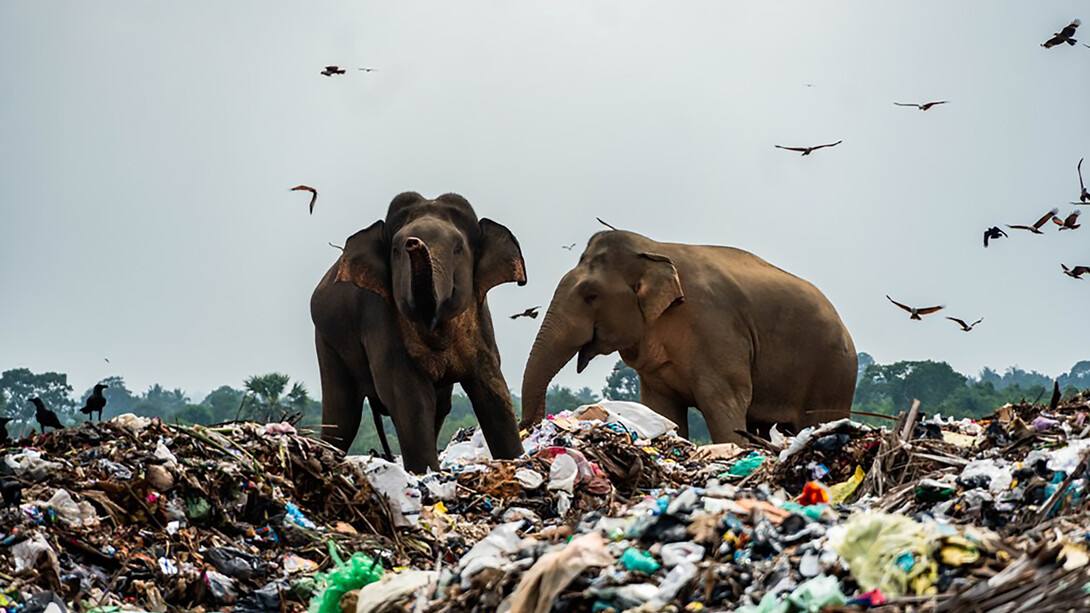
Do you ever get that feeling that we're just killing ourselves, slowly, but in plain sight?
The consequences of our pathological way of life are there for all to see, eloquently recorded month after month by scientists with no particular axe to grind, conscientiously reported on by mainstream media, and then almost entirely ignored by political decision-makers.
This was my overwhelming conclusion as I was following discussions at the big climate conference in Brazil in November last year. None of the science was in dispute—we're way beyond such crude denialism. Why, for instance, would anyone challenge the long-recognized fact that 75% of the emissions of greenhouse gases that are heating everything up come from the burning of fossil fuels? No one. So why did this incontestable fact not find its way into the final communique?
There is, of course, a simple answer to that: because Saudi Arabia, Russia, and a wider cohort of ‘petrostates’ would never permit such truths to be so widely shared.
It gets even more surreal than that. The (largely unchallenged) scientific consensus that we are headed towards an average temperature increase of around 2.5°C in the second half of the century was invariably described in Brazil as ‘good news’—because a decade ago we were looking at the likelihood of a 4°C increase. The fact that a 2.5°C increase will be utterly devastating for humankind, causing trillions of dollars of economic damage whilst displacing hundreds of millions of people, was rarely referred to—even to qualify in passing what we mean by ‘good news’!
But it's not just on the climate crisis that suicidal surrealism appears to be the order of the day. The changes in the way we feed ourselves are right up there—a ‘public health crisis’ unfolding as incontrovertibly in our midst as the climate crisis.
Bang in the middle of the climate conference in Brazil, a quite astonishing report appeared in The Lancet Child and Adolescent Health Journal, based on data from nearly 100 separate studies in 21 countries, involving more than 400,000 children. Headline conclusion: high blood pressure in children doubled between 2000 and 2020, primarily as a consequence of unhealthy diets, chronically inactive lifestyles, and soaring levels of obesity. As we know from adult statistics, hypertension (from high blood pressure) can be deadly. So the fact that more than 100 million children are now developing hypertension before adulthood (with tens of millions more affected by ‘pre-hypertension’) might have commanded a headline or two, a few ‘wake-up call weighty editorials.’
Not a bit of it. In fact, the report’s authors were struggling to get decision-makers to focus on their findings:
Persistent hypertension is a risk factor for early death due to damage to the cardiovascular system and other organs. The nearly twofold increase in childhood high blood pressure over 20 years should raise alarm bells. With trends like these, I fear that without urgent action, we are hurtling towards a public health emergency.
Ring any bells? Hurtling towards a public health emergency, while simultaneously hurtling towards a climate breakdown crisis.
Just a week after that little blockbuster, The Lancet was upping already very high stakes in its review of the impact of ultra-processed foods on health and general well-being. “UPFs are rapidly displacing fresh foods in regular diets on every continent and are ‘strongly associated’ with more than a dozen health conditions, including obesity, type 2 diabetes, heart disease, and depression. UPFs harm every major organ system in the human body—the evidence strongly suggests that humans are not biologically adapted to consume them.”
In both the UK and the US, more than half the average diet now consists of UPFs. Even more worryingly, for people in poorer areas, a diet comprising as much as 80% UPF is typical, including for children.
I hope you're joining the dots here. If not, let me share one final quote from the report's authors:
This change in what people eat is fuelled by powerful global corporations who generate huge profits by prioritizing UPFs, supported by extensive marketing and political lobbying to stop effective public health policies supporting healthy eating.
Every one of those ‘powerful global corporations’ is well aware that UPFs, in all their high-fat, high-salt, and high-sugar intensity, are addictive. They hack our brains, and the younger the people are, the more impactful the hack. We know how this works. And we know how profit-obsessed corporations work—with the record of the tobacco industry providing us with what now looks like an infinitely replicable playbook.
Addiction is not just experienced individually, one unfortunate individual after another. It can manifest societally. It's nearly 20 years since President George W. Bush (in his 2006 State of the Union address) warned that the US “must break its addiction to oil,” suggesting that “the best way to break this addiction is through technology,” and pledging huge increases in research funding for renewable energy and nuclear.
Well, the fossil fuel industries were obviously having none of that! Using their dominant position in all energy markets, near limitless amounts of money and other inducements were deployed to persuade politicians where their best interests really lay. Equally limitless amounts of money became available for marketing and advertising campaigns of every description, for sponsorship arrangements, and for high-profile charitable activities.
The vast majority of today's politicians in OECD countries have little interest in weaning themselves off fossil fuels. However critical it may be, this global ‘cold turkey’ will indeed be very painful, with a lot of economic damage needing to be managed. But the alternative is the same as with all addictive pathologies if not managed: death.
Perhaps campaigners like me don't always recognize just how hard it's going to be 'getting clean.' What we do understand, however, is that our addiction to fossil fuels is no more than a subset of the most deep-seated, universal addiction of all—to the cruel gods of economic growth.
There's much less popular recognition of this meta-addiction today than there is of its countless subsets—fossil fuels and UPFs being two of the most immediately life-threatening. That was not the case back in the 1970s, when the debate about ‘limits to growth’ was playing out vibrantly at the highest level in the UN, the World Bank, nation states, academia, and civil society.
I need hardly acknowledge here that all those advocates for recognizing both the physical and the socio-economic limits to growth lost that battle. Come the 1980s, turbocharged by the neoliberal ideology of Ronald Reagan, Margaret Thatcher, and countless ‘Dark Lords’ of the Chicago School of Economics, ‘growth at all costs’ had swept all before it.
Since then, it has become a quasi-religious dogma—a faith-based creed that has evolved beyond reason and scientific evidence. Every such creed needs its high priests and acolytes, and if you're not certain what that looks like today, just listen to the inane repetition of the ‘growth, growth, growth’ mantra of both Keir Starmer and Rachel Reeves here in the UK. The idea that progress can only be achieved through conventional year-on-year economic growth, and that the lack of such growth points to inevitable decline, is now seen as permanently fixed; indeed, it is “in our DNA.”
In the real world, however, it gets clearer by the year that this pursuit of growth is literally killing us, undermining the ecosystems on which we depend, and pushing us faster and faster towards climate breakdown. Most of the benefits of today's economic growth go to further enrich the already super-rich, whilst the vast majority of us are left to cope with all its disbenefits.
From a moral perspective, this has now become a Manichean struggle between an evil, material world of darkness on the one hand, with the vast majority of humankind trapped within an addictive dependence on growth at any cost, and an addiction-free, heroically liberated spiritual world of light on the other.
That might be overdoing the ‘big picture’ for some of you, but just think about it!