English
 Español
 Français
 Deutsch
 Italiano
 Português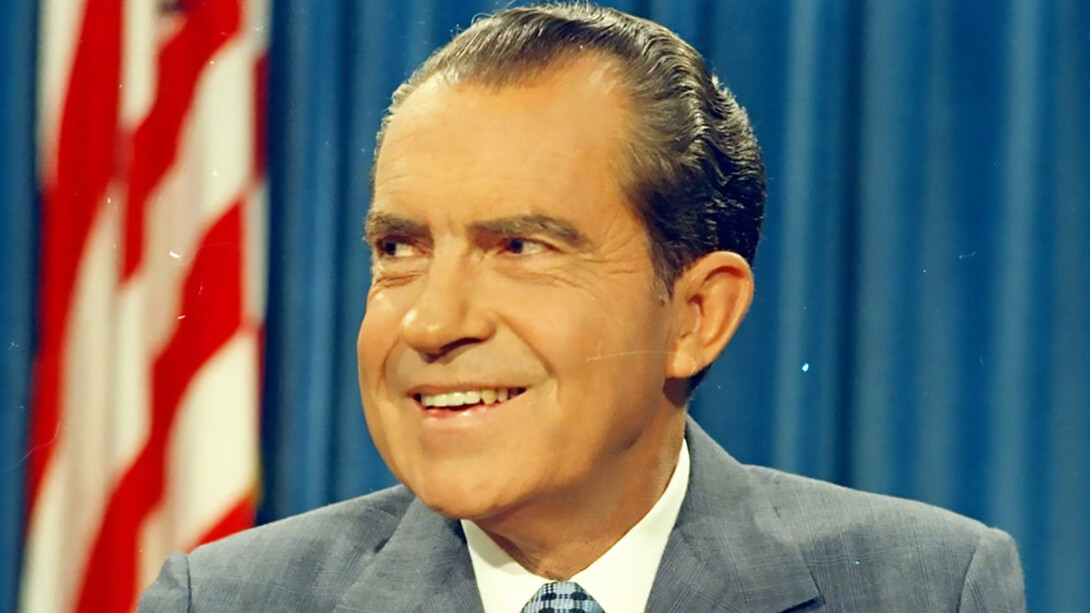
What if you're playing a game with your friends? And you need money for playing the game. So you decide that shiny rocks (hard to find) will be your currency. Everyone agrees. Now the shiny rocks are valuable. You can see them, touch them, and count them. Everyone trusts this system.
Now think if one friend says, "Rocks are heavy. Let's use paper slips instead! I'll write 'worth one rock' on each paper, and I promise you can exchange it for a real rock anytime."
But here's where it gets tricky...
The big switch
For most of human history, money was connected to gold or silver—real metals you could touch and hold. Under the gold standard, a country's paper money could be exchanged for a specific amount of gold. Now you have a receipt for real treasure in a vault.
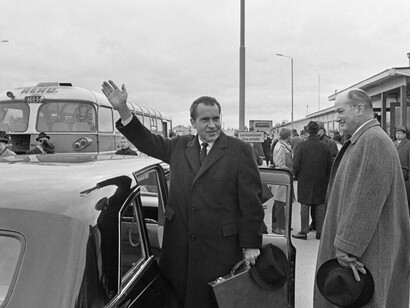
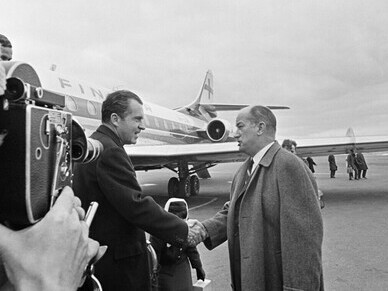
Back on August 15, 1971, something major went down. Nixon announced that the U.S. wouldn’t trade dollars for gold anymore. People later called it the “Nixon Shock.1”
Why? Well, other countries kept exchanging their dollars for gold, and the U.S. was starting to run low. Basically, they had printed so many dollars that there wasn’t enough gold left to cover them.
What Nixon did basically turned the dollar into plain paper money. It wasn’t backed by gold anymore—just by whatever the government said it was worth.
Impact after 1971?
Remember when I said this was like promising paper slips for rocks? Impact after 1971…? It got even weirder. The government stopped promising rocks (gold) at all. They just said, "Trust us, this paper is valuable."
And here's what happened to regular people:
Before 1971:
A person earning a median income could buy a home with about 2.5 years of savings.
Workers' wages increased when companies made more money.
One parent working was usually enough for a family.
CEOs earned about 20 times what average workers made.
After 1971:
It now takes over 7 years of savings to buy a home.
Workers' wages barely increased while company profits soared.
Most families need two parents working.
Now the CEOs are making 350 times what the poor class earns.
From 1971 the dollar has lost at least 87% of its buying power. Simply put, something that cost $1 back then would cost around $8 today.
Money for nothing
Assume you make a $100 bank deposit. Do you really think that $100 is safely kept in a vault?
Wrong!
Banks only keep a small part of deposits as reserves and lend out the rest. This is called "fractional reserve banking.2"
Here's how the magic trick works:
You deposit $100.
The bank keeps $10 (10% reserve) and lends $90 to someone else.
That person deposits the $90 in another bank.
That bank keeps $9 and lends $81.
This keeps happening...
From your original $100 deposit, the banking system can ultimately create up to $1,000 in new money!
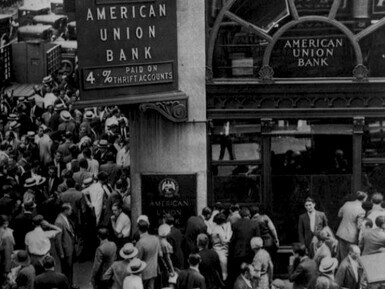
But wait—if everyone went to withdraw their money at the same time, there wouldn't be enough! This is why bank runs happen—too many people trying to get their money when it doesn't actually exist.
How this system traps poor people
Here's where it gets really unfair. This system helps rich people and hurts poor people:
How rich people win:
They own houses, stocks, and land.
When banks create new money, prices of these things go UP.
Rich people's wealth increases without them doing anything.
They can borrow huge amounts of money at low interest rates.
How poor people lose:
They mostly have cash or money in the bank.
As inflation erodes value, their savings become worth less over time.
Everything costs more (food, rent, gas), but wages don't increase.
They can't afford houses or stocks that would protect them from inflation.
Poor people are forced to go into debt just to maintain their standard of living.
The system is playing with you. They keep pushing people to borrow more and more and more because all the money in circulation basically comes from debt. Poor people are just like hamsters on a wheel. They keep running till death, but they never really get anywhere.
China is quietly collecting gold
I want to talk about here the rising economy of the world. While Western countries keep printing paper money, China is doing something very different—they're buying gold. Lots of it.
China's central bank added 44.17 tons3 of gold to their reserves (in 2024), bringing their total to 2,279.57 tons. But many experts think the real number is much higher.
China has been buying gold for 18 consecutive months, and some analysts believe this is part of a bigger plan.
China is reducing their reliance on the US dollar. They're the biggest gold producer in the world, and analysts estimate China's total gold holdings could be around 47,000 tons when you include state reserves and private holdings.
Why is China doing this?
Remember how I said paper money has no real value except the government's promise? Well, China seems to be worried about that promise. Gold is real. You can't print it. You can't create it from nothing.
In 2024, China's central bank secretly bought 570 tons of gold, contributing to gold's largest gain in global reserves in four decades. Some experts think China's actual gold reserves could be over 5500 tons4, more than double what they officially report.
Why am I telling you all this?
If you’ve got a piggy bank with some paper money. Your parents are like, “This is valuable! ” But honestly, every year it buys less candy than before. Meanwhile, your friend has been holding onto gold coins. Those things? They don’t really lose value. Sometimes, they even go up.
The paper money system works like this:
Governments can print as much as they want.
Banks can create money from thin air through loans.
No gold backs it up—just promises
Your savings lose value every year through inflation.
Poor people get trapped in debt.
China seems to understand:
Paper money can be printed endlessly.
Gold cannot be created—it's real and limited.
When people lose trust in paper money, gold will still have value.
By collecting gold now, they're protecting themselves for the future.
Final words
Now, from 1971, when Nixon ended the gold standard, the world has been running on paper money backed by nothing but trust. Banks create money from thin air through loans. This system makes rich people richer (their assets increase in value) and keeps poor people trapped (their savings lose value, forcing them into debt).
Meanwhile, China is quietly accumulating massive amounts of gold—the one thing that has been recognized as valuable for thousands of years, the one thing governments can't just print more of.
If I can explain this more, it’s the same as everyone playing with paper money while one smart player is secretly collecting all the gold. And when this paper money show stops… who do you think will be in a better position?
The biggest lesson? Money isn't what we're told it is. Since 1971, it's just paper backed by promises. And as China's gold buying shows, not everyone trusts those promises anymore.
References
1 Nixon Shock: Definition, Causes, and Economic Impact.
2 Fractional Banking.
3 China's gold reserves hit record high at end of 2024.
4 China Chases Gold Supremacy As It Builds A U.S. Dollar Alternative.