English
 Español
 Français
 Deutsch
 Italiano
 Português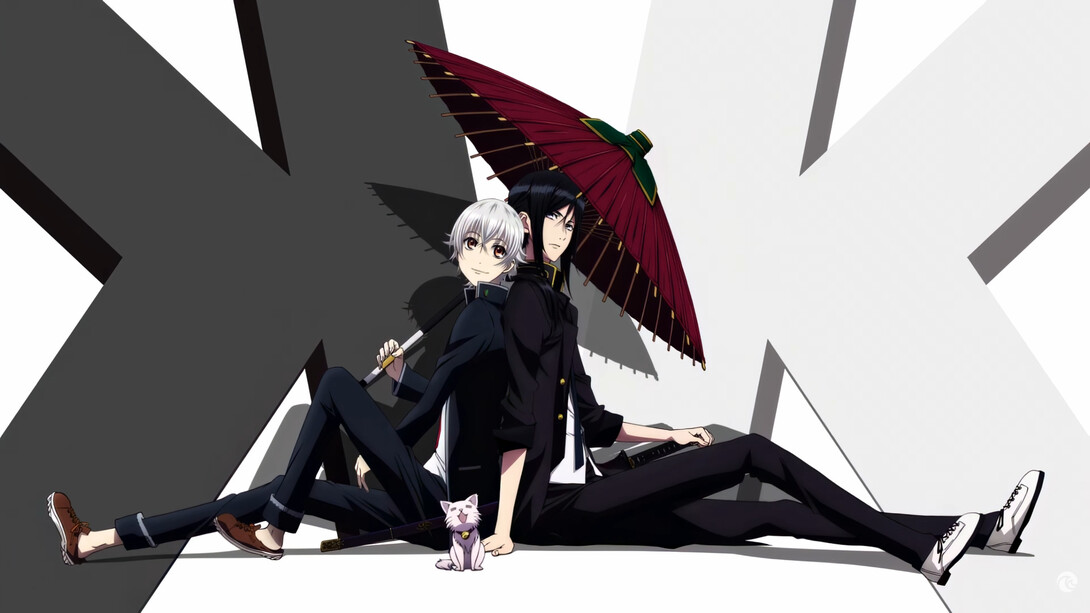
Anime, especially in the 2020s, is a medium known for pushing the envelope regarding visual fidelity and animation. Take for example, the overwhelming popularity of the anime adaptation of Koyoharu Gotouge’s Demon Slayer: Kimetsu no Yaiba manga, a series propelled into legendary status by ufotable, Inc. The adaptation of Demon Slayer is lauded as a masterclass in animation for its flowing, dynamic fight scenes and seamless incorporation of digital effects.
Anime and “good” animation
The 19th episode was described by Anime News Network as “a thrilling showstopper of an episode, showing off ufotable's considerable skills as producers of nearly unrivalled action spectacle,” further praising the animation as “absolutely incredible” (Beckett, 2019). Studio Bones’ adaptation of ONE’s Mob Psycho 100 is regarded as one of the best anime titles of the 2010s, and if you were to ask me, I’d describe the series as one of the shows that “complicates” the idea of having a Top 10 anime list before I wax lyrical and call it a “modern classic."
In the first-ever Crunchyroll Anime Awards, the first season of Mob Psycho 100 was nominated for eight different categories and won two: Best Action and Best Fight Scene, while its second season went on to be nominated for seven different categories and won another two awards: Best Animation and Best Opening Sequence.
When Crunchyroll ran a study titled “How Anime Became a Worldwide Cultural Force," together with the National Research Group in the US (NRG), they came to an interesting discovery—Gen Z is the generation with the largest proportion of anime fans of any generation in history. The study revealed that over half of this generation in the 3500 or so anime fans they surveyed were anime fans, out of a total 29000 “general entertainment consumers” from the US, UK, India, Germany, France, Brazil, and Mexico (Crunchyroll; NRG, 2025). Beyond this mind-blowing statistic, the study broke down how different generations interact with the medium differently.
For instance, in the great war of subbed vs dubbed, Millennials and Gen-Z had greater incidence of preferring to watch their anime with subtitles (34% each), while Gen-Xers were most likely to either have no preference either way (38%), or strongly prefer dubs (37%). When it came to the top driving forces that bring each generation to watch anime, 37% of Gen-Z cited high-quality animation as the main reason; compared to Millennials and Gen-X, where 42% of both groups put imaginative and creative storytelling above all else (Crunchyroll; NRG, 2025).
Poetry in motion: sakuga explained
The explosion in the association of anime with high-quality animation can be attributed to growing fan interest in the phenomenon known as sakuga. The term in Japanese refers to “animation” in Japanese, but is used by enthusiasts in other parts of the world to refer specifically to eye-catching moments of sublime animation characterized by sharp increases in quality (Cirugeda, 2015).
As an anime watcher gets more entrenched in the medium and develops their tastes, they can start seeing consistencies in productions credited to the same studios, like how Shaft is known for its iconic head tilt. A step beyond that is seeing the handiwork of a specific animator within the swathes of names found in the credits of their favourite shows. Another adaptation of a story created by ONE, One Punch Man (2015), is often seen as a key turning point in the direction taken with the animation of battle Shonen anime titles.
Studio Madhouse (NANA, Death Note), long known for their high quality productions, created a new wave of animation production enthusiasm within the fandom. These fans would go on to use the word “sakuga” in reference to a kind of dynamism and flair given to animation in certain scenes, but One Punch Man is by no means the first title to feature sakuga.
It goes beyond high-octane action scenes, and is more of the practice of animating. Sakuga can sometimes be a style recognizable as the work of a particular artist, which makes it like a personal touch or fingerprint of the animator (Cirugeda, 2015). Speaking of having a fingerprint in anime, there’s an anime studio whose productions are known for having a dizzyingly cinematic touch.
This approach is so apparent in the studio’s works that it has been the site of controversy among anime fans for quite some time despite some of its triumphs. Introducing the Japanese animation production studio, GoHands.
Introducing Studio GoHands
Established in 2008 by Ringo Kishimoto and other former employees of Satellite’s Osaka Studio 2, GoHands has come to be known as the studio with shows that look like that. The productions all feature both 2D and 3D computer generated animation to create a film-style approach.
Their earliest notable project is the adaptation of Tozen Ujiie’s yonkoma (four-panel) manga, Seitokai Yakuindomo (2010), a title popular for its brazen and sometimes crude humour; however, it wasn’t the kind of series GoHands came to be known for. One of the studio’s most popular productions is K, also known as K-Project (2012), a title that was praised for its character designs, visuals and interesting use of cinematic camera work.
Aidan Foote, writing for T.H.E.M Reviews, described K-Project as “a show with high production values: the action scenes are well animated, the art is even, the music has quality and an obvious amount of effort has gone into the whole aesthetic of the show”, going on to praise the character designs as well, saying, “the characters look fantastic and are well varied” (Foote, 2015).
A writer for The Artifice described K as “an anime that clearly places some importance on style”, further elaborating that it has “a distinctive look” and ultimately listing a few elements that contribute to the main thought of the review’s opening paragraph: K-Project is a series that is “remarkably beautiful to watch” (The Artifice, 2015).
The infamy of GoHands
While K-Project was a triumph for the studio, compliments for the show were largely skin deep, but this praise for the visuals serves as proof of the studio’s artistic ability. However, the release of Hand Shakers in 2017 is what kicked off GoHands’ reputation as the studio with dizzying camera angles, bizarre visuals, shocking effects and other strange visual decisions.
The anime had several issues when it came to story and characters, but the visuals came to be especially under fire. OtakuUSA describes the series’ visuals as “a mess of CGI, psychedelic colour work, and needlessly detailed over animation, a clear product of someone trying way too hard to look cool”, which is a scathing review, but the criticism continues, “the action scenes, which should be the highlight of Hand Shakers, are completely unintelligible” (Minto, 2018).
Hand Shakers has been brutally reviewed by anime fans and some even refer to it as the worst anime they have ever seen. I have seen much worse, but it’s likely the fact that it didn’t have to go in this direction that raises the standards expected by fans, especially when there was enough talent present in the studio to create something visually striking.
The complex camera movement for which the studio has become known, has become a meme; a go-to example of the dangers of overmixing in the context of anime production. “Everything about Hand Shakers' first episode was a trainwreck; the characters were rote and uninspired, the plotting was nonsensical, and the animation was so garish that it managed to induce literal motion sickness in a number of viewers”, lamented Anime News Network’s James Beckett in his review of the series’ first two episodes (Beckett, 2017).
Despite the fact that the techniques employed by GoHands in their productions are meant to impart the studio’s sensibilities, the expectation is also that these increase the level of visual interest garnered by the show in question. Unfortunately, their style has been increasingly mentioned in a negative light due to the ways in which the over animation detracts from the enjoyability of the production.
Sakuga, especially how it’s understood in the west, serves to add something notable and memorable to a production. In this era when it is becoming increasingly common for fans to watch an anime based on visuals alone, GoHands’ approach, with its complex camera movements, heavy post-processing and hyper-realistic backgrounds that have been described as inducing an “uncanny valley” kind of feeling.
In all honesty
One of the most interesting critiques of a GoHands production was Mack samson's review of Momentary Lily (2025), in which they described the series as not having anything controversial about its cinematography. The reviewer had a unique perspective as someone who stopped watching anime for a few years, especially seasonal titles, and also had no prior experience of a GoHands production but was aware of the studio’s notoriety.
“I eventually came around to the most plausible realization: that it’s the other way around. GoHands doesn’t make shows controversial by making absurd decisions in favour of artistic expression, but instead, makes their shows mediocre on purpose, and dresses them up as something that stands out to come off as an acquired taste” (Mack samson, 2025).
While I don’t like the visual choices made by GoHands; in fact, they’re enough to make me drop a show entirely like I did The Girl I Like Forgot Her Glasses (2023), a title I’d first enjoyed as a manga prior to the anime’s release.
I think there’s definitely room for a studio that chooses to create in this way, but it is the overstimulation present in these titles that has given the studio such a bad reputation despite having the ability to create titles with visuals that reflect their design philosophy without aggravating their viewers. If we bring this back to sakuga, what makes it stand out is the fact that it is a visual separation from the rest of the scene. It is an intentional, purposeful application of emphasis to increase the impact of particular moments or scenes, regardless of the emotion the studio intends to invoke.
I think that at best, the GoHands approach to animation could be seen as a gorgeous application of the exaggeration inherent to animation focused on the cinematography and environment rather than the movement of the characters themselves. This can be used in such interesting ways, especially where the narrative calls for it (imagine an anime series about an aspiring film director/camera operator).
There could be some benefit to sparse, less intense applications of the GoHands approach, but Mack samson's scathing appraisal of the studio’s biggest vice, the dressing up of mediocrity as something outstanding, might be the best summary of what makes GoHands’ production style so infamous – all that work in overcomplicating the most random visual aspects could be put into improving the overall narrative quality of the original stories they decide to bring to life.
Notes
Beckett, James (August 12, 2019). "Demon Slayer: Kimetsu no Yaiba Episode 19". Anime News Network.
Crunchyroll: Global State of Anime (2025) Ceros.
Cirugeda, Kevin. (Sep 30, 2015) “The Joy of Sakuga” Anime News Network.
Foote, A. Review of K, (2012).
The Artifice (2015). “Anime Review: K Project”.
Minto, Evan (2018). “Hand Shakers [Review]”.
Mack samson (2025). “I Return to the World of Anime… and I Drop the First Show I Watch after Two Episodes”.