English
 Español
 Français
 Deutsch
 Italiano
 Português
Final Fantasy Tactics was released on September 30th, 2025. The game is a story-rich gem from the 90s PlayStation One era. And as the game’s creator states, the game now feels more relevant than ever. The idea of fighting oppression and having a firm moral ground against the tides of history is a classical source of inspiration.
In this article, I want to give a reading of Final Fantasy Tactics that answers why the game’s themes resonate so much with its fans and what anyone can take from the game’s message. Specifically, we’ll examine what the “the ends justify the means” tenet says about contemporary politics, and what an anti-Machiavellian approach would offer in this situation.
Politics, power, and contemporary democracies
The world is changing rapidly, some might say. In the West, this is true for a number of reasons: war on European soil, tensions between the USA and the rest of the world, economic uncertainty, and the looming changes of technological advancement. To top it all off, AI-generated news, content, and imagery blend the lines between fact, possibility, opinion, and fiction into one seamless mass of overwhelming hyper-reality.
This is a culmination of things that were brewing for at least a decade; in reality, even this current “brew” was a response to politics, ideologies, and the new technological possibilities of the internet and the social media from previous decades. These new technologies enabled amassing power at unprecedented scales.
But this is an old story, as we do learn from history.
Politics has been dominated by the discourse of “ends justifying the means” for centuries, if not since its inception. This Machiavellian approach focuses on obtaining power by any means necessary. This power was supposed to serve the greater good, the one that establishes a stable state.
As history progressed, politics, and more importantly, the living, actual human beings these politics refer to, became a tool for obtaining more power just for power’s sake.
And this is the state of our democracies today. Resistance towards this is brewing, but it has yet to be articulated as a coherent ideology; social actors still need to unite under a single denominator to resist new oppressive forces. There are some exceptions – like the student protests in Serbia – so in this article we want to examine an alternative to the Machiavellian approach.
Machiavelli did not just “invent” his view on politics; for the most part, he wrote about it as he saw it. Even now, these ideas are true and relevant. But there’s nothing natural about them. As with any human-made ideas, they’re contingent and subject to change.
Setting the stage: 'Final Fantasy Tactics' and its political world
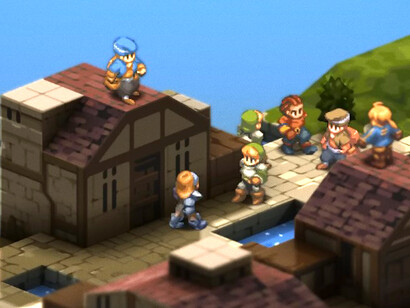
Final Fantasy Tactics is a tactical role-playing game developed and published by Square (now Square Enix) for the Sony PlayStation in 1997 (Japan) and 1998 (North America). The game was directed by Yasumi Matsuno, who also co-wrote the story alongside Hironobu Sakaguchi (creator of Final Fantasy) and Hiroyuki Ito (designer of the battle system).
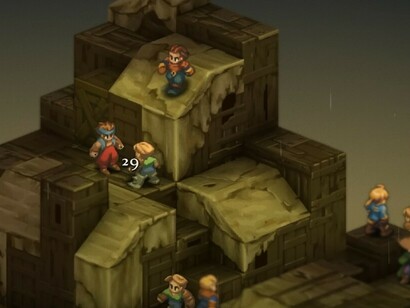
Final Fantasy Tactics follows the story of Ramza Beoulve, a young noble who becomes entangled in a brutal civil war sparked by the death of the king. Set in the war-torn medieval region of Ivalice, we know the resolution of this from the start of the game – this war ended when King Delita took the throne for himself.
Story of 'Final Fantasy Tactics'
In many ways, the premise of the game is set for the Machiavellian prince. This prince, however, is not the protagonist, Ramza, but Delita, Ramza’s childhood friend of lower birth.
Delita is a complex character – an anti-hero, schemer, murderer, and a triumphant, tragic figure; yet clearly necessary as a positive (future) leader of the kingdom. And indeed, the game states that history remembers Delita as such: a consolidator and a great ruler, purger of the corrupt elite, a figure that the future kingdom recognised as justful.
Unknown to the pages of history, we know he’s using manipulation and calculated ruthlessness to achieve his goals. He is the embodiment of the Prince ideal, using any means necessary to attain power, but ultimately, gaining legitimacy from the people whose interests he represents.
In contrast, Ramza’s contributions are left out of history.
In the game’s world, Ivalice, Ramza faces and fights a number of powerful prince-like figures. Machiavellianism is the norm, not an exception; the only difference is how powerful these pretenders are. Viewed like this, it’s the Machiavellianistic norm we want to tackle, not just a prince.
It were the actions Ramza took, along with his allies, that established the groundwork necessary for Delita to succeed and the kingdom to thrive. This was done by rejecting the established political power players altogether. This was a political move too, as it was no longer enabling the status quo. Instead, Ramza and his allies focused on personal ethics, integrity and accountability to lead their actions.
I think, at some level, everybody shares the opinion that the political figures, and our politics, are in dire need of those values.
I also think that they’d be far more effective now than before, precisely because the world’s problems cannot be tackled nationally but globally.
The ends justify the means
What are “the ends” of contemporary politics today?
It’s very difficult to know what the end goal of contemporary politicians is. At base level, the goal is to win the next election. If that’s the goal, then no wonder that the means are reduced to the politics of spectacle where choices are variations of the same. This is one of the reasons many believe Trump actually won: because he did offer something different, for better or worse.
“The ends”, however, refer to the actual policies as well, and these are a lot more cryptic. The ends are, in a sentence, utilized means, decisions made for the betterment of a society the rulers represent, the “greater good”. In some cases, like Putin’s decision to invade Ukraine, believing in these ends might become nonsensical.
Some of the narratives regarding the “greater good” on why Russia invaded Ukraine revolve around national security (NATO expansion), protecting the Russian-speaking population and “denazification of Ukraine”. All of these objectives sound valid; they have also objectively failed. What it comes down to is the will to power, disguised under the struggle for the "greater good" (the supposed national interest). We can speculate on the real reasons, like belief in weird Eurasianism and the multipolar world, or Putin’s alleged ambition to leave a mark on history, or the rare mineral incentive, and honestly, they’re just as believable as the “real” reasons. “Greater good” can mean anything.
Machiavelli was well aware that use of violence and deceit comes at a price. But if we’re all ready to pay the price, “the ends” often become self-serving and are not useful to anyone but the supposed Prince.
Without the “greater good”, the ends become the means for the Prince to maintain the position of power. This belief solidifies, and eventually occupies the public space even without any specific purpose. This is also the democratic norm now, a sentiment I believe a lot of us share.
Ramza highlights the importance of something else.
Political agency in a political structure
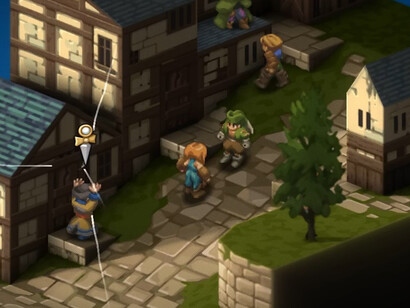
While witnessing the death of his childhood friend, Delita’s sister Tietra, at the hands of his aristocratic comrades, Ramza becomes disillusioned with the principle of “the ends justifying the means”. He feels something very wrong with “fate” having a say on who’s worthy to live. But even more important, despite not approving of Tietra’s murder, despite avenging her, he feels complicit. That is why he runs away and changes his identity.
This is a profound experience for a person playing the game. Not only were we present when Tietra was killed, but we, actual humans, put some actual effort into avenging this outcome. Why should we, as Ramza, feel responsible?
The answer is this: Ramza knows he’s a part of an unjust system that benefits him, and that his inactivity is the core way the system stays in place. His enjoyment of these benefits is what made him complicit.
And it is this ability to reflect on the sentiment, take decisive action and build his own power through this moral position that sparked the social change of the future. Ramza is well aware of the factuality of fate (meaning that we can’t escape being born into the world and a given position in it – the political structure), but he rejects the idea that fate has to create the factuality. He actively rebels not just against the structure, but also against the implication that “fate” has anything to do with it being just. He becomes the anti-Prince by refusing to justify his means with an undefined, unattainable, self-serving greater good.
The importance of this is highlighted by Delita. Delita has all the more motivation to change the unjust system. Yet unlike Ramza, he’s not questioning the system itself, just the arrangement of societal positions. He succeeds in changing the system, effectively becoming the societal position of a noble. His agency is contained by this inherently unjust political structure – he justifies the means with the greater good.
The Prince vs. the anti-Prince
The game’s narrative constantly explores the dynamics of power between the Prince and the anti-Prince. Below is the overview of the story, so be aware that there are spoilers.
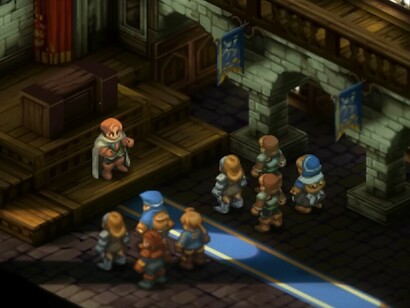
At first, Ramza is a noble, and Delita is a commoner; the next time they meet, Ramza is an expendable commoner knight, while Delita is a powerful Holy Knight. Delita has allies, yet betrays them one by one until the lonesome, triumphant end; Ramza starts alone but gains righteous, powerful allies who follow him until the bitter end. Delita's final achievement – saving the kingdom – is hollow and soaked in blood and loneliness. Ramza’s final achievement – saving the world – is hidden from history and acknowledgement, but fulfilling and connected with his comrades.
Who won between the two?
This is something for the reader, or a player, to decide.
Safer To Be Feared Than Loved
What can we conclude about contemporary politics from the game?
Firstly, that inactivity is a political activity. Staying silent on injustice, romanticising it through “greater good” or ideologies we see as fate is just as idealistic as being on the moral high ground like Ramza. The issue is that it’s far more common.
This approach also means embracing the possibility that maybe we do not have all the answers for the future. But we are very well aware of what’s wrong now, and we’d need someone to represent this.
This is why personal integrity is more than ever a crucial component of any future political leader. At this point, integrity is not just idealism; it’s a (marketable) necessity in order to stand out from the norm.
And this is reflected in Eurobarometer statistics of trust towards the EU and their national governments. The data shows that 52% of people trust the EU government – a trend I believe is declining day by day – but the more interesting point is that 36% of people trust their national governments. For some context, there are just a few countries pulling this above, with just a few over 50%. Distrust towards national governments is the norm.
More context highlights something of extreme importance. “Three quarters of respondents (75%) – the highest level in more than two decades – say they feel they are citizens of the EU.”
Pressures from the outside have consolidated the idea of European identity. There is an empty power spot for the European leadership found in that audience. This ideology needs to be articulated by answering, what would be the “greater good” of this European leadership? What values does the E.U. represent? Answers will be found after the questions of Ukraine support, Israel-U.S.A.-Palestine support and, after those, the question of lithium mining in Serbia.
Until some points are elaborated, I think acting and representing what is “just” would be a great starting point. This is also what we can learn from the game’s storyline.
Ramza consistently refuses to commit injustice, even when it would personally benefit him or "make things easier". When there is no “greater good”, or when the greater good is not good, it is the means that justify the ends. This is the starting point to counter the banality of evil that looms among us.
Secondly, the Prince, despite being positioned here against the more positive “anti-Prince”, is not necessarily an evil figure. It becomes this when the greater good is hollowed out of meaning. But the point here is not that the Prince has to be a “Dark Prince” or a monster. The redeeming quality of the Prince is that they see the issues and act on them. In other words, they are fighting for an elaborated future, an ideology or a “greater good”. This further pushes the questions of alternatives. This is Delita’s figure and a useful thought experiment between these two dynamics.
Notes
Madsen, H. (2025, June 21). “Final Fantasy Tactics” creator asks whether those who fail can become happy. Inverse.
GESİS, Leibniz Institute for the Social Sciences. (n.d.). Eurobarometer Data Service: Opinions and trends in Europe.