English
 Español
 Français
 Deutsch
 Italiano
 Português
Many times, the art and business worlds embrace and share ideas. Sometimes, the foundation that germinates in good artistic grounds and business projects springs from brilliant minds that seek an aesthetic intention or a corporate goal. The truth is that when an intelligent person detects a need, they have discovered the great vein that can bring success. Lucid minds are appreciated in all areas.
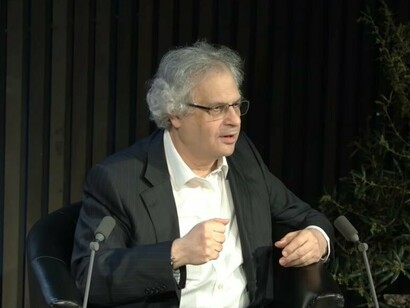
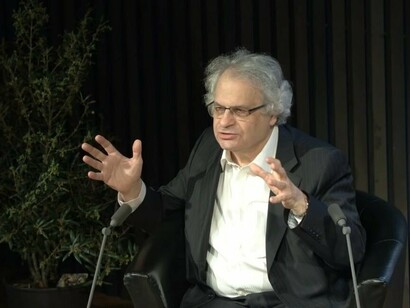
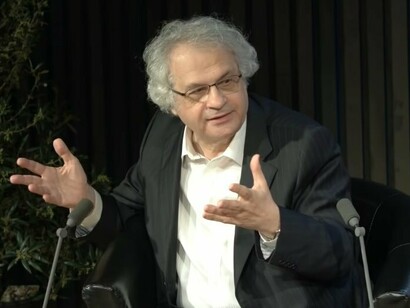
I was fortunate enough to interview Mr. Amin Maalouf, in the surroundings of the Guadalajara International Book Fair, he is the winner of the FIL Prize and he told me that literature is the vehicle for a present and a future with more hope "Literature is more indispensable than ever", especially now that we live in the era of social acceleration and artificial intelligence. Obviously, in the artistic field, this is pertinent, and to my great amazement, it is also relevant in the business environment.
It filled me with surprise and joy to talk with an affable, calm man with a lucidity that gave me hope. Amin Maalouf is a man committed to our time. "Writing and reading are part of the development of critical thinking; reading is not an act of consumption, but the trench of the uncomfortable, where a conversation takes place between the book and the reader." Indeed, excellence and innovation are the favorite children of critical thinking.
With my bad French and his excellent disposition, we managed to communicate, something difficult in our time. A Mèxic salvem les nostres paraules —In Mexico, we save our words," he said. Amin Maalouf arrived with a white scarf over a dark suit and a gray mane that refuses to remain flattened. On the one hand, he had no qualms about expressing the admiration he has for technological discoveries, which allow me to have "at my fingertips, at any time, all the knowledge of the universe; that I could talk face to face with my children and grandchildren, on the other side of the planet; that he could participate in a conference in Milan, in Mexico"; on the other, he pointed out that he would never have thought that violence would continue to increase, that democracy would be weakened, that wars were not going to disappear.
But, Maalouf told me very clearly that he still has many reasons for hope, despite what he has seen throughout his life. "We will never return to the world of before," he said without bitterness, "We can regret it or celebrate it, but in any case, we must be aware of it in order to move forward." He recognized the importance of collective effort to overcome the challenges of the moment, which move at breakneck speed, and it is the task of humanity to rise "above its greed, its selfishness, its prejudices." He trusted in one of the missions of literature, which can lead to two paths. "Either we survive together, or we disappear together... Because it is it [literature] – that is, all of us – that is up to repair the present and imagine the future."
And, in the same way that literature is responsible for looking at the present and imagining the future, it is up to the executives of large corporations, the entrepreneurs who manage local projects, the leaders of broad industrial portfolios, the managers of specific portfolios to compose what is wrong in the here and now to elucidate how we are going to adjust our paths to generate a better future. In these moments of high uncertainty, we cannot place the responsibility on anyone but ourselves in our field of action.
So, does literature save? I asked him, and with great tenderness, he answered yes and shared a secret: everything begins with a question, the question that inhabits your mind, the one that you ask yourself when you wake up, the one that accompanies you all day, and is the last thing you deal with before falling defeated by sleep. That question that makes us humans and not machines that refer to information.
And, it is at that point where art and business converge. It is the questions that inhabit our minds that aim to give an answer and purpose to our business plans, to our projects, regardless of their size. When we start something, when we generate an initiative, we have a question for which we are looking for an answer.
Such questions are the manifestation of a curious mind that longs to find answers. The search and encounter with these answers give us purpose, generate a route, and help us understand how far we are.
For Maalouf, those questions, yours and mine, are the salvation from an indifferent and violent, racist world that hates the different. A curious mind is the one that allows itself to be inhabited by these questions, the one that takes the time to find these answers, the one that, when it finds them, reflects on them and evaluates them to see if they are true or not, and once that evaluation is justified, makes them its own. Isn't that the critical path of thought we should follow when starting any initiative? Stopping to think about the questions that arise when looking for a new job, to open a new branch, to close a business, to start a new strategy, to move is what we should be obliged to do, instead of tearing ourselves away like fools and madmen. If we know the question and we know the answer, it is more difficult for us to deviate.
What is the question that lives in your mind, Mr. Maalouf? I had to ask you. With a kindness and sweetness that is reflected in his eyes and a smile that filled his entire face, he replied that his question revolves around what the future of humanity will be. And my reflection always finds reasons for hope, he told me. Neither economic uncertainty nor political manipulation nor risk in business nor the onslaught of progress has taken away that optimistic perspective. Optimistic but not naïve.
I said goodbye with a soul full of joy for having spoken with a wise and profound man, one of those that we need so much today. And, just as I was leaving, Maalouf stopped me and asked me: Excuse me, what is the question that inhabits your mind? And that same question is the one I pose to you.