English
 Español
 Français
 Deutsch
 Italiano
 Português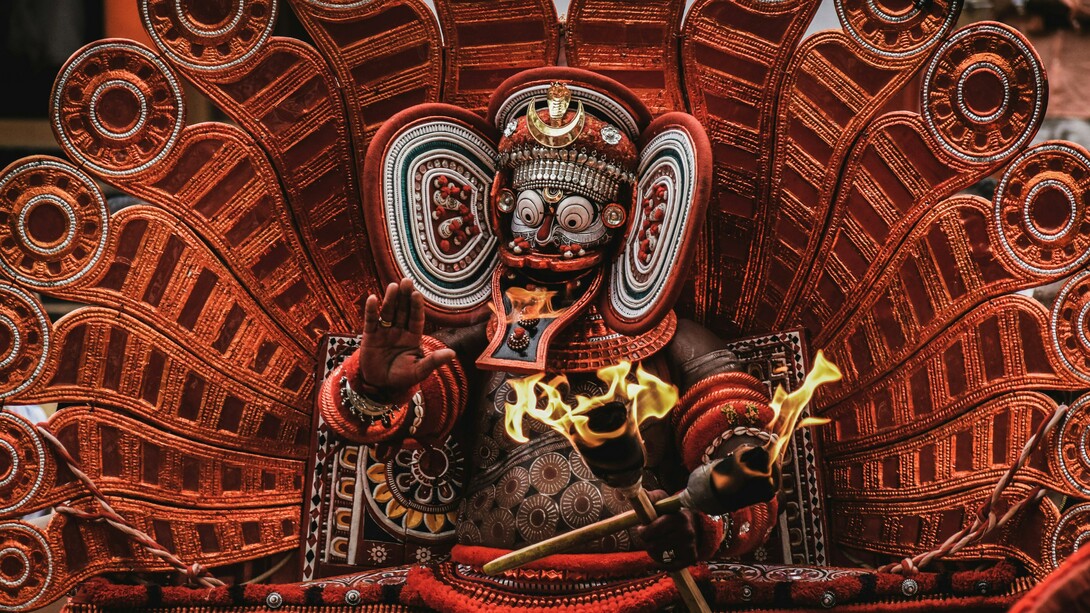
In the world we live in, people continue to struggle with issues that test both flesh and spirit. Illness, financial problems, and mental illness are struggles that nearly everyone has to endure at some point or another. But there is a pain that cuts even deeper. The pain of inequality. The majority have suffered iniquities of race, gender, caste, and class. These invisible walls divide human beings, and the world is a space where some are born privileged while others are compelled to consider themselves inferior simply because of where they were born.
In India, this reality has long been intertwined with the idea of caste and class. Centuries ago, even spirituality was marked by these divisions. The gods in temples were often worshipped by upper castes, while those from lower castes were forbidden to enter. The very concept of divinity was confined within social walls. But amid this injustice, there arose a divine art form, a living, breathing expression of equality and humanity: “Theyyam.”
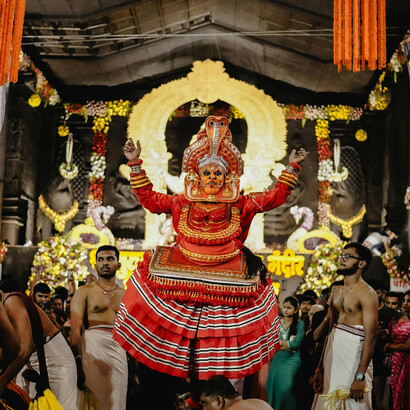
Theyyam, meaning "God's dance," is neither a ritual nor a performance but an experience, a spiritual incarnation of spirit, tradition, and justice. It flourished in North Kerala, especially in Kannur, Kasaragod, and some parts of Kozhikode, where over 400–450 distinct forms of Theyyam are performed even today. Each Theyyam tells a story of gods, heroes, ancestors, and spirits, but more importantly, it tells the story of people.
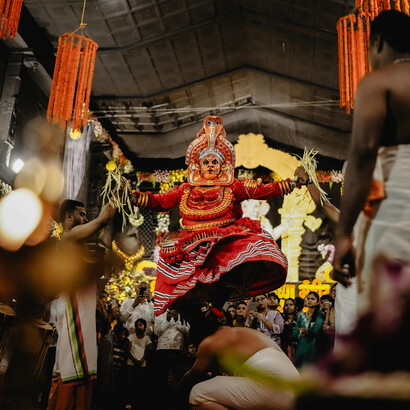
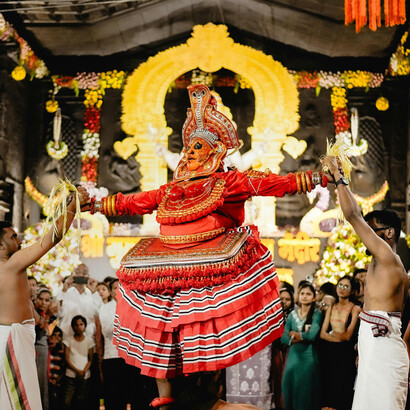
Theyyam is performed by individuals from the very communities that society once called “lower castes.” But in the sacred arena, during the ritual, the performer does not remain a mere human. He becomes divine. When the drumbeats rise and the performer, clad in brilliant red, gold, and white, dances in rhythm, he transforms into a living god. At that moment, all social divisions collapsed. The rich and the poor, the upper caste and the lower caste, and the educated and the uneducated “all bow down before the same divine presence.”
Some of the most powerful Theyyams are Vishnumoorthi, Gulikan, Muchilottu Bhagavathi, Kuttichathan, Pottan Theyyam, and Theechamundi. Each has a very deep moral and spiritual meaning. Vishnumoorthi Theyyam, for instance, is the story of divine justice and protection of a god who stands for the oppressed. Pottan Theyyam, the most socially symbolic of all types, is known to confront social inequality itself. Pottan Theyyam directly addresses the audience during his performance, indicating to them the futility of pride and caste superiority.
The most iconic moment of a Pottan Theyyam performance is probably when the deity speaks:
"If you bleed or I bleed, only blood will flow—and it is the same color." This simple but powerful line contains the message of humanity. It informs us that in spite of the methods society uses to divide us, the truth about the equality of human beings cannot be denied.
The spiritual meaning of Theyyam is that it is inclusive. It is one of the few traditions where gods are for the commoners. In contrast to temple rituals, which required the approval of priests or the presence of upper castes, Theyyam is performed in open courtyards, under sacred trees, or in small shrines accessible to all. The divine here is not discriminating. The deities of Theyyam are human beings' deities, compassionate, merciful, and accessible. They listen to the cries of farmers, fishermen, and laborers and give them comfort and hope.
This is what is revolutionary about Theyyam. It is not just an art; it is a spiritual uprising against casteism and classism. The ritual and the ceremony take the once-oppressed people and turn them into embodiments of the divine. For those sacred holy hours, the performer is a god, and society bows down to him. That single moment of respect demolishes centuries of inequality, if only for a short time, reminding everyone that divinity is not hierarchical.
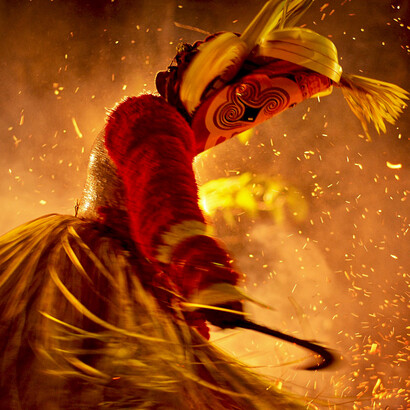
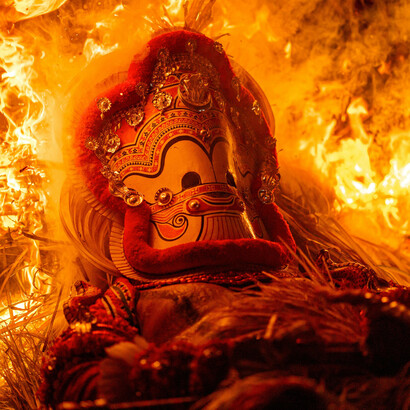
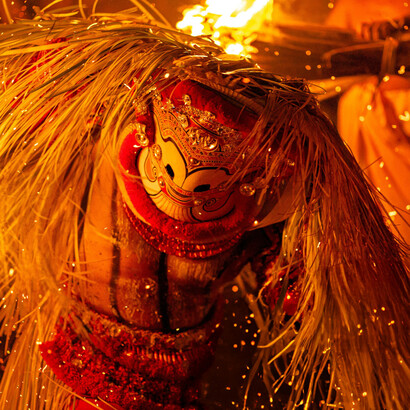
Apart from its religious importance, Theyyam is a cultural masterpiece—a synthesis of dance, music, narrative, and ritual that has lasted for over a millennium. The colors, face-painting, tall headgear, and fiery performances are not just for show; they symbolize cosmic energy and divine strength. The entire community is engaged, with drummers, singers, costume makers, and devotees all having a role in a living tradition that celebrates equality, faith, and continuity.
And yet, somehow, what maybe makes Theyyam most moving is its humanity. In its chants, one hears shouts for justice; in its movements, one sees the pride and suffering of generations; in its fire, one feels the burning desire for equality. Theyyam's gods are not strange beings sitting on a throne in heaven. They are amidst the people, barefoot, blessing, consoling, and healing.
In a world where discrimination is still prevalent, Theyyam teaches us that spirituality can bring people together rather than push them apart. It teaches us that God is not the monopoly of any one class, any one caste, or any one religion. The divine is where justice and compassion are.
When the drums fade away and the performer removes his crown, he is mortal once again—but the faith he embodies lives on in every heart that has witnessed the ritual. Theyyam, in all its raw power and beauty, continues to whisper an eternal truth: all blood is of the same color, and all souls are equal in the eyes of the Almighty.