English
 Español
 Français
 Deutsch
 Italiano
 Português
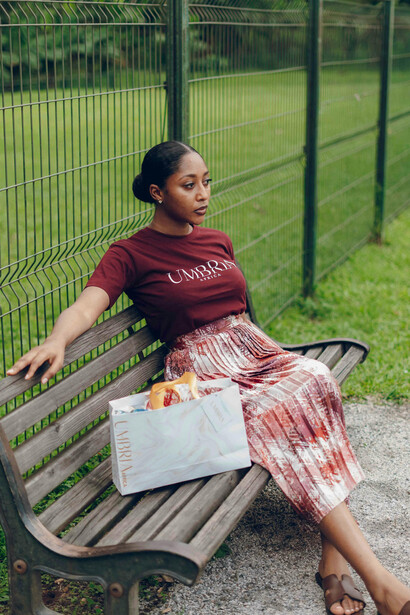
I heard a glass breaking close to me while sitting on a park bench during my one-hour break. Due to the time difference between Ireland and India, this call with my two best friends was planned days prior. I was so focused on my call with my best friends from India.
The incident
I stood up from the bench at the sound of the glass bottle breaking next to me. When I looked back, I saw two kids in their teens hiding in the bushes. They threw another bottle, and I moved back. I did not hang up the call. I remember telling my friends, ”They just threw a glass bottle in my direction.”
Thanks to my reflexes, I moved as fast as I could, but too scared to turn my back, I walked backward while facing towards them to make sure they were not going to run after me.
One of them was wearing a sky-blue tracksuit, and the other one was wearing a grey tracksuit. They smiled at me and said, "Hi," and when I did not respond, they called me the B-word and ran out of the bushes.
The sky-blue fear
For days, I hated the color sky blue because the teenager who smiled and said, “Hi,” and proceeded to call me the B-word was wearing that coloured tracksuit that day. So, I bought a sky-blue mug to drink water and coffee from. It took me days to recover from that, feeling unsafe constantly.
The questions
For the first few days, I blamed myself, asking questions like, “Why did I go to that park? I should have just crossed the road and sat at the bus stop. Why did I sit on that bench? If I had sat on a different bench, closer to the exit gate of the park, would I have been able to exit the park easily?
To relive this moment as I write is not as painful or anger- or fear-triggering anymore. In a few months, it's going to be a year, and I am no longer in the same space in my head. It’s not that I have moved on. It's that I have learnt to live with it, talk about it, and now write about it. I know there are many people who have been through worse than I have, even lost their lives.
A few days after the incident
I do not make eye contact with people who walk by me; it has become a very subconscious move by me. I have noticed my eyes drop down to the ground when an Irish person passes by; I refuse to make eye contact if it's not needed. I do not look at people if they are smiling at me. If I see teenagers approaching, I cross the road. Other than the elderly clients that I work with, I do not have any Irish friends. I refuse to even look in the direction of my neighbors.
My brain's conclusion
All this and more, avoiding social contact with people just to keep me safe. But, when it comes to shopping at a store, I feel fine. I prefer using the self-checkout to the cashier.
The book that made me understand the incident
Before the incident, I was on the bus, reading the book that helped me understand trauma and how to process it, and more importantly, how to face it. The name of the book, “The Myth of Normal: Trauma, Illness & Healing in a Toxic Culture”, is by Dr Gabor Maté.
I understood that if I carry the incident with fear and stress, then I’ll be only hurting myself. Especially after looking up the studies Dr Maté mentions in his book, societies treated with inequality can experience health disparities like hypertension and autoimmune disorders in marginalised groups.
The poor health outcome affects the genetic and molecular functioning as well, affecting the future of an entire community.
Black Americans who have experienced multiple episodes of racism are more likely to develop asthma and other respiratory issues. The stress induced by racism can cause inflammation in the lungs, causing the airway to narrow.
After reading all these research papers, I decided to start meditating and praying as often as I could.
To learn how to stay calm and collected in situations that are moderate to highly racist, what places to avoid, and how to carry myself. I learnt to call the police if I ever experience an incident that requires their assistance, just in case.
A year after the incident
I no longer cross the road when I see teenagers approaching; I make sure there is enough space for them to pass by. I smile back if anyone smiles at me; it doesn't matter if I know the person or not.
I still work with elderly people who are more than a delight to work with; they taught me a few things about Irish humour. I have made a few friends who are also my colleagues. I chose the cashier and not the self-checkout a few times. A few shops don’t offer self-checkout.
I had to face the fear, see how my brain reacted to the trauma and give myself time to process; during that time, I prayed and meditated to calm the stress and focus on how my heart rate changed when I thought about the incident versus when I thought about my future.
The future
I imagined my future where I walk the streets without fear, greeting people without stress, trying to read their intentions through their body language and tone if they are speaking.
Each time my heart rate reduced, and evidently, I understood it was never my fault that I chose to sit on that bench. Something traumatic and racist had happened to me, and I chose my future; I chose the future where I walk with no fear, and I can’t make that happen sitting inside a house.
Everyone reacts to racism differently; this was and is a short description of how I faced this incident. There were more incidents that took place after this incident. Each time, I still chose the future that I imagined—the one where I walk the streets with no fear.
References
Brain-Body Pathways Linking Racism and Health. Experiences of racism and the incidence of adult-onset asthma in the Black Women's Health Study.
Racism and mental health and the role of mental health professionals.