English
 Español
 Français
 Deutsch
 Italiano
 Português
Editor's note: this article is published posthumously in memory of Peter Ongera (1972–2026), an award-winning Kenyan journalist and writer. He was deeply passionate about telling Africa’s stories and examining the forces shaping the continent. Through essays and investigative reporting, he highlighted issues of justice, governance, and social change. His work continues to inspire thoughtful engagement with Africa’s present and future.
It is striking how alarm only seems to rise when Africans are reported fighting for Russia in Ukraine. Yet for over a century, Africans have fought—and died—in wars far from their own soil, often in conflicts that were never truly theirs.
But history also teaches a painful lesson: when African lives are treated as expendable, the cost is carried home in silence, grief, and neglect.
What is happening today with Africans being drawn into the Russia–Ukraine war echoes a troubling past—but with even fewer protections, less accountability, and greater secrecy.
A long history of fighting foreign wars
During the First and Second World Wars, hundreds of thousands of African soldiers were recruited—and in many cases conscripted—by European colonial powers.
West Africans served as Tirailleurs Sénégalais in the French army, fighting in the trenches of Europe. East Africans joined the British King’s African Rifles and Carrier Corps, marching across harsh terrain in campaigns stretching from Ethiopia to Burma. North Africans fought in Italy and France. Many never returned home. Those who did often came back to poverty, little recognition, and broken promises.
They were told they were fighting for “freedom” and “civilization,” yet returned to colonies where they themselves had neither. Their service helped shape world history, but their sacrifices were rarely honoured in proportion to their contribution.
Even in more recent decades, Africans have joined foreign militaries—the British Army, the French Foreign Legion, and the U.S. Armed Forces—often through formal recruitment channels. In these cases, whatever the political debate, there are at least systems of documentation, contracts, training standards, and legal obligations. Families are notified when tragedy strikes. Compensation exists. Embassies can intervene. There is a paper trail that acknowledges the soldier as a human being, not disposable labour.
That is the difference between structured military service and what appears to be happening today with many Africans recruited to fight in Ukraine on Russia’s side.
Service vs. discarding
There is a dangerous myth that keeps resurfacing: that Africans going to fight in Ukraine simply “choose” this path in full awareness of the risks. But many are lured by promises of jobs—as drivers, cooks, or security guards—only to find themselves pushed toward the frontlines of one of the world’s most technologically advanced wars.
Yes, choices have consequences. But even in war, dignity must exist. Accountability must exist. Human value must exist.
In regulated military systems, a soldier is documented. A contract is signed. Training is structured. Governments know who you are. Embassies are aware. If you fall, your family is informed. Your body is recovered where possible. If you are wounded, efforts are made to extract and treat you. Your loved ones can seek help through official channels.
You are treated as a human being.
Now compare that to reports emerging from Russia’s recruitment of foreign fighters.
Recruitment pathways are often hidden. Visas are sometimes processed through third countries rather than through clear diplomatic channels. Passports are reportedly confiscated upon arrival. Training may last only days or weeks. Recruits are then deployed to active combat zones where drone warfare, artillery, and landmines dominate the battlefield.
When death comes, families back home are left in the dark. Salaries reportedly go unpaid.
Compensation rarely reaches relatives. Diplomatic offices can deny responsibility. Bodies are not always recovered. Silence replaces accountability.
This is not military service in any meaningful sense. This is the use of African bodies in a distant war—and the discarding of African lives when they are no longer useful.
Two lives, two families in mourning
Boniface Ouma Asika, 38, from Saka Village in Busia County, Kenya, is among those reported dead. Recruited last year, he underwent basic training before being deployed to Ukraine. After surviving in one zone for weeks, he was reportedly sent to a more intense frontline area in the Donbas region.
According to accounts circulating among contacts and community sources, several fellow African fighters near him were killed by drone strikes. Asika, trying to escape the bombardment, stepped on a landmine. He died instantly. Back home, a family waits with grief and limited answers.
In another case, Edison Kamwesiga, a Ugandan from Rukungiri District, was reportedly killed in Ukraine’s Kharkiv region. News of his death spread mainly through social media, with appeals for anyone who knows his relatives to inform them. Official communication has been minimal, deepening the anguish of uncertainty.
These are not just statistics. They are fathers, sons, and brothers—people who left home seeking opportunity and found themselves in a mechanized war far beyond what they were led to expect.
A brutal, high-tech war
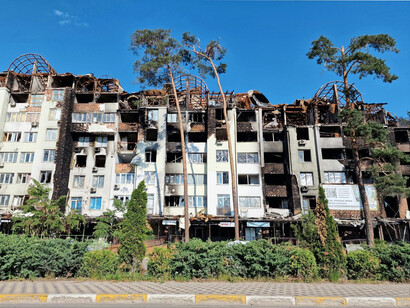
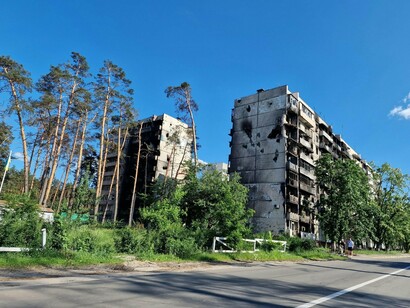
The war in Ukraine is not a low-intensity conflict. It is defined by drones, satellite surveillance, precision artillery, and heavily mined terrain. Even well-trained soldiers face extreme risk. For poorly prepared foreign recruits, survival chances can be tragically slim.
Reports indicate that thousands of foreign nationals from Africa, Asia, and Latin America have been drawn into the conflict, often through deceptive recruitment networks. Many are told they will not see combat. Many do.
Once deployed, they are part of an offensive war effort in unfamiliar terrain, with language barriers, limited support systems, and no clear safety net for their families if they fall.
History should have taught us
Africa’s history is filled with the graves of men who fought for empires that did not see them as equals. From the trenches of World War I to the battlefields of World War II, African blood was spilled in foreign struggles, often with little long-term benefit to the communities left behind.
Today, the flags have changed. The promises sound different. But the pattern feels hauntingly familiar.
Going to fight in Ukraine under opaque arrangements is not a guaranteed path to prosperity. It may be a one-way journey into a war where your name is barely recorded and your life barely acknowledged.
Your life is worth more than secrecy. Worth more than false promises. Worth more than being treated as expendable in someone else’s conflict.
Africa has already given too many sons to other people’s wars.