English
 Español
 Français
 Deutsch
 Italiano
 Português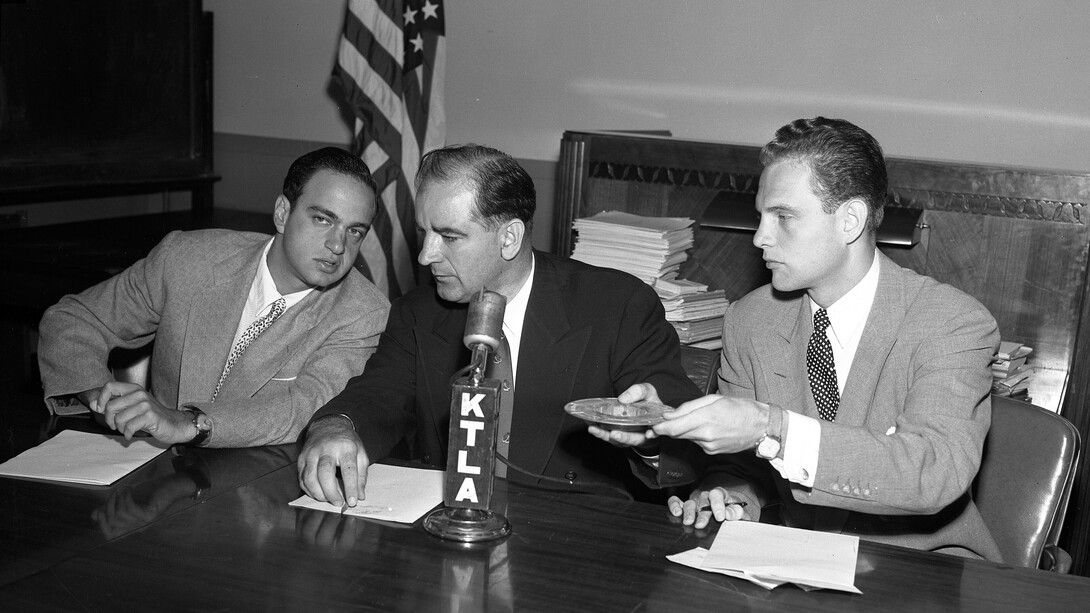
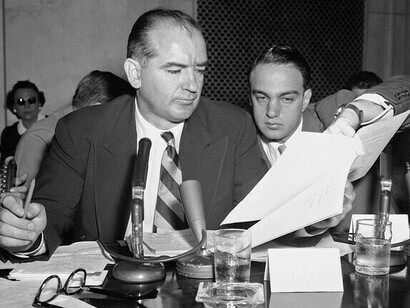
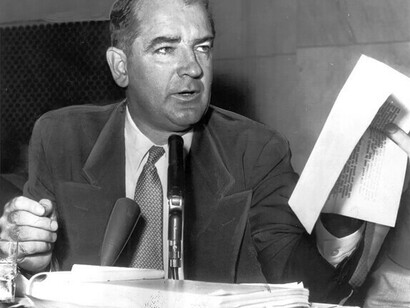
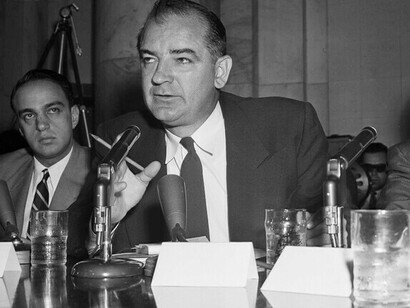
At the onset of the Cold War between the United States and the Soviet Union, the "Red Scare," or fear of communism, began in the United States. It quickly spread across the country amid fears of a Soviet nuclear attack. In February 1950, Senator Joseph McCarthy (1908–1957) claimed to have a list of communist officials infiltrating the U.S. Foreign Service and working in embassies or as analysts at the State Department. This marked the beginning of the period known as "McCarthyism" (1950–1954), during which lists were compiled of artists, intellectuals, and politicians who were fired under accusations of being communist sympathizers.
A new shadow of fear, this time regarding China’s presence in the region, appears to be spreading from Washington to the southern part of the continent—albeit with different characteristics— but by intimidating to prevent governments from accepting investments in areas considered vital to the new definition of U.S. national interest.
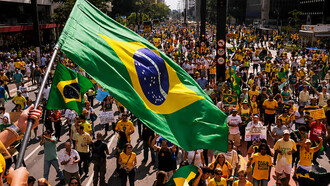
This policy has materialized in recent months through the State Department’s revocation of U.S. entry visas for high-ranking public officials from Latin American countries. Among those affected are the former president of Costa Rica and Nobel Peace Prize laureate Oscar Arias, along with 14 other high-ranking Costa Rican officials. In Brazil, President Trump demanded the release of former president Jair Bolsonaro, who was sentenced to 27 years in prison by Brazilian courts for attempting a coup d'état.
When Brazil refused to comply with the ruling, Trump imposed 50% tariffs on Brazil’s main exports and revoked the visas of several Supreme Court justices and Brazil’s Minister of Justice. They were all barred from entering the United States. Similar sanctions have been imposed on officials from Mexico, Panama, Nicaragua, Venezuela, and other countries under various pretexts. What caused a stir in Chile was the recent punishment of the former Minister of Transportation and two officials from former President Gabriel Boric's administration, which ended on March 11.
On February 20, Secretary of State Marco Rubio issued the following statement: "The State Department announces that it has taken steps to impose visa restrictions on three officials of the Government of Chile who directed, authorized, financed, provided substantial support for, and/or carried out activities that compromised critical telecommunications infrastructure and eroded regional security in our hemisphere."
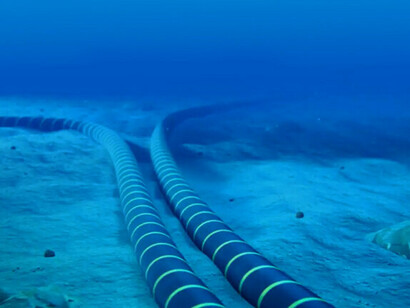
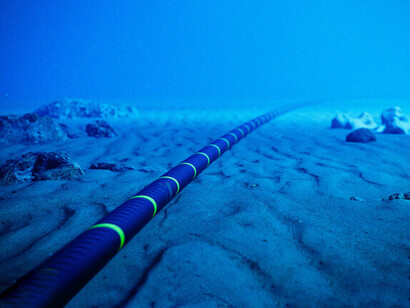
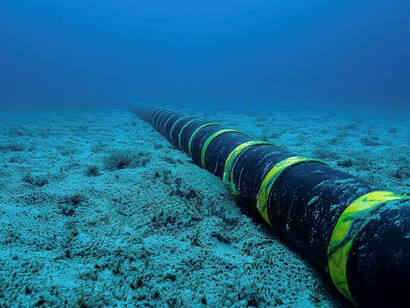
In 2025, the Chilean government began negotiating with China Mobile to install a digital submarine cable linking Hong Kong and the port of Valparaíso. This would enable a digital connection between the Asia-Pacific and South America for the first time, benefiting the entire region.
The negotiations are still in the initial evaluation stage and have a long way to go before eventual approval, which is unlikely under the recently inaugurated government due to fears of retaliation. The U.S. ambassador in Santiago warned that, if approved, his country could reevaluate all existing information-sharing agreements because Washington considers them a risk to regional security infrastructure.
A similar project with Google, the Humboldt Project, is underway. It will connect Valparaíso with Sydney, Australia, via a digital cable spanning nearly 15,000 kilometres. However, the connection to the Asia-Pacific region, which would benefit all of South America, remains pending. China is the main trading partner of several countries in the region, including Chile. This country was the first in South America to establish diplomatic relations with China in 1970.
Furthermore, Chile recognized China as a market economy in 2000, facilitating its subsequent entry into the World Trade Organization (WTO). Notably, the first free trade agreement (FTA) Beijing signed was with Chile in 2005. China is now the destination for nearly 40% of Chilean exports. Therefore, attempting to ban a digital cable linking South America to the world’s second-largest economy would affect the entire region.
Currently, the United States has around 30 undersea cables connecting it to Asia. Data travels through these cables via fiber optics at speeds approaching the speed of light. The China-US Cable Network, which connected Shanghai with California, was inaugurated in 1999, but it became obsolete due to technological advancements.
As globalization, financial liberalization, and trade expanded, Sino-American consortia, such as Pacific Light Cable Network and Google, planned to install new cables. These companies would connect Hong Kong with Los Angeles, but in 2020, the project was modified for security reasons, rerouting the transmission to Japan and Korea. Other cables operate with Taiwan and the Philippines. There are also indirect multinational networks that pass through China and run to Japan, Korea, Taiwan, and Guam—a location considered strategic for the United States in the Asia Pacific. Cancelling cable projects is currently being evaluated based on security conditions. This stems from fears in the Trump administration that the Chinese government could exploit undersea cables to access vast amounts of data, compromising national security.
Digital submarine cables are known to contain information critical to national security because they form the backbone of global internet traffic. Official communications from governments and the global financial system pass through them. There is a possibility of interception, hence the fear that they could be used for intelligence purposes. Today, the primary source of power is data—our data that flows freely across networks and feeds large corporations that are shaping the future, influencing politics, and, with the help of artificial intelligence, seeking to build a different world in some cases.
Thus, the message from the Trump administration to Latin American countries seems clear: each country in the region must embrace the national interest of the United States as its own; otherwise, it will face the consequences. In other words, total alignment, as in the early Cold War. This has led many people—especially politicians, journalists, scientists, and academics—to be cautious in their statements for fear of being denounced or sanctioned.
The United States is Chile’s second-largest trading partner, and many professionals from the region travel there to pursue specialized training because it is a culturally attractive country. Chile’s former Minister of Transportation, a civil engineer by profession who earned his doctorate at Berkeley, has been sanctioned along with his immediate family for attempting to improve Chile’s connectivity. This bars them from entering the United States, where his daughter resides. The message to Latin American governments is clear: nothing that affects the United States' national interest can be implemented without Washington’s consent.