English
 Español
 Français
 Deutsch
 Italiano
 Português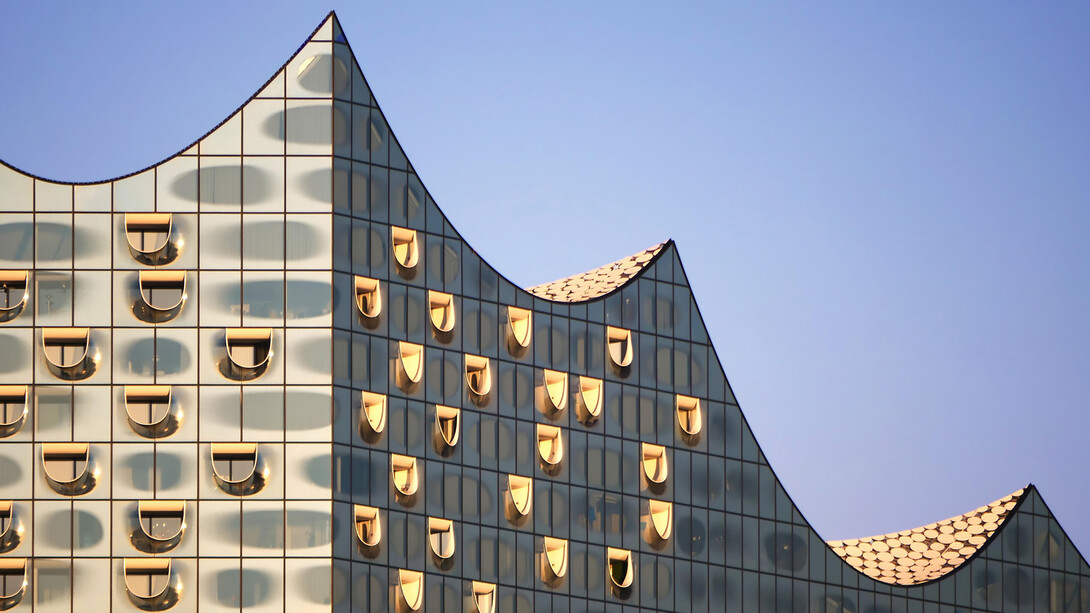
Hamburg, historically one of Europe’s most significant trade and port cities, has long leveraged its waterfronts for economic and cultural purposes. Among its most iconic modern structures is the Elbphilharmonie, located in the HafenCity district along the Elbe River. Since its completion in 2017, the Elbphilharmonie has become a symbol of Hamburg’s contemporary architectural identity, merging historical legacy with innovative design.
History and location
The Elbphilharmonie was constructed atop Kaispeicher A, a former warehouse built in 1963. This adaptive reuse project was designed by the Swiss architecture firm Herzog & de Meuron, transforming the industrial structure into a modern concert hall. The construction process spanned 14 years, reflecting both the technical complexity and ambitious scale of the project.
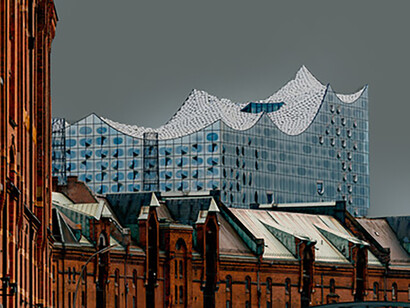
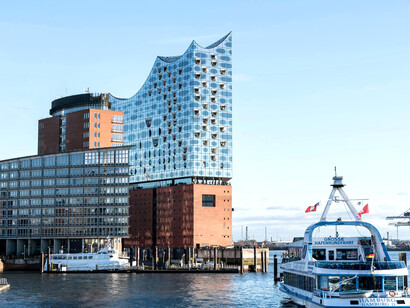
Situated on the Grasbrook peninsula, the Elbphilharmonie is adjacent to Hamburg’s historic Speicherstadt district. Rising 110 meters high, the building is Hamburg’s tallest residential structure and extends across 26 floors. The strategic placement along the river not only connects it visually with the city’s maritime heritage but also makes it a prominent feature in the urban skyline. The structure rests on 1,732 deep foundation piles to support its mass, ensuring stability in the riverbank’s soft soil.
Architectural design and form
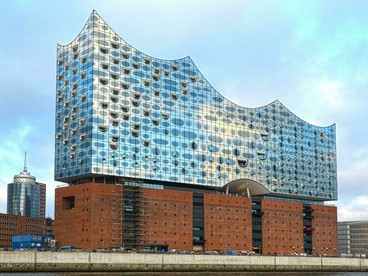
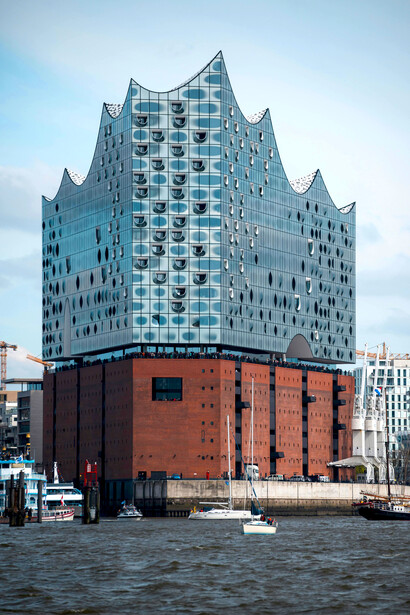
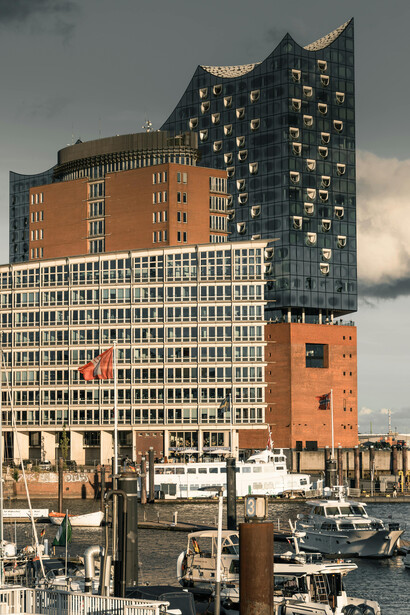
One of the most striking aspects of the Elbphilharmonie is its dual structure: the preservation of the historic brick warehouse at the base, topped by a modern, undulating glass volume. This contrast reflects a dialogue between Hamburg’s past and present, integrating historical industrial architecture with contemporary aesthetics.
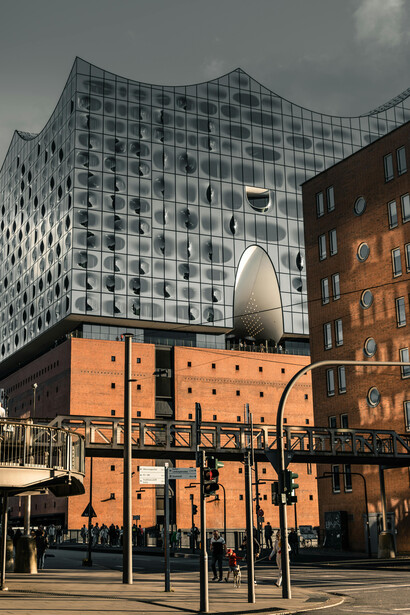
The glass façade, characterized by wave-like curves, draws inspiration from natural forms such as water waves, ice formations, or quartz crystals. This dynamic exterior creates a shimmering effect that changes with daylight and weather conditions, linking the building visually to the river and the sky.
The design divides functions vertically: the lower historic portion houses a hotel, restaurants, and public spaces, while the upper glass volume accommodates three main concert halls. The Grand Hall, seating 2,100 people, is designed for symphonic performances and features exceptional acoustics engineered by Japanese acoustician Yasuhisa Toyota. Every seat is positioned to optimize sound quality, and a system of 342 lower and 34 upper acoustic reflectors ensures a uniform auditory experience throughout the hall. Smaller venues—the Recital Hall and Kleiner Saal—are designed for chamber music and more intimate performances.
Materials and sustainability
Materials were carefully selected for both functional and aesthetic reasons. The glass façade not only creates a striking visual identity but also incorporates energy-efficient systems. Inside, natural materials such as wood and stone provide warmth and a sense of intimacy for concertgoers. Sustainability considerations were embedded into the design, including optimized energy consumption, daylighting, and advanced ventilation systems. The Elbphilharmonie also uses a sophisticated energy management system that reuses waste heat from the building’s technical equipment to maintain temperature balance, aligning with Hamburg’s broader environmental goals for HafenCity as a model of sustainable urban development.
Social and cultural significance
The Elbphilharmonie functions as more than a concert hall—it is a cultural hub that reshapes Hamburg’s social and urban landscape. Beyond the performance venues, the building includes the Plaza, a publicly accessible viewing platform offering panoramic views of the city and the river. This space connects residents and tourists with the waterfront, allowing the city’s cultural and geographic context to be experienced directly.
As part of the larger HafenCity development, the Elbphilharmonie has catalyzed urban regeneration, linking residential, commercial, and cultural functions within the district. The building serves both as a landmark for international visitors and a focal point for local cultural engagement, symbolizing Hamburg’s ambition to integrate modernity with tradition.
Critiques and cost considerations
While the Elbphilharmonie is celebrated for its architectural innovation, the project faced criticism during construction. The timeline exceeded initial projections, and costs rose significantly beyond the original budget. Despite these challenges, the building has been widely praised since completion for its architectural quality and urban significance. It is now regarded as one of Hamburg’s premier cultural icons.
Conclusion
The Elbphilharmonie exemplifies the successful fusion of historical preservation and contemporary architecture. Its design, location, and programmatic diversity have transformed the city’s cultural life, creating a landmark recognized globally. Herzog & de Meuron’s innovative vision, combined with Toyota’s acoustical expertise, ensures that the building excels both technically and aesthetically.
By bridging Hamburg’s port heritage with modern urban life, the Elbphilharmonie contributes to the architectural and cultural history of the city. It respects the past while serving as a forward-looking cultural institution, making it a must-visit destination along Hamburg’s waterfront. The Elbphilharmonie stands not only as a concert hall but also as a testament to the city’s ambition, creativity, and commitment to blending history with contemporary innovation. Its continued role in hosting international orchestras and cross-genre performances ensures that it remains a vibrant cultural heart of northern Germany well into the future, inspiring generations of artists and architects worldwide.