English
 Español
 Français
 Deutsch
 Italiano
 Português
From the moment we began painting caves and carving figurines, creativity became more than an act; it became a bridge between the material and the symbolic.
But something extraordinary happened between 7000 and 4000 BCE. Art was no longer just for expression or ritual; it became practical, integrated into daily life. This shift marked the birth of pottery and symbolic design, an era when humans mastered their environment and used art to shape civilization.
But this wasn’t just a functional innovation. It was a psychological and cognitive leap. The evolution of early ceramics, particularly in the Balkans and Japan, tells a profound story, one of identity, emerging social complexity, and the first hints of abstract thought beyond survival.
The birth of pottery: a necessary evolution
Before pottery, early humans relied on baskets and animal skins for storage. These were functional but impermanent. The shift to agriculture and permanent settlements meant something new was needed, something durable, something that could hold grains and liquids for long periods.
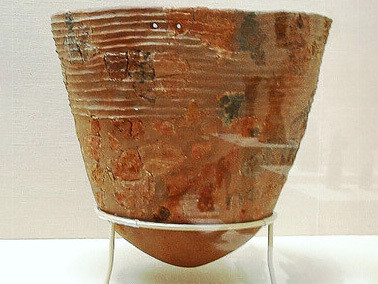
The earliest pottery predates the era I’m focusing on, with Jomon pottery in Japan (c. 14,000 BCE) being the oldest known example of ceramic production.
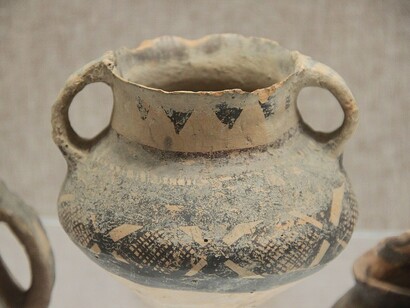
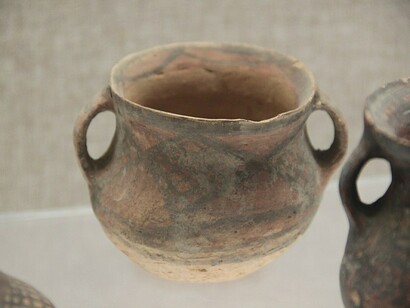
But by 7000 BCE, this practice had spread, and different cultures began experimenting, creating not just vessels but art.
Pottery signified more than mere survival; it marked a shift in how humans viewed themselves.
A society that creates aesthetic, decorated, and symbolic ceramics is one that is thinking beyond the present moment. It is considering the future, creating objects that hold value over time.
Jomon pottery: the oldest artistic ceramics
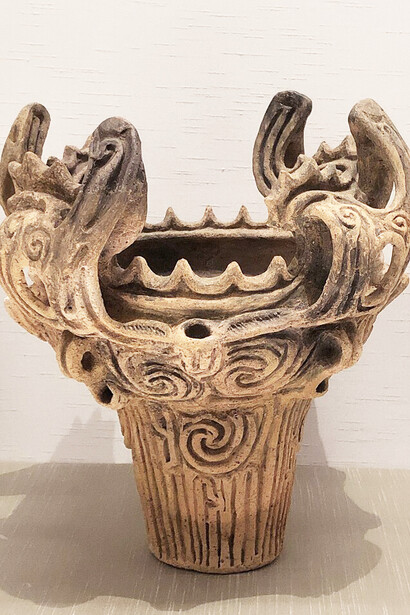
Japan’s Jomon culture (c. 14,000–4000 BCE) produced the world’s first known pottery, and its significance cannot be overstated. "Jomon" means "cord-marked," referring to the distinctive patterns on their ceramic vessels. The people of this era used woven fibers to imprint designs on clay, transforming what could have been purely functional objects into pieces of art.
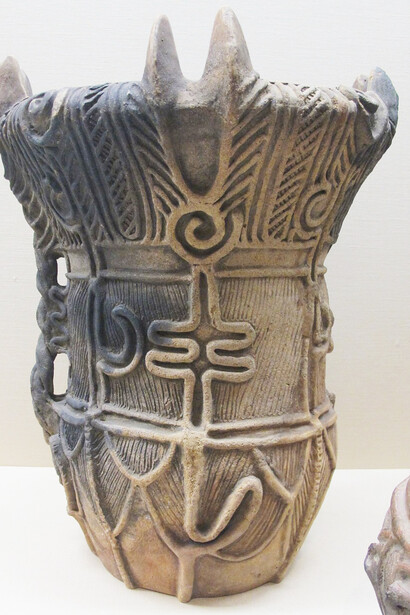
But what fascinates me most about Jomon pottery is the early presence of complex, sculptural forms. Some later Jomon vessels, particularly those from the Middle Jomon period (c. 5000–2500 BCE), show wild, elaborate patterns and flame-like protrusions, suggesting that these objects carried spiritual or symbolic importance beyond mere storage.
What does this say about human evolution?
The act of creating beauty in everyday objects reflects a mind capable of abstract thinking and long-term planning.
The presence of ritualistic pottery suggests that early spirituality and artistic traditions were already embedded in society.
The complex patterns hint at an early form of visual storytelling, perhaps encoding myths or beliefs.
Jomon pottery was not an isolated event. Thousands of miles away, another culture was developing a unique form of ceramic art—one that would leave an equally powerful mark on history.
The Vinča culture: the Balkans’ forgotten artistic revolution
The Vinča culture (c. 5500–4000 BCE), centered in present-day Serbia and the Balkans, represents one of the most fascinating and overlooked artistic leaps of the Neolithic era.
What makes Vinča pottery so significant?
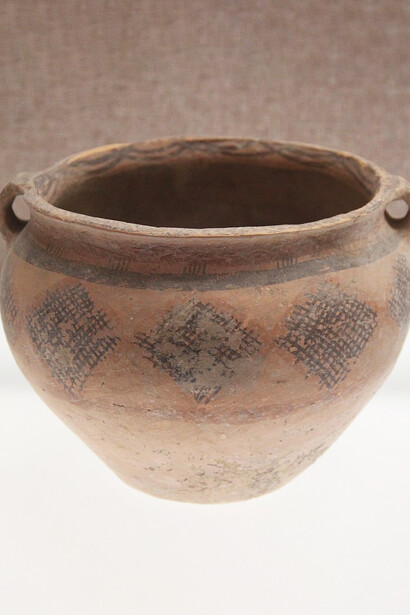
Unlike the Jomon, whose designs were primarily textural, the Vinča engraved intricate geometric symbols into their ceramics—symbols that some believe may represent a precursor to writing.
Their ceramics featured highly stylized human figures with triangular faces, elongated eyes, and exaggerated body proportions.
Their figurines, particularly the famous Vinča "Lady of Vinča," show an incredible understanding of form, abstraction, and symbolism—far beyond what was expected for the Neolithic period.
Here’s what this tells us about human development:
Symbolic Thinking and Proto-Writing: Some researchers argue that Vinča symbols predate Sumerian cuneiform, possibly serving as an early form of record-keeping or communication. If true, this would place the Balkans at the forefront of written artistic expression, long before Mesopotamian civilizations.
Standardization of Aesthetic Ideals: The stylization in Vinča figurines suggests that certain artistic features were repeated deliberately, perhaps indicating a shared cultural or spiritual belief system. This is a precursor to iconography—a concept that would later dominate religious art.
A Shift Toward Structured Society: The presence of highly decorated ceramics and figurines suggests that Vinča society was moving beyond subsistence, toward a culture that valued aesthetic refinement and perhaps even social stratification.
This is the moment in history where art ceases to be just expression and starts to serve a societal function, one that reinforces cultural identity, hierarchy, and possibly even governance.
The human mind evolves alongside art
Looking at these two cultures, Jomon and Vinča, we see more than pottery.
We see a turning point in the Journey of Art, where creativity intersects with human evolution in profound ways:
The transition from survival to aesthetics
Before this period, art was primarily ritualistic or tied to hunting magic (as seen in cave paintings).
Now, art was woven into daily life, marking the emergence of a culture that values beauty, continuity, and tradition.
Symbolic complexity emerges
Jomon pottery hints at ritualistic importance, while Vinča symbols suggest a cognitive leap toward writing.
This shows how humans were beginning to externalize their thoughts, beliefs, and identity in a structured way.
The foundation for future civilizations
The craftsmanship, standardization, and decorative traditions of these cultures paved the way for later societies, from the Cucuteni-Trypillia culture to Mesopotamian civilizations.
By embedding symbols, patterns, and meaning into clay, these cultures unknowingly set the stage for written language, religious iconography, and artistic movements that would define humanity for millennia.
Conclusion: why this chapter matters in art history
Jomon and Vinča pottery represent a forgotten yet vital chapter in the evolution of art. Their contributions are not as widely recognized as Egyptian hieroglyphs or Sumerian cuneiform, but they hold an essential truth: the artistic mind was evolving alongside human civilization.
These cultures remind us that art was never separate from human development. It was a direct reflection of it, a testament to our ability to create, symbolize, and imagine.