English
 Español
 Français
 Deutsch
 Italiano
 Português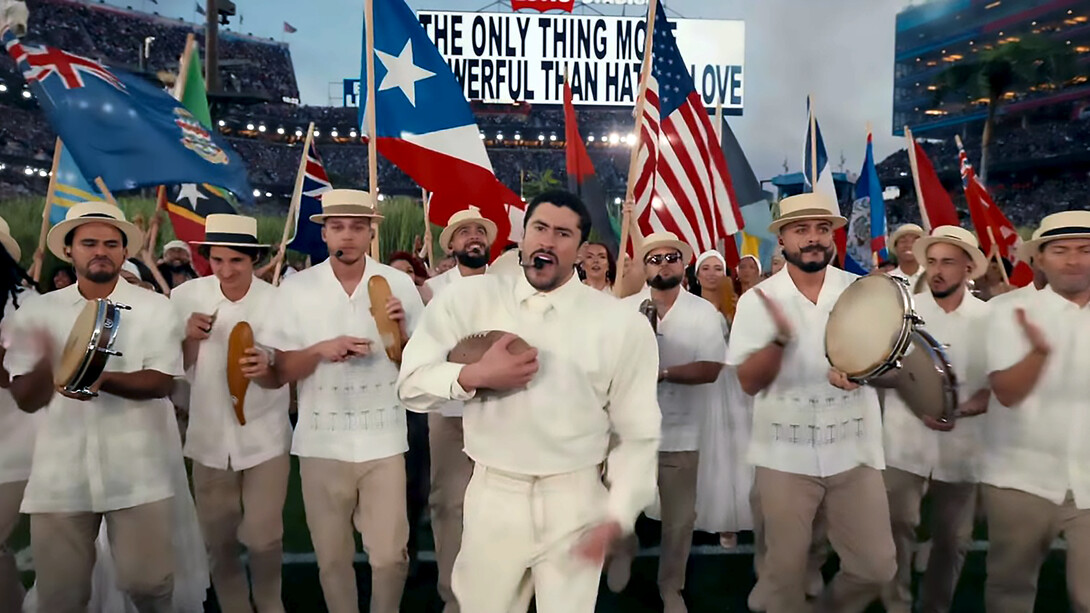
I woke up, grabbed my phone, and immediately searched for Bad Bunny's Super Bowl performance. Couldn’t tell you who won the game. Don’t care. That wasn’t the headline.
Watching from my bedroom in London, 12 hours away from Levi's Stadium in Santa Clara, I cried. Real tears. This wasn’t just a halftime show; it was a bold statement. A beautifully choreographed, culturally loaded, emotionally devastating statement delivered right in the middle of the biggest American spectacle on earth.
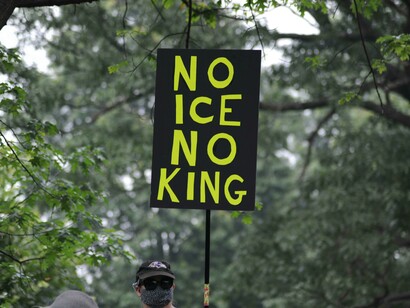
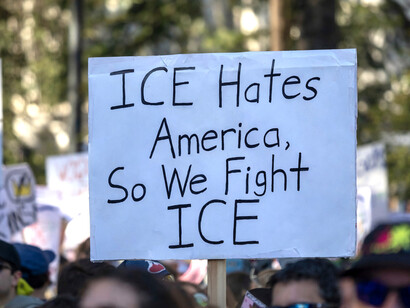
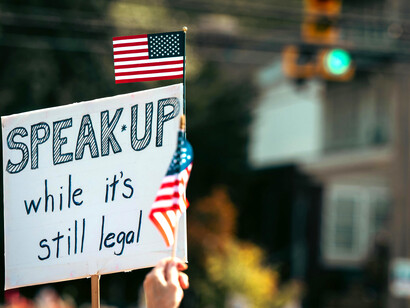
At a time when immigration, particularly from Latin America and the Caribbean, is being demonized daily, when ICE raids dominate headlines and families are ripped apart with paperwork and power, Bad Bunny didn’t shout. He didn’t rage. He did something far more dangerous: he made people feel.
Music has always been political. The difference is some people only notice when it’s not in English.
The loudest protest without saying a word
Let’s be super clear: a Puerto Rican artist headlining the Super Bowl is already a political act. Representation at that scale is resistance. This performance wasn’t an angry one; it was loving, and that’s what made it hit harder.
As Bad Bunny himself said during the show in Spanish unapologetically, “The only thing stronger than hate is love.” If that didn’t move you, I’m not sure the problem is the performance.
The symbolism (because none of it was an accident)
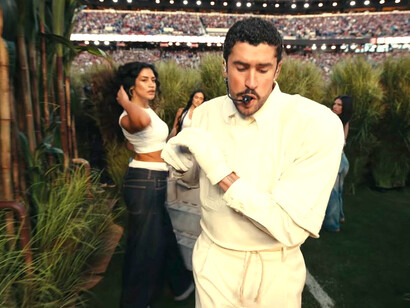
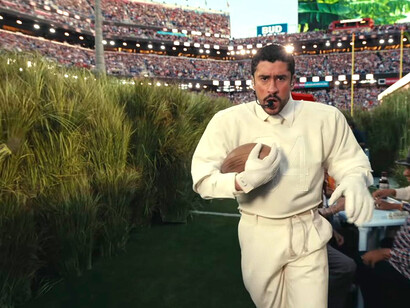
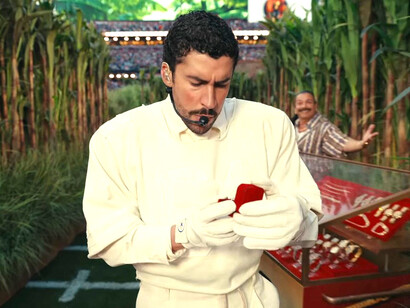
The show opens in Puerto Rico's sugarcane fields, a direct reference to colonial exploitation, slavery, and the extraction of Caribbean resources for empire-building economies. From there, we’re transported to Nueva York, home to one of the largest Puerto Rican and Latin diasporas in the world. A city of first gens, second gens, survival, hustle, and identity negotiation.
He walks into a storefront and takes a shot with Dona Tona, a real Puerto Rican woman and owner of the Caribbean Social Club in Brooklyn, one of the last remaining Puerto Rican establishments in Williamsburg, a neighborhood gutted by gentrification. She’s been pushed to sell countless times. She refuses. New Yorkers felt that moment in their chest.
Then Ricky Martin appears, the man who cracked open the door for Latin artists, singing lyrics that reference Hawaii, a not-so-subtle nod to colonization, sovereignty, and Puerto Rico's ongoing fight for self-determination.
We see performers climbing power lines, symbolizing Puerto Rico’s chronic blackouts, a direct consequence of colonial neglect. Then comes the light-blue Puerto Rican flag, the original version, once banned, later forced to be recolored to match the US flag. History, resistance, and memory. All in under fifteen minutes.
The human core
At one point, Bad Bunny hands his recent Grammy to a little boy sitting with his mother and grandmother, a mirror of himself. A reminder of where he came from and who this is all for. He looks straight into the camera and says (again, in Spanish), “If I’m here today, it’s because I never stopped believing in myself. And you should believe in yourself too; you’re worth more than you think.” Then, because why the heck not, he officiates a real wedding mid-show. Love over hate. Literally.
He brings out Cardi B and Karol G. Performers are crying. The joy is real. The unity is real. This is what protest looks like when it’s rooted in humanity.
Then of course, there’s the backlash (predictable, boring, telling).
Donald Trump called it “the worst halftime show,” complaining it wasn’t in English and was “inappropriate for kids.” Interesting priorities, especially given his silence on far darker issues involving his good friend Jeffrey Epstein, who brought detrimental harm to the lives of innocent, helpless children for years. But sure, let’s panic over dancing and Spanish lyrics.
Meanwhile, Lady Gaga's segment was beautiful. She sang and danced along with a talented band, sending all her Latin ‘monster’ fans on TikTok into a euphoric frenzy, because for once, they weren’t being told to shrink themselves for comfort.
Why this performance matters so much
Bad Bunny didn’t frame this as us vs. them. When he named the entirety of the Latin American countries, he also named the US and Canada. This wasn’t division. It was inclusion. In a climate obsessed with borders, he offered belonging.
This performance will go down in history. The first Puerto Rican artist to headline the Super Bowl. Fresh off a Grammy win. Still unapologetically political. Still choosing love. Still telling the truth.
And maybe that’s what unsettled people most. Not the language. Not the choreography. Not even the politics. It was the refusal to shrink. The insistence on joy in a moment designed for spectacle, not substance. He used America’s biggest stage to center the Caribbean, to center migrants, to center brown kids watching from bedrooms like mine, wondering if they belonged.