English
 Español
 Français
 Deutsch
 Italiano
 Português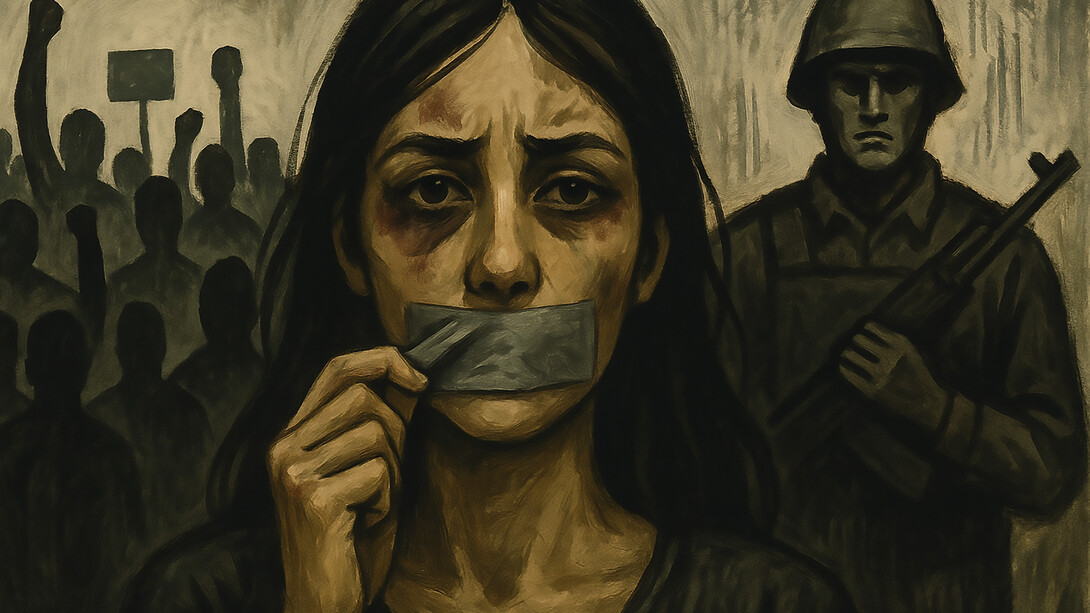
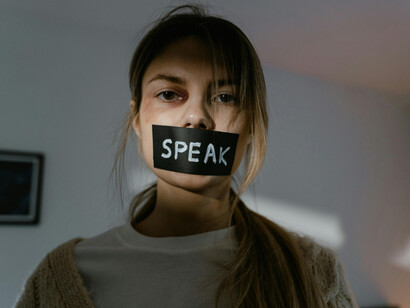
Why do societies so easily turn on their own? Why, when fear takes root, does humanity become a casualty? Throughout history, and even today, innocent civilians are scapegoated, silenced, or sacrificed, not by accident, but by design. This article explores how cruelty, driven by power and fed by the media, becomes not only tolerated but accepted.
I do not claim allegiance to any political party or ideology. Instead, I write from a neutral standpoint, using publicly available sources. The aim is not to assign blame but to examine how cruelty, when wielded by those in power, causes extreme harm to innocent people, and how public opinion is often distorted through deliberate manipulations.
What is cruelty?
Cruel (adj.): the intentional infliction of pain or suffering on others, with no regard for the consequences.
Cruelty (noun): a behavior that causes bodily or emotional injury and is considered wrong by both law and morals.
The terms serve different objectives, despite the fact that their meanings overlap. We call someone cruel to characterize their personality. We use the term "cruelty" to describe what is being done. This distinction is important because cruelty in modern conflict is not simply personal but systematic. It is ingrained in policy, media narratives, and popular discourse. And it is frequently disguised.
Historical context: cruelty as a tool of power
Cruelty has always been an intentional tactic for political and military power. Ancient civilizations, such as the Assyrians, utilized terror methods such as mass deportation, mutilation, and public executions to instill fear and obedience. As a reaction to revolt, the Romans destroyed towns and enslaved people.
Civilians were increasingly targeted over time. During World War II, civilian bombs were normalized with the goal of lowering morale. From Hiroshima to Dresden, the distinction between fighters and civilians blurred. In current times, ethnic cleansing, drone warfare, and blockades perpetuate this trend, with leaders justifying atrocities in the name of security or ideological purity.
The message remains unchanged: human existence becomes a means to an end.
The modern battlefield: media as a weapon
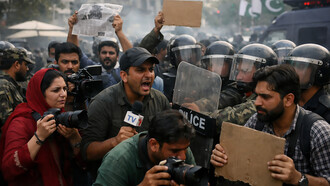
In the 21st century, this legacy lives on, not just via weaponry, but also through language. Today, the media is more than just a mirror of events; it is a battleground for perception. Politicians, the military, and even non-state entities recognize that controlling the narrative is just as effective as controlling the territory in question. Through selective reporting, emotionally charged language, and constant repetition, the media may portray a whole community or cause as either victim or villain.
This manipulation can take numerous forms:
Propaganda emphasizing national pride while demonizing the “enemy.”
Disinformation is propagated over social media in order to confuse, distract, or radicalize.
Omission of civilian suffering in favor of concentrating on strategic successes.
Consider the lead-up to the Iraq War: Western media hyped official claims about weapons of mass destruction, which were eventually proven incorrect. Fear, rather than reasoning, drove public support for war. Similarly, in the Israel-Gaza war, media coverage varies greatly by location, affecting public empathy depending on whose side of the narrative is portrayed.
In authoritarian countries, this control is much more apparent. Russia’s state media sees the Ukraine conflict as a defensive liberation endeavor. In China, governmental censorship prevents mention of the Uyghur situation. In both circumstances, entire populations are indoctrinated not to question what they are given, and the truth is not simply concealed; it is substituted.
To create us-versus-them narratives, governments and prominent groups use propaganda, selective information, and incitement of fear. By portraying certain groups as rivals or risks, the media may dehumanize them and urge the public to tolerate, if not condone, extreme actions such as dictatorship and war. This brainwashing process breeds distrust and antagonism, making it harder to create empathy and diplomacy.
Meanwhile, cultural norms and societal expectations usually praise conformity, strength, and devotion while penalizing nonconformists and rewarding those who have similar values. Strong cultural influences, such as nationalism, patriotism, and group identity, may cause people to prioritize defending “their own” over recognizing the humanity of others. This cultural paradigm is imprinted and reinforced by the media tradition and education.
History, the media, and social forces across the world interact to form a feedback loop that shapes how civilizations think and behave, frequently suffocating critical thought and fostering violent and conflictual cycles. If we want to avoid repeating the same mistakes and work towards a society where justice, empathy, and peace govern decisions rather than fear, hatred, or blind allegiance, we must understand this dynamic.
Why society accepts cruelty
It’s natural to wonder, “Why do people go along with this?” The solution resides in psychology and sociology. Leaders don’t just rely on force but also on conditioning.
There is no direct response that can explain why innocent people are hurt in the midst of political disagreements without instilling animosity in those in authority over our own country.
Truth be told, the killing of innocent people during war, terrorism, and repressive regimes is frequently motivated by power, control, ideology, fear, or retribution. It typically does not stem from logical or moral principles.
Politicians frequently behave primarily on what will keep them in power in the short term, rather than what would benefit mankind in the long run. War generates popular support, diverts attention away from internal issues, and enhances their image as powerful leaders, which they are not. If we look at it logically, they would rather sacrifice peace for popularity, for whatever gets them into the history books, no matter how horrible it is.
Humans naturally create groups. When leaders establish “us” versus “them,” people start justifying harshness to foreigners. Societies internalize these ideals through education, custom, and the media. Over time, defending “our side” becomes more essential than acknowledging another person’s humanity.
Beyond war: hatred in everyday crisis
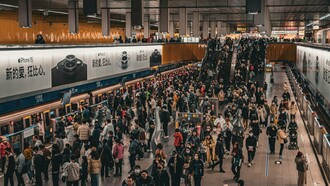
Civilians are targets of collective animosity in more than just war and political strife. Social bias, which is something exacerbated by fear and disinformation, may grow just as brutally during times of crisis. During the COVID-19 epidemic, this was particularly evident.
When the virus was initially discovered in China, persons of Asian heritage, regardless of nationality, became scapegoats for a worldwide health crisis beyond their control. Throughout the world, Asian populations faced verbal abuse, physical attack, and systematic discrimination. They were wrongfully condemned and reviled, as if they had caused the pandemic. This scapegoating exposed profound bigotry and internalized preconceptions, portraying an entire ethnic group as harmful or “unclean.” Individuals were made to feel like society dangers, like revealed deep-seated racism and internalized stereotypes, painting an entire ethnicity as dangerous or "unclean." Individuals were made to feel like societal threats, like parasites, despite the fact that they were victims of the same crises as everyone else.
This tendency isn’t limited to the epidemic. We’ve seen similar generalizations used for other communities. For example, many Mexicans and Colombians have been stereotyped and discriminated against as a result of drug cartels’ acts, which operate independently of the great majority of law-abiding residents. Despite having no control over such criminal organizations, people from these nations are usually viewed with mistrust, being portrayed as criminals or illegal immigrants in public discourse and policy.
These incidents highlight recurring dynamics: when fear takes hold, the distinction between the individual and the group they “represent” is frequently blurred. Instead of addressing core causes or pursuing culpable actors, society directs its rage onto the innocent individuals who, like everyone else, are simply trying to live their lives. This misdirected anger is not only wrong; it also perpetuates cycles of separation, fosters xenophobia, and exacerbates societal divides.
A call to remember our shared humanity
Innocent people have always paid the highest price—whether in war zones, under political regimes, or in the quiet corners of ordinary life where hatred can still be heard. Too frequently, people are not just caught in the crossfire; they are the victims of brutality disguised as policy, fear disguised as patriotism, or ignorance masquerading as reality. While the weapons may change—from bombs to headlines, from borders to slurs—the wounds they leave are tragically familiar.
We live in a world where narratives are twisted, entire communities are blamed for crises that they did not cause, and empathy is increasingly viewed as a weakness. But how much does it cost us to continue along this path? What do we lose as individuals when hatred becomes a habit and brutality becomes common sense?
Every act of dehumanization, every twisted story told to serve those in power, weakens the links that keep society together. And somewhere, a child learns to be afraid of another child simply because of where they were born.
If anything can be salvaged from this long history of suffering, it is the imperative need to do better, to view one another as human beings deserving of dignity, truth, and peace, rather than threats or numbers. We cannot undo the harm that has already been done, but we can choose not to repeat it. We have the ability to speak up, listen harder, and care for one another in ways the world has not always demonstrated.
And maybe, just maybe, that’s how we start to heal.
References
Oxford University Press. (n.d.-a). Cruel. In Oxford Learner’s Dictionary.
Oxford University Press. (n.d.-b). Cruelty. In Oxford Learner’s Dictionary.
International Committee of the Red Cross. (2025, April 30). From “total war” to “total defense”: Tracing the origins of civilian involvement in armed conflict. ICRC Law & Policy Blog.
Kalyvas, S. N. (2006). The logic of violence in civil war. Cambridge University Press.
Plakoudas, S. A. (2015). Mass killings of civilians in counter-insurgency: Killing more, winning more? Infinity Journal, 4(3), 34–38.