English
 Español
 Français
 Deutsch
 Italiano
 Português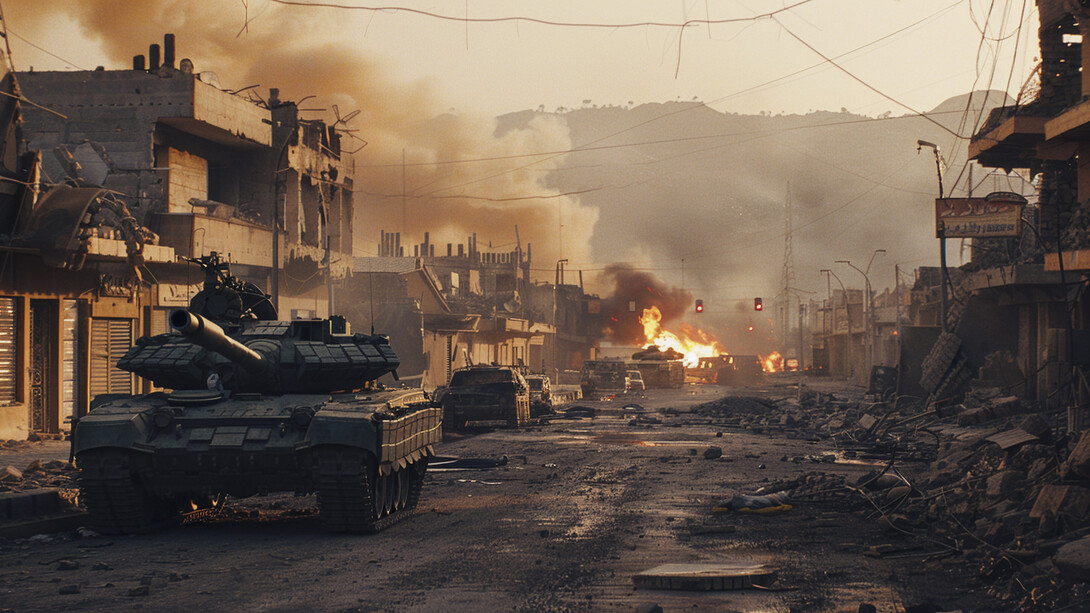
The Middle East is no longer only unstable. It now serves as a testing ground for global disorder, where shipping chokepoints, fractured sovereignty, and climate pressures converge to define the present era.
The Middle East: where global shocks land first
The Middle East has long been considered the world’s most volatile region, noted for recurring cycles of war, fragile ceasefires, proxy wars, and ongoing political upheaval. By 2026, the instability has evolved. The region now absorbs structural shocks from the wider international system.
To understand the Middle East today, it is useful to start with developments at sea rather than in traditional capitals.
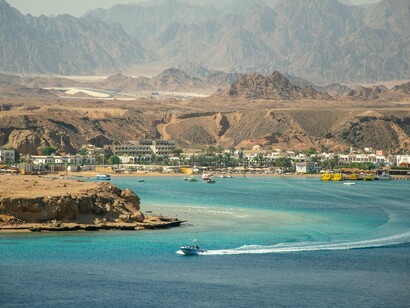
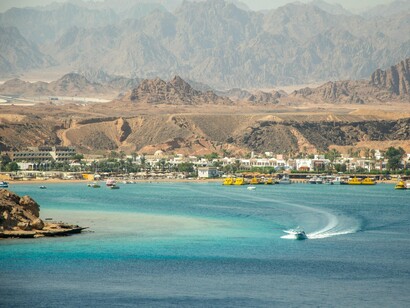
In the narrow Red Sea corridor, a new form of power has emerged: the power of disruption. Low-cost missiles, unmanned drone swarms, and non-state actors can now force major shipping networks to reroute, increase war-risk insurance premiums, fuel global inflation, and prompt major powers to form reactive military coalitions.
The Red Sea is therefore not simply a regional waterway. It has become a microcosm of the emerging global order—an order defined less by stable multipolarity than by fragmentation, coercion, and contested circulation.
From multipolarity to multipolarization
The international system is often described as entering an era of multipolarity, with power diffusing beyond the post–Cold War unipolar period. However, multipolarity suggests the potential for equilibrium among multiple centres of influence. Instead, the present environment is significantly more unstable.
As the Munich Security Report has argued, the defining condition of the current era is better captured by the concept of multipolarization: not simply the rise of new powers, but the sharpening of divisions within and between states, alliances, and institutions. Polarization has become systemic.
Rules and norms are weakening, and global governance is increasingly paralyzed. Geopolitical competition now goes beyond diplomacy and military rivalry to include supply chains, technology standards, food systems, and financial networks.
In this context, the Middle East cannot remain isolated. It operates as a focal point for global instability.
Geo-economics as the new battlefield
By 2026, the major threats will no longer be conventional invasions. The World Economic Forum’s Global Risks Report identifies leading dangers as geo-economics, including sanctions, trade restrictions, weaponized supply chains, competition for critical minerals, and control over energy corridors.
Interdependence now creates vulnerability rather than guaranteeing stability.
Economic networks are now tools of coercion. Trade serves as leverage, and infrastructure is a frontline.
This shift carries significant consequences for the Middle East. The region’s strategic importance now consists in its central part in global circulation. Its straits, ports, canals, and pipelines are not just economic assets but also geopolitical instruments.
In this era of geo-economics confrontation, geography is a source of power.
The chokepoint order
The Red Sea crisis clearly demonstrates this reality.
Localized attacks on commercial shipping quickly developed into systemic disruption of a critical trade corridor. Rerouting vessels around the Cape of Good Hope adds weeks to transit times, increases costs, and creates volatility in global markets.
For Europe, this results in inflation and energy uncertainty. For Asia, it disrupts supply chains. For global finance, it signals increased fragility.
For Egypt, the consequences are existential.
The Suez Canal is more than an infrastructure asset. It is essential for fiscal stability, national revenue, and regional influence. Prolonged disruption poses a direct threat to Egypt’s economic autonomy.
The Red Sea is now more than a maritime security issue. It is an arena where smaller actors can impose global costs, and major powers risk overextension through repeated interventions.
This is the emerging chokepoint order, where command of circulation is as important as control over territory.
America’s strategic dilemma
The Red Sea also highlights a deeper contradiction in United States strategy.
Washington’s 2026 National Defence Strategy shows a shift in focus toward China and the Indo-Pacific, with Middle Eastern conflicts increasingly viewed as secondary.
However, geographic realities do not correspond to this strategy.
The United States cannot fully disengage from the Middle East, as the region is fundamental to global trade and energy flows. Prolonged disruption would affect the wider economic system that supports American power.
The result is a new form of strategic exhaustion: not the massive occupation wars of the early 2000s, but a persistent and distributed burden of crisis management across global corridors. American naval power can intercept drones and protect ships, but it cannot eliminate the underlying logic of disruption. Non-state actors do not need to win wars; they only need to increase costs.
This is the era of asymmetric leverage.
Armed peace and the Israel–Iran axis
While maritime chokepoints reveal global vulnerabilities, the Middle East’s core security dilemma remains unresolved.
The most significant axis of tension remains between Israel and Iran.
The brief but consequential June 2025 war resulted in deterrence without resolution, creating an armed peace rather than lasting stability.
Neither side seeks total war nor trusts the other’s restraint. Both continue to prepare for escalation.
The Iranian nuclear issue has re-emerged as a threshold dynamic rather than a countdown. Ambiguity increases anxiety, making pre-emption more tempting and miscalculation more likely. Sovereignty. The Middle East is entering a period of managed confrontation, not stability. Run state and the rise of fragmented sovereignty as a permanent condition.
For decades, analysts attributed instability to authoritarianism, sectarianism, or external intervention. While these factors remain relevant, by 2026, the defining feature is systemic: weakened state monopoly, diffusion of armed authority, and normalized governance lacking centralized sovereignty.
The Middle East is undergoing reorganization, not just instability.
Syria after Assad: fragmentation without resolution
Syria illustrates this transformation most clearly.
The collapse of the Assad regime did not lead to reconstruction but instead created a vacuum defined by competing zones of influence, militia economies, and external intervention.
Turkey has established administrative control in the north. Israel has expanded its defensive depth through buffer zones. Gulf States engage selectively, driven by international interests rather than ideology.
The result is not peace, but de facto partition. Borders remain on maps, but sovereignty does not.
Syria is becoming a model of post-state order: fragmented, externally influenced, economically militarized, and structurally unstable.
Hybrid sovereignty and the militia–state system
One of the most significant changes in the region by 2026 is the normalization of hybrid sovereignty.
In Yemen, Sudan, Iraq, Lebanon, and elsewhere, armed non-state actors now operate as quasi-state entities. They collect revenue, govern territory, control supply chains, and negotiate directly with external powers.
This development is structural, not anomalous.
The region is now defined by militia–state systems, where authority is fragmented and legitimacy is contested. Diplomatic frameworks based on coherent sovereign control are increasingly inadequate.
Power is dispersed, conflict is chronic, and governance is conditional.
The Middle East is moving beyond the consolidation of the modern nation-state.
Cyber, AI, and the automation of disruption
A new domain of confrontation is emerging, one that does not require armies or land conquest.
Cyber conflict has reached an industrial phase, with attacks that are increasingly AI-enabled, automated, scalable, and targeted at critical infrastructure.
Ports, electric grids, financial systems, and maritime logistics hubs are now front lines. Cyberattacks on shipping networks can impose costs similar to missile strikes.
The region’s chokepoints are now both physical and digital.
This is disruption without conventional warfare and coercion without direct conflict.
Climate stress as the next strategic multiplier
However, ecological variables may be the most underestimated drivers of instability in 2026.
Climate stress is now a strategic multiplier, not simply an environmental concern.
Rising temperatures, deepening water scarcity, and worsening food insecurity are increasing fragility in already vulnerable societies. Drought drives migration, migration strains governance, and governance breakdown empowers armed actors. a missile strike.
It may start with a failed harvest, a power grid collapse during extreme heat, or a water dispute that escalates into violence.
In the Middle East, climate is increasingly a source of conflict.
Grand conclusion: a strategic prescription for a disordered era
If the Middle East in 2026 is defined by fragmentation, contested circulation, and hybrid confrontation, its trajectory will not be set by a single war or peace agreement. Instead, it will be formed by converging structural pressures: geo-economics coercion, chokepoint vulnerability, post-state governance, and climate-driven fragility.
The central question is not whether the Middle East will be reshaped, but whether policymakers are prepared for the form this change is taking.
Three broad trajectories appear plausible:
Escalation through miscalculation and cascading crisis
Durable fragmentation through stabilization without settlement
Conditional prosperity through selective resilience plus hedging.
The West’s standard frameworks of counterterrorism and energy security are insufficient for this new landscape. The Middle East is now a structural node of global disorder, where trade, cyber disruption, ecological stress, and fragmented sovereignty intersect.
A credible strategy must recognize that chokepoints are now central. Protecting circulation is essential for stability. Hybrid sovereignty should be addressed through containment rather than unrealistic state-restoration efforts. Cyber resilience must be a strategic priority, and climate adaptation should be integrated into security policy. Retrenchment should not be confused with disengagement, as vacuums are quickly filled.
The key strategic lesson of 2026 is that power is measured not only by dominance but also by resilience—the capacity to absorb shocks without collapse.
In a multipolarised world where disruption is widespread and inexpensive, stability depends on adaptive capacity rather than established rules.
The Middle East is no longer characterized exclusively by crisis; it is now the world’s strategic frontier. The question of 2026 is not whether the region will be reshaped.
The question is whether global powers will adjust rapidly enough to influence this transformation or be formed by it.