English
 Español
 Français
 Deutsch
 Italiano
 Português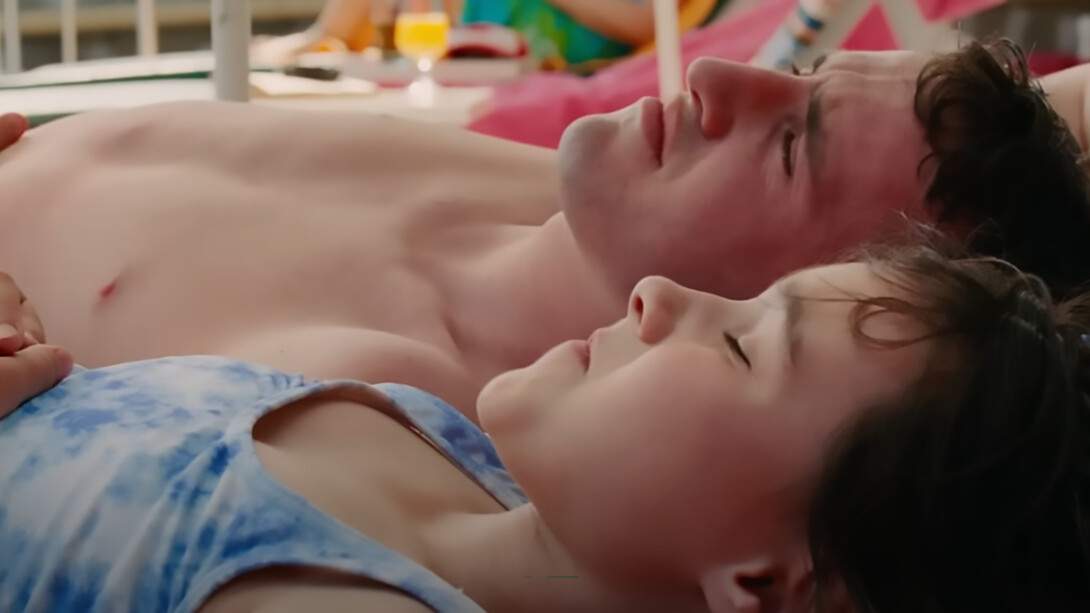
"Memory is an editing station," says the poet Waly Salomão, and our connection with the past reveals much about who we are. Aftersun majestically explores this concept.
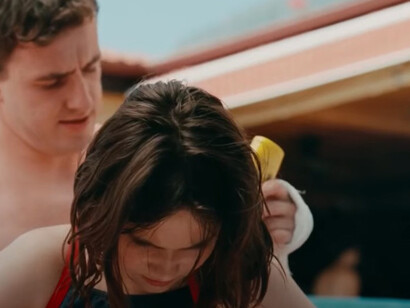
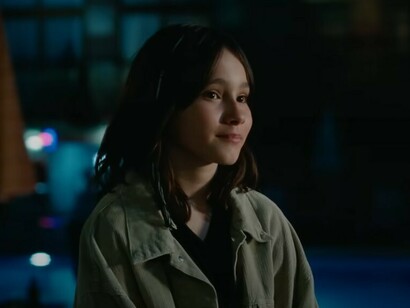
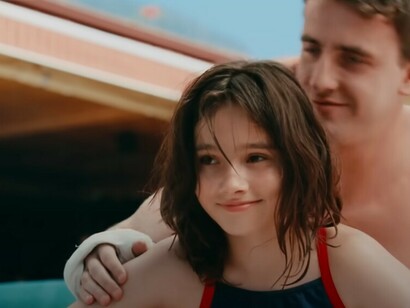
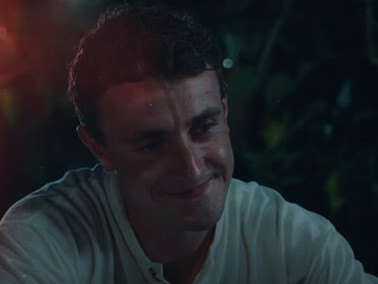
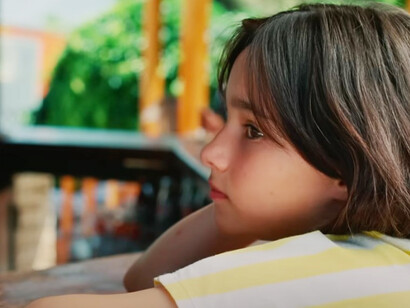
Through Sophie’s camera, played by the fantastic Frankie Corio, we discover the wonders of an 11-year-old girl and her charismatic yet troubled father, Calum, played by Paul Mescal. Aftersun, Charlotte Wells' debut feature film, is about love, parenthood, dreams, and traumas. The beauty of the film lies in the simplicity with which the camera reveals the characters' flaws and inner wishes without directly pointing out the dramas Sophie and Calum are facing. Set in Turkey in the 90s, Aftersun presents us with metaphors of a depressive man bringing his kid to a sunny paradise for a daughter-and-father holiday.
Early in the film, we learn that Calum and Sophie's mother are no longer together, which triggers a deep question in Sophie's world: If her parents aren’t together, why does Calum still say "I love you" to her mother over the phone? This simple question portrays Sophie's urgent need to understand the meaning of love and how complex it seems to her. Her eyes are constantly observing everything around her, as if at any moment she will suddenly find the answer she is looking for. Calum is a protective father who wants to teach his daughter all the basic things of life: how to defend herself from a physical attack, how to swim, and how to be a strong person.
The paradox is that Calum is not strong himself, and Sophie knows it, yet she still sees him as her big hero. This is evident when she introduces him to the little camera she carries all the time, or, better, to the audience as “The Marvellous, Amazing, Wonderful, One-Armed Calum Aaron Patterson.” Contrary to his daughter’s perspective, Calum is a father and adult who seems to not have a clue about what he’s doing, especially when alone: he buys an expensive carpet he can’t afford, drinks too much when Sophie is not around, and somehow gets himself physically hurt, as we see at the beginning of the film.
Despite it all, Calum and Sophie love each other, even though they may not have the answer to what love means. What matters is that they want to stay together. They want to be in each other's company. The subtle camera of Gregory Oke shows us this inner wish at different times. We often, literally, watch them spending time together as if we were their voyeurs. At their last dinner together, someone passes by selling Polaroid photos. A photo of them is taken, and we watch it being revealed as they talk in the background, confessing their desire to stay in that moment forever, and we witness this desire in such a casual conversation full of meaning as represented by this single long shot.
The minimalist camera style, as I like to call it due to a few long shots and nuances captured by the director of photography, Gregory, brings us closer to their story, delivering answers that we didn’t question ourselves. We slowly and carefully learn the events that may have happened either in their future or in their past. For example, we come to understand that Calum has passed away, and it’s interesting how we perceive this without noticing that we know it.
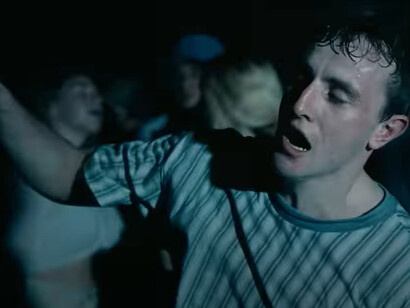
At the end of the film, we see the grown-up Sophie watching the camera’s footage, showing us that she watches it quite often, as this moment connects us to the beginning of the film, where we see the footage being rewound. Another example—or clue—is that we see them looking for each other on a blurred, dark, strobe-lit dance floor - something is lost and hard to see, but what? Or yet, by the fact that Calum seems to face depression—and again the camera plays an important role here. Calum walks into the darkness; we see him walking towards the beach from behind. He gets into the water, and the camera is there, watching, offering no hope of salvation. Nobody is going to rescue him.
The film creates several moments of tension, but nothing goes too far. At least we don’t see that on screen. For example, we are presented with the feeling that Calum has passed away, but we don’t see it, we don’t hear it. All we know is that Sophie longs for that moment they spent together in Turkey, and alongside her, we wish she could freeze those memories and make that present last forever. But just like the characters, we’re impotent. Despite this fear the director creates, as if we were responsible for Calum and Sophie’s well-being, we mainly experience moments of tenderness and bonding. A father and daughter take a vacation to escape their reality, a sort of runaway to a happy and sunny world.