English
 Español
 Français
 Deutsch
 Italiano
 Português
In 2013, director Steven Soderbergh announced his retirement from filmmaking—and we should all thank our lucky stars it only lasted about three years. Since his return, he’s already directed ten feature films, and Black Bag might just be the best yet.
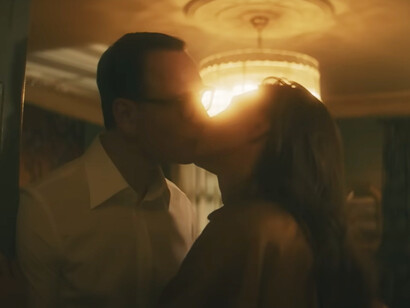
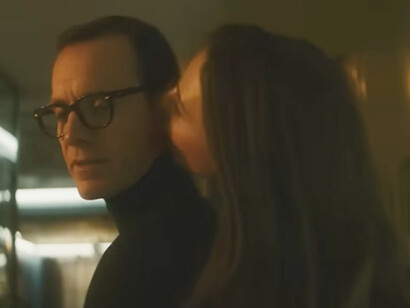
Already his second release of 2025 (both collaborations with screenwriter David Koepp), Black Bag follows two married spies, George and Kathryn, played by Michael Fassbender and Cate Blanchett. To say their performances are magnetic would be an understatement—from the moment they appear on screen, they command every frame. These are two actors at the top of their game, playing characters who never drop the act, even in private.
It’s not just that they’re attractive, suave, and calculating (though that certainly helps); it’s their relationship that makes them so compelling. Many films in this genre, like Zemeckis’ Allied, derive tension from a rift in the marriage, the constant question of loyalty hanging in the air like a knife. But that’s not the case here. Even in fleeting moments of suspicion or doubt, their devotion to one another remains unwavering. This is a love built not on sentimentality but shared experience, shared danger—a kind of practical, practiced intimacy that feels oddly romantic in its own right.
The opening shot sets the tone: George moves swiftly down a London alley, the camera fixed on his back as he turns sharp corners to meet his contact. Instantly, we’re placed in his headspace—immersed in the shadowy world of espionage, meeting strangers outside clubs for scraps of information. The contact informs him of a stolen weapon known as “Severus” and gives him a week to track it down. Start the clock.
At home, he’s cooking dinner—mincing garlic as steam fogs his glasses. The warm, golden glow of the domestic setting contrasts sharply with the murky, gray world we just left. What follows is the first of two dinner parties, where George and Kathryn invite four fellow agents (two other couples) to subtly investigate their potential involvement in the disappearance of Severus. These gatherings serve as bookends for the plot, heightening tension within the group dynamic. During the first, they play a game wherein each player must identify a resolution for the person to their right. What could possibly go wrong?
After dinner, George notices a movie stub in the trash. When he brings it up casually the next morning, Kathryn pleads ignorance. He asks about the nature of her upcoming trip; she simply responds, “black bag.” Meaning: top secret, I can’t tell you. This might be an issue for your average marriage—and as characters are wont to lament, “That’s why you don’t date a spy.” But as George explains later, the only way any of this works is if their priority is each other. Not the agency, not the country, not even the world. If she’s in trouble, I will help her—even if she got herself into it.
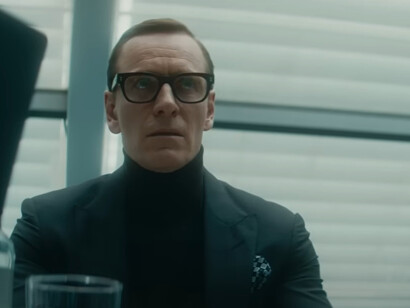
Probably my favourite scene in the whole movie comes when George dispenses with all pretense and simply sits his suspects down for a polygraph test. It’s a stark, clinical sequence—each agent wired up, facing a barrage of deeply personal, disarming questions. Fassbender’s cool, monotone delivery lulls both his targets and the audience into a trance-like state, the tension so carefully modulated it becomes hypnotic. It’s not just an interrogation; it’s a performance, one that leaves the viewer unsure of who’s hiding something—and who might break.
Elsewhere, Kathryn quietly unravels in her own way. In a brief but powerful scene, she meets with a therapist. It’s never made entirely clear whether this is part of the mission or a genuine attempt to ground herself amid the web of lies. The ambiguity only deepens her character. Cate Blanchett plays it beautifully, allowing the cracks to show without ever letting the mask fall completely. In contrast to George’s clinical control, Kathryn’s interior life remains more enigmatic—but no less captivating.
All of this unfolds with an economy that’s frankly astonishing. The film accomplishes so much—introducing a world, a marriage, a conspiracy, and a dozen interpersonal tensions—and does it all in just 90 minutes. There’s no fat, no indulgent tangents. Every scene builds on the last, each one revealing a little more or shifting the dynamic in just the right way. The pacing is razor-sharp, yet it still finds time for silence, stillness, and moments that breathe. It’s as precise as a watch and as slippery as a secret.
Take the second dinner party, for instance. Tensions have simmered to a boil, and one of the agents reaches for a gun on the table—who it is, I won’t spoil. But it’s a payoff built entirely on atmosphere and character. Moments like these punctuate the film: slick, elegant turns that slide by almost too quickly, drawing the viewer further in. Soderbergh doesn’t announce these moments with flair or flourish; he lets them unfold with a quiet confidence that assumes you’re paying attention.
By the time the credits roll, you’re left breathless—not from action, but from the sheer precision of it all. Black Bag isn’t trying to reinvent the spy thriller. It’s simply doing it better than almost anyone else. It’s a lean, stylish puzzle box with just enough warmth to make you care, just enough danger to keep you guessing, and two of our finest actors playing lovers who know every secret—except, perhaps, their own.