English
 Español
 Français
 Deutsch
 Italiano
 Português

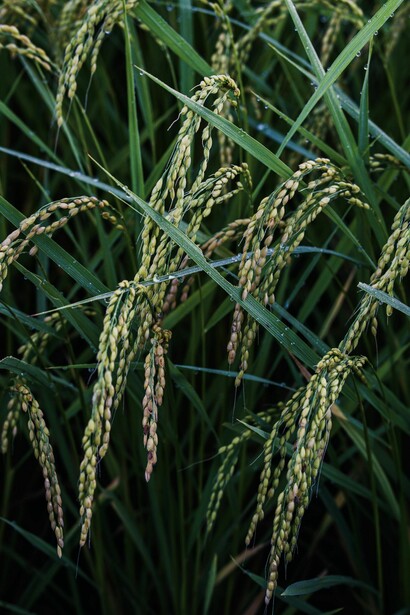
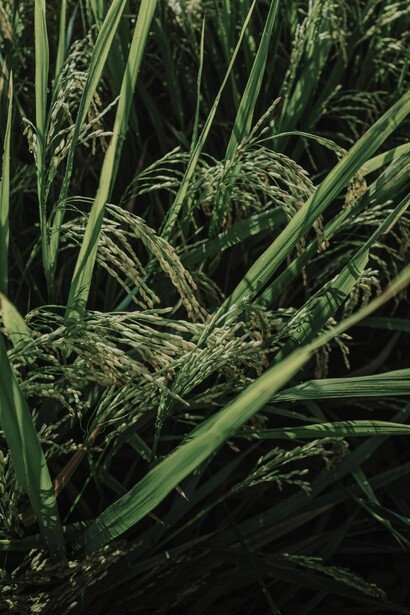
Increasing salt content in soil is becoming a critical stressor on global agricultural production, especially for the most widely produced crop, rice. More than half of the world’s population consumes rice, and the crop shows extreme sensitivity to salt-induced stress. When soil contains too much salt, rice crops are unable to acquire nutrients, regulate water balance, photosynthesize, and maintain cellular internal balance.
Microscopic allies
Beneath the surface, rice roots aren’t navigating the toxic, salty soil alone. Bacterial colonies grow on and around the plants, exerting various effects. These soil bacteria, known as rhizobacteria, can be parasitic, neutral, or beneficial to plants, depending on the species. Together, the plants and rhizobacteria create a complex ecosystem reliant on biological interactions for all species to survive. One group of rhizobacteria has become the focus of study due to its ability to tolerate higher salt content in soil, potentially being used in rice agriculture to protect crops.
These rhizobacteria are called halotolerant, and they have been sought out by agricultural researchers as a solution for protecting rice crops from the growing salt in soil. Several halotolerant rhizobacteria belonging to the genera Bacillus, Pseudomonas, and Enterobacter have been identified and shown to enhance plant growth and resilience in salty environments. However, rising salt is not the only issue facing agriculture, and previous studies on halotolerant rhizobacteria have not looked at their potential to adapt and survive in other conditions.
A study from the University of Rajshahi in Bangladesh examined the whole genome of a halotolerant rhizobacterium to identify genes linked to stress adaptation, the creation of useful natural compounds, ecological survival, and potential health and safety implications.
The Enterobacter genus has attracted significant attention from scientists due to its remarkable ability to adapt its diet and functions, as well as its rapid response to environmental changes. As rhizobacteria, Enterobacter possess multiple plant-promoting features, including metabolizing phosphates and nitrogen into the soil for roots to absorb. The University of Rajshahi study focused on the halotolerant rhizobacterium Enterobacter roggenkampii. Three of E. roggenkampii’s cousins have already had their full genomes studied, and researchers have found numerous genes involved in biomaterial production, stress adaptation, and multiple metabolic pathways that support ecological adaptability.
Meet OSNO4
Since E. roggenkampii is closely related to the previously studied Enterobacter species and has been found in many soil and root ecosystems, it is a good follow-up candidate for genomic study. Currently, there is a gap in the genetic information for E. roggenkampii, with questions remaining about safety, potential antibiotic resistance, and disease-causing features. The answers to these questions were provided by the University of Rajshahi team.
From soil samples, the research team isolated a single strain of E. roggenkampii, called OSNO4, from 283 bacterial candidates. OSNO4 was discovered after the researchers filtered out the other bacteria based on their ability to support plant growth, tolerate salt, and protect against fungi. After a deep dive into the genetic sequence of OSNO4, the research team found several genes that program metabolic systems allowing OSNO4 to adapt to changing environments—a feature necessary to combat shifts in soil quality during agriculture. This deep dive also revealed a robust collection of genes OSNO4 uses to support plants. These include genes for acquiring nutrients from the surrounding soil for plant absorption and enabling OSNO4 to produce nutrients that a plant can use to stay healthy.
Along with these plant-supporting genes, the research team from the University of Rajshahi wanted to determine if OSNO4 would be safe to handle and apply to soil. From the genetic deep dive of OSNO4, the research team found several antibiotic-resistance genes. While this could pose problems, they determined that these genes were well-regulated and activated only under environmental stress, suggesting the bacteria could still be controlled with certain antibiotics. The team also looked for virulence, or disease-causing, genes and found a few of them in OSNO4. While such genes can cause problems in humans, in this case they actually help OSNO4 survive in soil, meaning the risk of OSNO4 causing harm to handlers is also low.
From the computer to the soil
Genetic profiling, however, just gives us a theory on how OSNO4 would behave. To put OSNO4 to the test, the research team grew rice in soil treated with the bacterium. The goal was to see if OSNO4 would help the rice grow when there is a lot of salt in the soil, and OSNO4 delivered! Even in salty soil, the rice treated with OSNO4 was able to germinate early, and the seedlings were able to sprout early, too.
With this confirmation of OSNO4 as a supplemental rhizobacterium for agriculture, the bacterium shows strong potential to support plant growth in an ever-changing climate and soil. Of course, more studies should be conducted to look into the complex relationship between OSNO4 and plant roots, but for now, OSNO4 is showing the outcomes farmers are looking for. With more time, OSNO4 and other helpful rhizobacteria could be added to soils as a custom microbial cocktail to keep plants healthy and strong during dire times.
References
AbuQamar SF, El-Saadony MT, Saad AM, Desoky E-SM, Elrys AS, El-Mageed TAA, et al. Halotolerant plant growth-promoting rhizobacteria improve soil fertility and plant salinity tolerance for sustainable agriculture—A review. Plant Stress. 2024;12:100482.
Davin-Regli A, Lavigne J-P, Pagès J-M. Enterobacter spp.: Update on Taxonomy, Clinical Aspects, and Emerging Antimicrobial Resistance. Clin Microbiol Rev. 2019;32(4):e00002–19. pmid:31315895
Hussain S, Zhang R, Chen Y, Li J, Hussain Q, Altaf A, et al. An overview on salt-induced physiological changes, molecular mechanism of salinity tolerance and application strategies for its management in rice. Cereal Res Commun. 2024;52(4):1239–51.
Khalifa A. Enterobacter. In: Amaresan N, Senthil Kumar M, Annapurna K, Kumar K, Sankaranarayanan A, editors. Beneficial microbes in agro-ecology. Academic Press. 2020:259–70.
Mohapatra PK, Sarkar RK, Panda D, Kariali E. Origin and Evolution of Rice as Domesticated Staple Food Crop. Tillering Behavior of Rice Plant. Springer Nature Singapore. 2025: 1–17.
Mukharjee SK, Hasan MF, Sikdar B (2026) Whole-genome characterization of halotolerant Enterobacter roggenkampii OSNO4 and its potential for climate-resilient agriculture. PLoS One 21(6): e0351555.
Riaz M, Arif MS, Ashraf MA, Mahmood R, Yasmeen T, Shakoor MB. A comprehensive review on rice responses and tolerance to salt stress. In: Hasanuzzaman M, Fujita M, Nahar K, Biswas JK, editors. Advances in rice research for abiotic stress tolerance. Woodhead Publishing. 2019:133–58.
Sokolova EA, Mishukova OV, Hlistun IV, Tromenschleger IN, Chumanova EV, Voronina EN. Phenotypic and Genomic Analysis of Enterobacter ludwigii Strains: Insights into Mechanisms Enhancing Plant Growth Both Under Normal Conditions and in Response to Supplementation with Mineral Fertilizers and Exposure to Stress Factors. Plants (Basel). 2024;13(24):3551. pmid:39771249