English
 Español
 Français
 Deutsch
 Italiano
 Português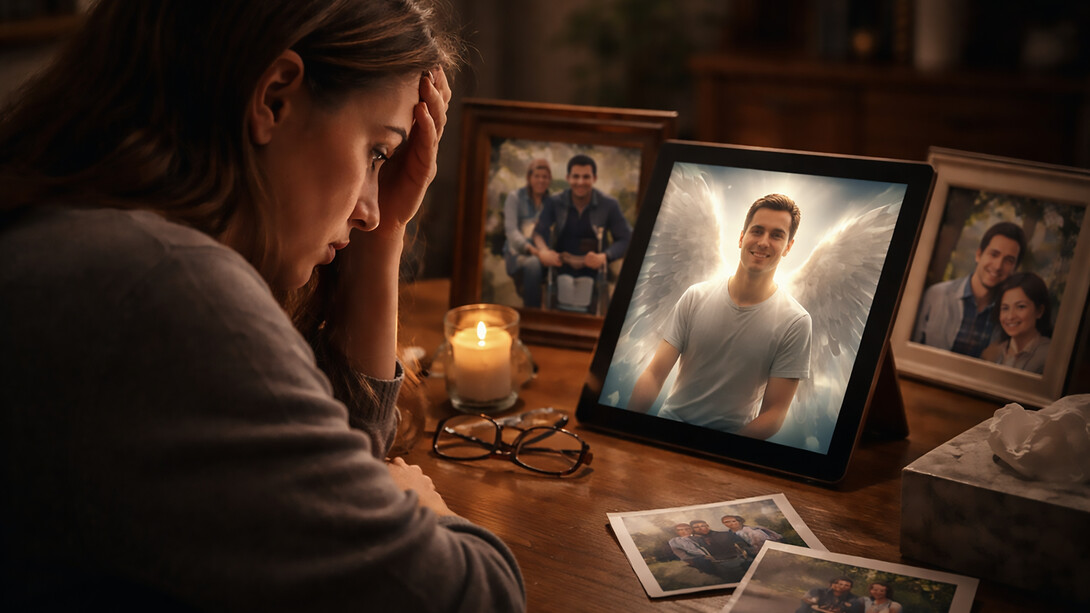
Often, in the era of hyperconnection, we find ourselves navigating oceans of synthetic information, desperately seeking a glimpse of genuine humanity. I periodically visit Reddit to find some interesting stories for myself from different corners of the world. On this platform, unlike traditional media or corporate publications, people usually write in a real, living language. And even though the plots of these stories can sometimes be strange, I enjoy this real, non-synthetic, and absolutely human language, along with a style of exposition that is sometimes turbulent and inconsistent. It is in this imperfection, in this emotional and grammatical rawness, where we can truly feel the pulse of contemporary society and discover how real people are dealing with emerging dilemmas that science fiction barely began to predict a couple of decades ago.
It was precisely on one of these digital journeys, during an ordinary night, when my attention was captured by a tale that forced me to stop my superficial reading and immerse myself in deep and necessary reflection. Stumbling upon one post one fine evening, I decided to continue my reflections on this topic. The core of my questioning centered on a highly contemporary dilemma:
To what extent is it ethical to use artificial intelligence when visualizing departed people, our deceased relatives and loved ones? This question does not arise in a theoretical vacuum but in a vertiginous historical moment where generative AI technology allows us not only to remember through static photographs but also to alter, animate, and hyper-realistically transform the visual memories of those we love and have lost.
The case I found on that forum was not a simple abstract speculation about the future of digital ethics but a palpable and painful family drama occurring in the present. A woman shared in her post that someone from her close circle had recreated photographs of her departed brother using artificial intelligence. Up to this point, in our era of quick edits and filters, this might seem like a simple modern gesture to memorialize someone, but there was a fundamental biographical detail that changed the entire moral equation: her brother had a disability. This condition, which undoubtedly shaped his daily life experience, his interactions with his environment, and the very essence of his identity in the world, was intervened with, modified, and erased by an algorithm under the unilateral direction of a third party.
The resulting image recreated him in the form of a healthy angel without any physical flaws. At first glance, the idea of not just visualizing these people as angels with wings but doing so in a way that in theory could help people cope with the stage of grieving seems like a comforting resource. Historically, since the dawn of civilization, human beings have resorted to religious, artistic, and spiritual metaphors to find solace in the face of the unfathomable void left by death, and AI is simply providing a new, immediate, and overwhelmingly realistic canvas to facilitate these ancient psychological projections of peace. However, the technological intervention in this case crossed a highly delicate line that goes far beyond the simple yearning for comfort, stepping into the territory of rewriting personal history.
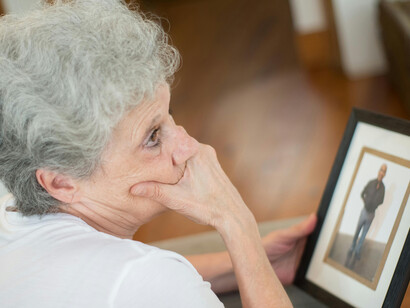
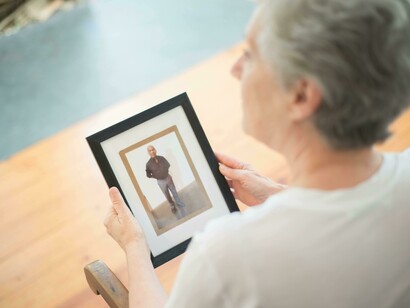
Here is where we go fully into the steep terrain of grief support for the living psychological process that is deeply individual, asymmetrical, and often full of painful contradictions. The reaction to this altered image divided the family in a way that perfectly illustrates the enormous complexity of human psychology in the face of loss. On one hand, her mother liked this image of her son as a healthy angel. For a mother who has had to endure the unnatural experience of burying her own child and who very likely watched him suffer, struggle, or face immense systemic barriers due to his disability throughout his life, the vision of her "healthy," ethereal, and peaceful son might have acted as an instant, comforting balm. In her grieving process, the visual eradication of her son's earthly suffering offered her a critical emotional anchor that technology miraculously materialized before her very tearful eyes. For her, grief support required the elimination of pain, even if it meant altering the visual reality of her son.
But what happens when the same visual medicine that heals one person becomes emotional poison for another within the same family unit? For the sister of the deceased young man, the same AI-generated image caused a diametrically opposite reaction: it shocked her very much. The emotional impact on her psyche was neither comfort nor relief; rather, she experienced it as a severe violation of her family's memory and truth. She shared her indignation on social networks. Her main complaint was based on a double ethical and emotional transgression that she could not ignore. First, she complained that no one had asked them for permission for such a manipulation of the photograph of her dead brother. Second, and perhaps in a much more profound and existential way, she argued that the identity of this person had been thoughtlessly erased.
The sister's passionate complaint forces us to stop collectively and consider what it truly means to love, honor, and remember someone who no longer has a voice to defend their own image. For her, her brother's disability was in no way a temporary "defect" that needed to be posthumously "corrected" by editing software, but an intrinsic, valuable, and undeniable part of who he was as a human being.
This debate touches a very sensitive social fiber that goes hand in hand with the normalization of people with disabilities and the normalization of people with some very serious health problems. By deliberately erasing the disability in the generated image, the person operating the artificial intelligence, whether consciously or unconsciously, was sending a toxic message: that the "ideal," "celestial," or "perfect" version of this man forcefully required the exclusion of his actual physical condition. This constitutes an affront not only to the memory and dignity of the deceased individual but also to the dignity of the entire community of people with disabilities, perpetuating the stigma that their bodies are something to be hidden or fixed, even in the afterlife. The sister's grief, unlike her mother's, required honoring the unaltered totality of her brother's life, embracing his complete reality without applying beautifying filters that censored his true life story.
Moved by the enormous depth of this conflict and its ramifications in our digital future, I published my reflections on LinkedIn. The professional, academic, and technological environment of this social network seemed to me the most appropriate stage to elevate the conversation, moving from a simple heartbreaking anecdote to the rigor of ethical and corporate analysis. This post had very good engagement, and people very often blamed humans, not the artificial intelligence itself. What caught my attention the most from the avalanche of responses and comments was precisely where people directed their moral critique.
In the comments, people talked about the proverbial good intentions with which the road to hell is paved. This phrase perfectly encapsulated the contemporary tragedy of the digital "good Samaritan." The person who took the original photograph, uploaded it to an AI image generator, wrote a specific prompt to turn the young man into a healthy angel, and gave it to the family surely thought deep down that they were offering an invaluable and deeply spiritual gift. Their explicit goal was, without a doubt, to mitigate the overwhelming pain of loss, offer tangible comfort, and dry the tears of a mother and sister plunged into heartbreaking mourning. However, by acting exclusively from their own biased perspective of what is "comfortable," "aesthetic," or "beautiful," and by completely omitting to consult the main mourners, their supposedly good intentions quickly transformed into an acute source of stress, division, family conflict, and additional psychological pain for the sister.
This complex scenario demonstrates how very sensitive and how very multifaceted this topic is. We find ourselves at an unprecedented turning point where dizzying technological capabilities have far surpassed our slow moral frameworks, our protection laws, and our basic social norms of etiquette regarding death. The rapid democratization of generative AI tools means that, today, absolutely anyone with internet access and a mobile device can manipulate the image, voice, or video of a deceased individual in a matter of seconds, without requiring advanced technical knowledge. For those of us working in the sphere of ethics and policy of artificial intelligence, there are no exact, direct answers. We are literally building the rules of the ship while trying not to sink in the midst of a storm of constant and disruptive innovations.
However, despite the worrying lack of strict governmental regulations or universal social consensus facing these technologies, we are not navigating completely blind. There are robust ethical foundations that we have inherited, and that must serve as an unwavering beacon. The single, first, and most important thing that we are taught (as I was taught, for example, in my master's degree in digital ethics) is the autonomy of personality, respect for the individual, and their mandatory consent for the manipulation and processing of personal data. This is a priori. It is a very important point.
Applying this a priori principle to the sacred realm of grief and death requires a monumental expansion of our empathy and our civic respect. The autonomy of personality and human dignity should not evaporate in the tragic moment an individual exhales their last breath. The personal data of a deceased human being, their photographs, written diaries, voice recordings, physical traits, and even the visual representation of their disability, continue to be vital extensions of their historical identity and legacy in this world. Using that intimate data to feed generative models or create altered representations without the prior and express consent left in life by the deceased, or failing that, without the unanimous and extremely careful consensus of their direct emotional heirs, constitutes a modern form of digital expropriation and an atrocious lack of respect.
In the specific context of providing grief support for the living, manipulating the image of a deceased person through AI presents psychological risks that psychiatrists and therapists are only beginning to catalog. The work of mourning, to be truly healthy and transformative, unavoidably requires survivors to process and accept the harsh reality of loss and physical absence. When we introduce hyper-realistic synthetic images that artificially revive or cosmetically alter the deceased to satisfy our discomfort with death, we run the serious risk of interrupting this fragile emotional acceptance process.
We may end up trapping mourners in a perpetual limbo of technological denial, a space where the loved one "has never really left," or, morally worse, where the real person has been stealthily replaced in family memory by a perfected and sterilized avatar that erases authentic memories, with all their beautiful, difficult, and deeply human imperfections.
The disturbing case of the offended sister and the AI-generated angel must remain etched in our collective consciousness as an indispensable cautionary tale for the modern era.
It teaches us forcefully that genuine grief support does not consist of trying to "fix" what we consider irreparable through the use of algorithms, much less in erasing the difficult, unique, or challenging aspects of a human biography.