English
 Español
 Français
 Deutsch
 Italiano
 Português
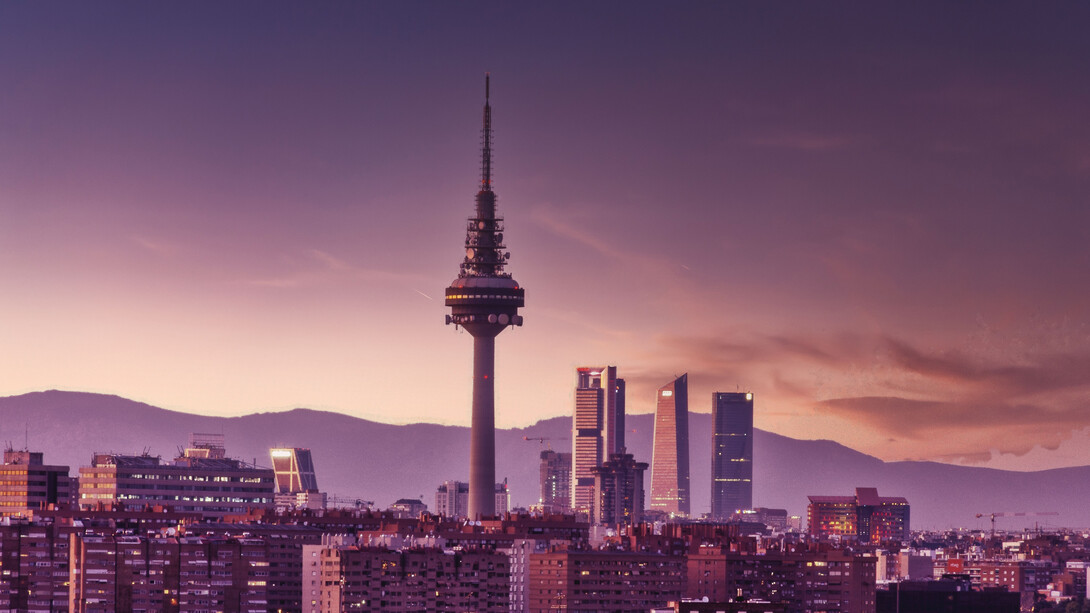
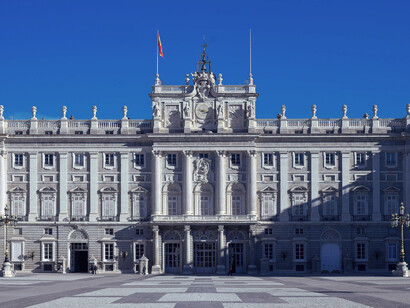
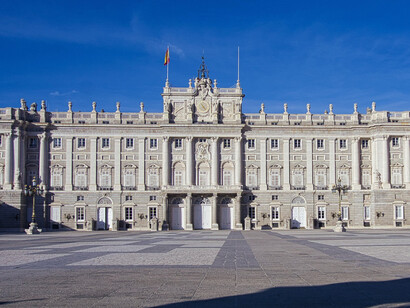
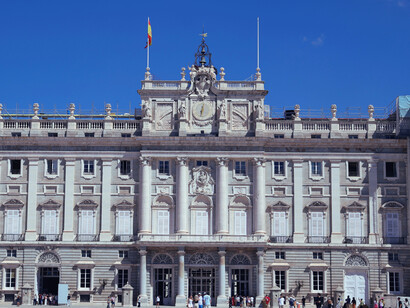
The 30th Ibero-American Conference of Heads of State and Government took place in Madrid on 4 and 5 November, bringing together 22 Spanish- and Portuguese-speaking countries from the Americas and the Iberian Peninsula. The theme of this year's summit was 'Ibero-America: Together We Build Our Community. Together We Build It and Project It Towards the Future and the World,” during which topics such as natural disasters, academic mobility and artificial intelligence were discussed, among others.
Only 10 heads of state and government were in attendance out of a total of 22, including the host, King Felipe VI of Spain. However, no consensus was reached on the final declaration, as Argentina, Colombia, Costa Rica and Paraguay refused to sign a clause condemning coercive measures contrary to international law, specifically the economic and financial blockade of Cuba, which has been in place for over 60 years.
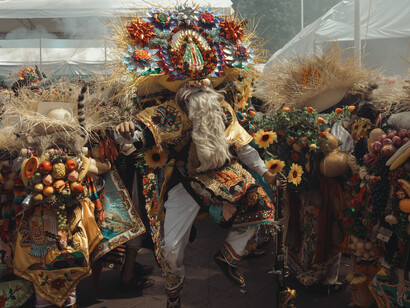
The Ibero-American Summits originated in the early 1990s, a time when the Cold War and Latin American dictatorships were ending and financial markets were being liberalised, economies were opening and globalisation was advancing rapidly. The approaching 500th anniversary of Christopher Columbus’s voyage in 1492 was on the immediate horizon. This voyage marked the beginning of the encounter between the European world and the indigenous peoples of the American continent — an encounter that left a deep mark of domination, exploitation, and slavery.
Two figures played a leading role in establishing the Summits: Mexican President Carlos Salinas de Gortari and Spanish Prime Minister Felipe González. Together, they organised the inaugural summit in Guadalajara in 1991, attended by the 21 founding countries, joined by Andorra in 2005. From 2014 onwards, the summits became biennial, and the Ibero-American General Secretariat (SEGIB) was formally established in Madrid in 2005. It has an annual budget of approximately six million euros, 60% of which is funded by Spain, 6% by Portugal and Andorra, and 34% by Latin American countries. During its 30-year history, the SEGIB has had three secretaries-general: Enrique Iglesias (2005–2014) of Uruguay, Rebeca Grynspan (2014–2021) of Costa Rica, and Andrés Allamand (since 2022) of Chile.
The Summits have been an invaluable tool in Spain’s foreign policy. Under the leadership of Felipe González and King Juan Carlos, they created extensive investment opportunities for Spanish companies in Latin America. According to the Elcano Royal Institute, investment reached €218 billion in 2020, rising to €245.2 billion in 2023. These investment flows have generated growth, jobs, and prosperity, as well as establishing a significant political presence for Spain. Hosting a Summit brings domestic political benefits for the country involved, as high-ranking dignitaries are received and honoured by the host, including the Spanish monarch and heads of state and government. This generates significant public exposure, primarily in local media.
In 1966, Italy became the first European country to establish a permanent link with Latin America by setting up the Italian Latin American Institute (IILA) under Aldo Moro’s Council of Ministers. The driving force behind this was the Christian Democrat (DC) politician Amintore Fanfani, who was Minister of Foreign Affairs at the time and would serve as Prime Minister of Italy on five occasions. Previously, in 1947, Mariano Rumor — who would also serve as prime minister several times — had proposed the idea of an 'interoceanic dialogue'.
Italian political influence was reflected in the close ties between parties aligned with the DC in Venezuela, Chile, Brazil, Uruguay, and other countries. However, the Italian initiative failed to build on the strong political ties established by prominent DC leaders, gradually losing momentum and failing to establish a permanent institutional framework or mobilise a consistent flow of investment towards Latin America. Italian investment figures range between 25 and 35 billion dollars, beginning in 1990.
Today, the IILA is an institution headquartered in Rome that has held international organisation status since 1999. It carries out cooperation programmes in the cultural sphere and promotes trade, as well as making agreements with universities. However, it is not a forum for high-level political dialogue and has not succeeded in positioning Italy within the Latin American framework, despite the potential of its companies and cultural institutions. It has limited itself to low-intensity activities that ultimately relegate it to inconsequential and unknown status in the region.
By contrast, Spain has established an institutional structure through which it has generated a dynamic enabling fluid and effective political dialogue, as well as a significant increase in trade and investment, through the Summits. Its governments have also served as allies in various negotiations between Latin American countries and the European Union. At the beginning of this century, the summits brought together virtually all heads of state and government. However, ideological rivalries, historical grievances and caudillismo began to emerge, leading to a weakening of political dialogue.
At the same time, some countries distanced themselves from Spain's role as the driving force and primary financier of most of SEGIB's bureaucratic structure. Resentment over Spain’s role during centuries of colonial rule also surfaced, leading former Mexican President Andrés Manuel López Obrador to demand an apology from King Felipe VI and causing a cooling of bilateral relations. This critical view of the consequences of Columbus's arrival on the continent is shared by various sectors in most countries. Recently, the monarch has tentatively acknowledged the abuses and subjugation suffered by indigenous populations, helping to thaw relations with Mexico.
From 2009 onwards, fewer and fewer heads of state and government attended the Summits, with just four in attendance at the Cuenca Summit in Ecuador in 2024: the host, President Daniel Noboa; King Felipe VI; the President of Portugal, Marcelo Rebelo de Sousa; and the head of government of Andorra, Xavier Espot. Notably, no Latin American heads of state were present, nor the head of government of Spain. Mexico, Venezuela, and Nicaragua had suspended diplomatic relations with Ecuador. This year, only ten heads of state and government arrived in Madrid, but subtracting the king and the Spanish prime minister leaves just eight. The absence of the leaders of Mexico and Brazil, Claudia Sheinbaum and Luiz Inácio Lula da Silva, creates a huge void, as these two countries account for more than half of Latin America’s population.
The success of a summit is measured by the number of heads of state and government who attend. While not the only indicator, it carries weight in terms of image and public opinion, reflecting the importance that countries assign to these meetings. The decline in attendance at these summits undermines the already limited political dialogue between leaders and diminishes the impact of resolutions, many of which end up gathering dust in storage rooms, unknown to the public. At a time when the multilateral system is fragmenting and the international order is concentrated in the hands of three major powers, international law is losing its force and countries are left at the mercy of decisions based solely on force and the logic of power.
The question that arises is: Is there political space to revive this forum for Ibero-American multilateralism and give the Summits practical meaning? This requires a pragmatic reappraisal of historical events that were painful for much of Latin America. Just as King Juan Carlos once was, Felipe VI is the key figure in foreign policy towards the region. The Spanish Foreign Ministry must engage in subtle political manoeuvring and implement a continuous, long-term programme with the major countries — some of which are most affected — as well as with the rest of the region.
Today, indigenous communities have regained much of their dignity, pride, and respect. Many have gained access to higher education and are now prominent researchers or university professors, immersed in the study of the past and with a full understanding of what happened. For this reason, Spain must embrace the Summits with a fresh perspective and not let them die out, as they are one of its best foreign policy tools.
The next Summit is scheduled to take place in Honduras in 2028, and the country has already assumed the Pro Tempore Secretariat. SEGIB will undoubtedly need to play an important supporting role in the administrative coordination process, but Spain must focus its efforts on revitalising this forum for political dialogue and Ibero-American cooperation from which everyone can benefit. However, it must first strike the right political balance and fully understand the sensitivities, realities, and diversity of Latin American countries.