English
 Español
 Français
 Deutsch
 Italiano
 Português
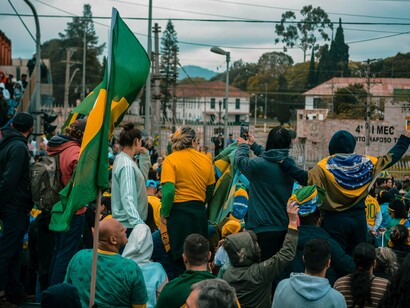
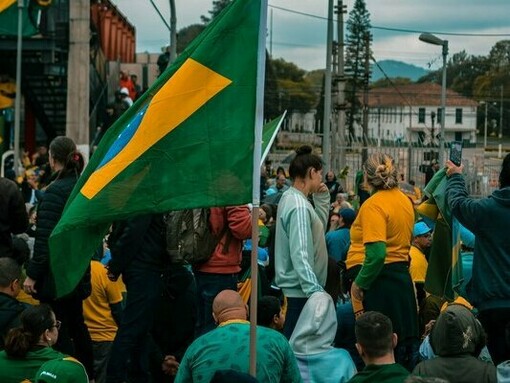
The results of Brazil's most anticipated election, held on 4 October, came as a surprise. Polls had predicted a first-round victory for Luiz Inácio Lula da Silva of the Workers’ Party (PT), but he received only 45.16% of the vote. His opponent Flávio Bolsonaro of the Liberal Party (PL) took first place with 47.03% of the vote, out of a total of 158 million eligible voters. The abstention rate was 21.08%, while the other ten candidates accounted for nearly 8% of the vote. Voting is mandatory for people between the ages of 18 and 70. Now, both candidates will face off in a run-off election on 25 October to determine who will govern the world’s fifth-largest country.
Brazil covers an area of 8.52 million km² and has a population of approximately 220 million. A key factor will be the mobilisation of the nearly 33 million voters who did not participate in the election, although most of those votes are expected to go to Bolsonaro. The other candidates who ran in the election hold right-wing views, so they are likely to support the winner of the first round.
For President Lula, who is seeking a fourth term in office, securing the necessary votes will be exceedingly difficult, given that Bolsonaro’s party won a landslide victory in the parliamentary elections. This victory will allow the party to control the Chamber of Deputies, hold a majority in the Senate, and secure the support of 27 state governors. These results have delivered a reality check to Lula’s bid for a fourth term. Aged nearly 81, he is up against a 45-year-old candidate who has also secured seats for four of his family members—two in the Senate and two in the Chamber of Deputies—including the current wife of his father, former President Jair Bolsonaro, who will take office as a senator while he serves a 27-year sentence for attempting a coup.
In other words, an entire family is set to enter parliament. Should he win the runoff and become president of Brazil, one of Flávio’s first actions will likely be to grant his father a pardon.
Brazil is a land of surprises, and many things could happen, especially given the narrow margin of just 1.9% of the vote. The election remains wide open and will depend on Lula’s message to the 33 million who abstained from voting—including many older adults—to reverse the result. Religion matters in Brazil, where 57% of the population identifies as Catholic and 27% as Evangelical—a group that has nearly doubled in size over the past 25 years. Flávio Bolsonaro, his brother, and his father’s wife profess this faith and have skilfully cultivated this electoral niche.
In the last seven Latin American elections held between 2025 and 2026 in Bolivia, Chile, Honduras, Costa Rica, Peru, Colombia, and Brazil, right-wing parties emerged victorious. President Trump has made no secret of his support for Bolsonaro Jr and has demanded the release of his father. In 2025, Trump imposed 50% tariffs on Brazil, which were reduced to 25% this year. This measure is far more political than economic in nature.
Brazil is a strong regional power with a significant degree of strategic autonomy, given the size of its economy, population, and defense capabilities. The country has developed industrial sectors in the military, aeronautical, and naval fields, as well as a modern agricultural sector and an abundance of natural resources, including oil, rare earth elements, and lithium.
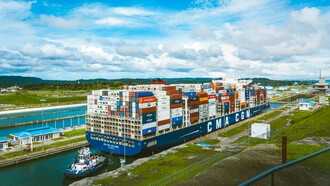
Currently, 87.4% of the population resides in urban areas, while the remaining 12.6% live in rural areas. According to World Bank figures from last year, Brazil's GDP was $2.3 trillion, with a nominal per capita income of $10,700. Adjusted for purchasing power parity (PPP), this equates to $23,433. The trade balance reached 628.49 billion dollars, resulting in a surplus of 68 billion dollars in 2025. Brazil's main trading partners are China, to which it exported goods worth just over 100 billion dollars, the European Union, with exports worth nearly 50 billion dollars, and the United States, with exports worth 38 billion dollars. In terms of foreign investment, however, the United States ranks first, followed by the EU, Japan, and China.
While Brazil currently enjoys a stable economic situation, with growth expected to exceed 2% this year, the unemployment rate is 5.6%. The IMF also notes that public debt reached 91.6% of GDP in 2025, which is a cause for concern. Last year, the World Bank estimated the poverty rate at 20%, despite the successful programs implemented by the Lula administration. Five days after the election, São Paulo's main stock market index, the IBOVESPA, had risen by almost 9%, reflecting investors' confidence in a Bolsonaro victory.
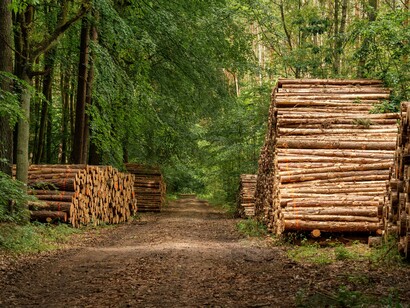
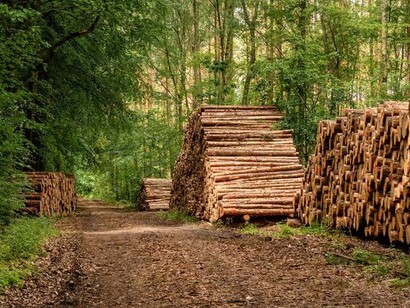
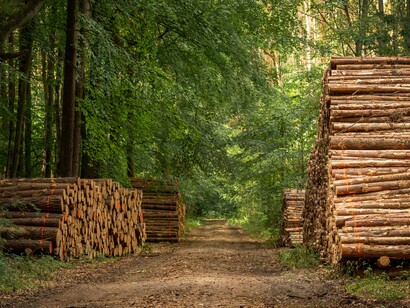
A victory for candidate Flávio Bolsonaro would have significant geopolitical and environmental consequences for the continent. During his father’s presidency from 2019 to 2023, environmental oversight weakened, resulting in a substantial rise in deforestation in the Amazon compared to previous years. Illegal logging also increased to make way for agriculture and mining. It is estimated that Bolsonaro Jr. will continue this policy without adequately protecting the environment.
Brazil has played a key role in defending the interests of developing countries through its active participation in multilateral organisations such as the United Nations, the G20, the BRICS—which now comprises 11 countries—the World Trade Organization (WTO) and MERCOSUR, among others. However, Bolsonaro has already announced that if he is elected president, he will join the “Shield of the Americas,” a pact through which Washington seeks absolute hegemony over the American continent under the concept of “continental sovereignty”—understood as making the US national interest its own.
A radical shift in his foreign policy is likely, with him aligning closely with the White House. This will prioritize the US's relationship with Brazil at the expense of other countries in the region. Brazil’s interests are currently global, and one of its main objectives is to gain a seat on the United Nations Security Council. This aspiration is firmly rooted in the Ministry of Foreign Affairs (Itamaraty) and Brazilian public opinion, which explains the tremendous expansion of its diplomatic presence. Brazil has 228 diplomatic missions, 136 of which are resident embassies.
President Lula and his international advisers have been a major driving force behind autonomous, inclusive, and multilateral diplomacy characterised by strong ties with developing countries, particularly in Latin America. An example of this was the unconditional support given to Chile’s two-term president, Michelle Bachelet, in her bid for the position of United Nations Secretary-General—a stance mirrored by Mexico, but not the Chilean government. Brazil also has an active presence in Antarctica, where it has had a permanent base since 1984. This base is staffed by more than 30 researchers and scientists.
Brazil’s entire diplomatic corps is professional, in that its ambassadors are career officials. In fact, even during the years of the military dictatorship (1964–1985), most of its foreign ministers were diplomats. Over the past 25 years, only three politicians have held the foreign ministry portfolio, with all others coming from Itamaraty. Should Flávio Bolsonaro become president, he will be faced with a challenging decision regarding Brazil's relations with China, its primary trading partner and destination for exports. He will also have to define or redefine Brazil’s role within the BRICS, of which Brazil is a founding member. Together with India and South Africa, the BRICS have served as a platform for Brazil’s bid for a seat on the Security Council.
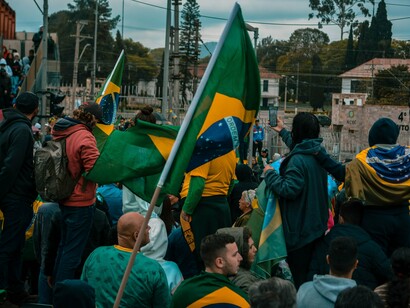
It is by no means certain that Bolsonaro will win the second round of voting on 25 October. The intense campaigning of recent days, in a politically polarized country with a keen sense of national pride, provides fertile ground for political communication strategists seeking the right message with which to convince voters. President Lula is showing signs of wear and tear: he has served four terms in office, he is 81 years old, he was the victim of a smear campaign that landed him in prison for a year and a half before he was released by the federal court, and he is exhausted from a gruelling campaign.
Meanwhile, Bolsonaro relies on his youth and promises of change, but he too is facing questions about his use of financial resources, his lack of experience and his dependence on his father, who has transferred his voter base to him. Ultimately, a Lula victory would give progressive sectors in Latin America hope, thanks to the strategic autonomy Brazil would maintain in relation to the United States. If Bolsonaro wins, President Trump will prioritize relations with Brazil, and he will have most of South America at his feet—except for Uruguay—and will try to get these countries to adopt his concept of continental sovereignty.