English
 Español
 Français
 Deutsch
 Italiano
 Português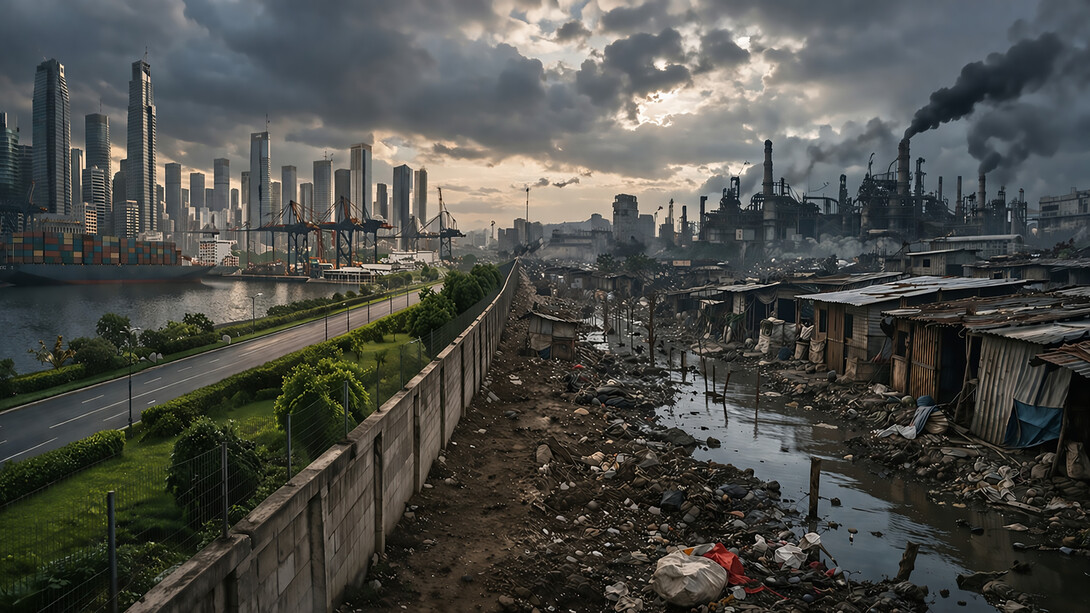
2026 is one of those arbitrary time locks we, in development work, like to use to make new resolutions to tackle, once and for all, the problems of underdevelopment (or maldevelopment, if you prefer) in the world. But there is nothing magical about the decade ahead. In development work, milestone breakthroughs rarely happen, and much less do they occur on nicely rounded dates. I would argue that no progress will be made in the decade to come unless we make some major changes in development thinking and development work.
While there, understandably, is a temptation to look at the hopeful side of the new decade, the reality is likely to be harsh. Heightened East-West tensions will mostly mean shifts not favoring countries rendered poor in the South. Long forgotten are the peace dividends resulting from disarmament talks in the North. Rearmament is now spreading both to regional and/or national conflicts, which worryingly contributes to the planet’s worst underdevelopment problems.
Furthermore, present global economic and political realignments are not of the kind needed to unequivocally favor the world’s poor and hungry. Add to this the lack of consensus on global environmental reforms, and you get a picture of our global failure in the search for solutions to our most pressing equity and equality concerns, all related to needed sociopolitical changes that are not happening.
Take the battle against hunger as an example. One cannot help help but be amazed that experts are now saying that we are seeing a breakthrough because “we have now discovered the real causes of hunger." Where have they been all these years, then, that it has taken them until now to discover these causes, which have been around us since time immemorial? Those rendered hungry could have told us long ago what the problems were…
One wonders, then, what we, development workers, can be accused of when confronted with all these years of ‘stagno-deterioration’? Not necessarily accused of a lack of commitment, nor of mediocrity; not of profiteering or a lack of professionalism. I hope for no cynicism, although I am not always sure.
But I think we can stand accused for the staleness of our approaches, for our complacency towards the status quo, for our lack of criticism of the overall lack of progress, for our political naïveté, or—more likely—for our choice not to get involved in the politics of it all. Or, further, for uncritically pushing forward to do something and get things done and over with; for not solving problems boldly using workable approaches agreed upon with those who must live with our decisions; and for our paternalistic (patriarchal) and ethnocentric approach. In sum, we cannot escape taking part of the blame.
A minimalist approach dominates our development philosophy, resulting from our obsession with sharpening the focus of the interventions through which we choose to tackle development issues. Many of these interventions, especially by the United Nations and international NGOs, mainly contribute to better chronicling and keeping records of how bad the situation is.
These minimalist strategies—still dominant in 2026-- concentrate on doing the “doable” and thus apply a “shish-kebab mentality," as one prominent United Nations official called it. This approach looks at the various problems of maldevelopment as if they were all separate events skewed together by tragedy. But the morsels are not a problem per se! It is the skewer that binds them that represents the sum of the structural constraints that perpetuate the poverty and powerlessness cycle, with all the ill health, malnutrition, and other problems that come with it, as represented by each of the morsels in the shish kebab.
Yes, it is this minimalist approach that dominates our development philosophy, resulting from our obsession with sharpening the focus of the interventions (mostly service-provision activities) through which we choose to tackle development issues. In this sense, the fallacy is to keep concentrating on the morsels in the shish kebab as the only ‘doable’ separate alternatives; I want to remind you that the tackling of the structural problems in the skewer is also 'doable.' But only to the extent that we, together with the victims of maldevelopment, concentrate our efforts and energies on doing so, since these problems will not go away by themselves. Therein lies the real challenge for the upcoming 10 years.
The question of how we can more effectively work together to heighten the priority for an all-out battle against underdevelopment cannot be posed in isolation anymore. We must ask if we are willing to drop much of what we are currently doing as development professionals and institutions and more decisively move, with the beneficiaries acting as claim holders, into new directions with a greater potential to make a dent in the chronic and self-perpetuating problems of maldevelopment.
Looking the other way or, from now on, conducting business as usual to deliver more of the same, even if ‘better focused’ (as the present mood seems to call for), will not do. We cannot forget that the next time lock marks the end of the Sustainable Development Goals (SDGs) in our civilization, a civilization that has for so long pursued the wrong development priorities.