English
 Español
 Français
 Deutsch
 Italiano
 Português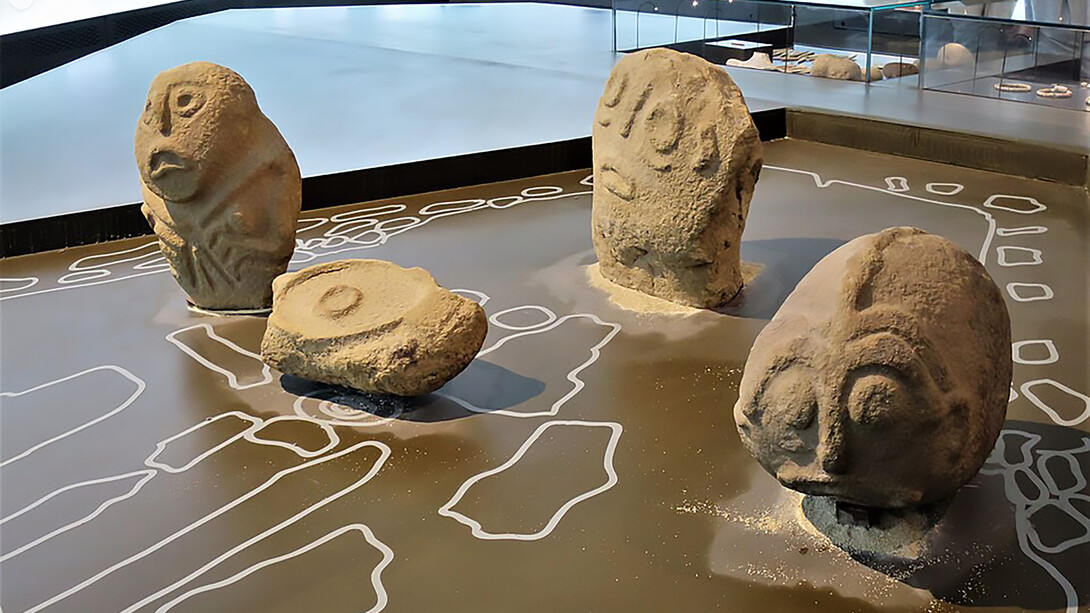
Standing on the banks of the great Danube, I imagine what life must have been like for those who first settled at Lepenski Vir.
It is one of the earliest known planned settlements in human history, nestled along the river that carried both life and mystery. Here, art, spirituality, and community converged in ways that marked a turning point in our human journey.
Unlike the fleeting marks left in caves or the figurines shaped in secrecy, Lepenski Vir was a place of permanence. Its stones, sculptures, and homes continue to speak to us across millennia, telling a story of humanity’s first experiment with community, ritual, and order.
The Danube and the birth of settlement
The Danube River was more than water to drink; it was the lifeline of the people of Lepenski Vir.
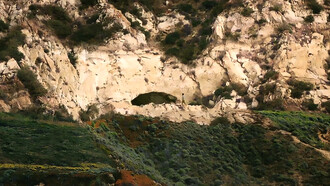
It provided fish in abundance, fertile land for gathering, and a natural route of connection to other groups. This was no ordinary location. The Iron Gates gorge, where Lepenski Vir is situated, is one of the most dramatic stretches of the Danube. Towering cliffs and the steady flow of the river created both opportunity and challenge.
The people who lived here were not wandering nomads but pioneers of settlement. They began to anchor themselves to one place, experimenting with permanence.
For me, this marks a threshold in our human story: the moment when survival began to be tied to place, and art began to reflect that rootedness.
Trapezoidal houses and structured living
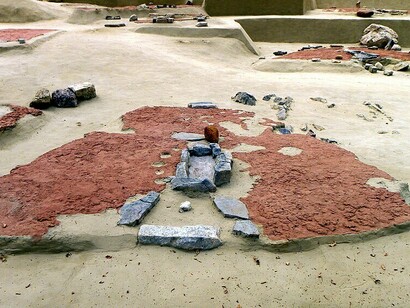
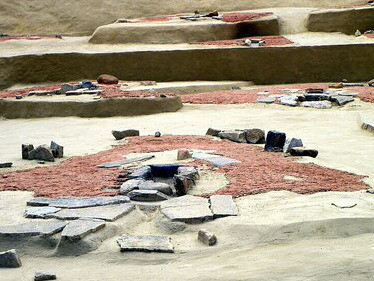
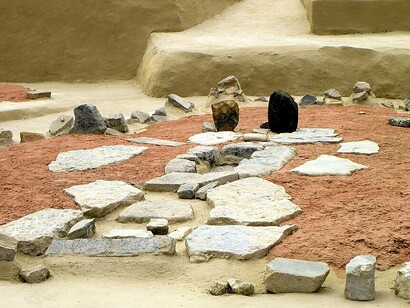
The trapezoidal homes of Lepenski Vir are perhaps its most fascinating feature. Carefully planned with stone foundations, each house followed the same geometric pattern, angled to face the river. This uniformity was no accident; it speaks of shared knowledge, communal decision-making, and an emerging sense of order. Inside these homes, archaeologists discovered hearths and altars, suggesting that daily life and spirituality were inseparable.
Some houses even contained sculpted stones that seem to have served as sacred focal points. To me, these structures reveal the earliest human attempt at designing not just shelter, but a living philosophy. A house was not merely a roof over one’s head… it was a place where body and spirit coexisted.
Art and the hybrid sculptures
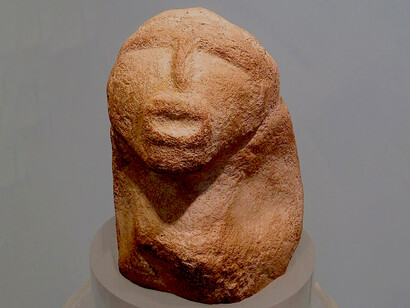
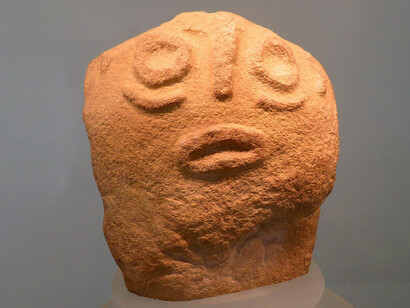
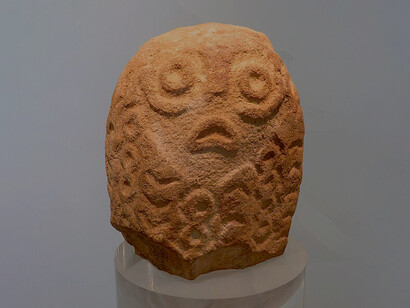
The sculptures of Lepenski Vir are unlike anything else from the Mesolithic era. Carved from river boulders, they often depict faces that are both human and fish-like. Wide eyes, gaping mouths, and solemn expressions suggest a deep spiritual symbolism.
Some scholars interpret them as deities of the river, guardians of life, or ancestors watching over the community. The choice of stone itself is telling, rounded boulders drawn from the Danube, shaped into sacred icons.
In them, I see a people who no longer created art in isolation but embedded it into the rhythm of their daily existence. The sculptures stood at thresholds between the physical and the spiritual, between human and nature. This merging of forms reminds me that early humans did not see themselves as separate from nature but as part of its living current.
Ritual and spirituality
Excavations at Lepenski Vir revealed altars, burials, and carefully placed sculptures within the trapezoidal houses.
The presence of ritual within domestic spaces tells us that belief was not an occasional practice … it was woven into everyday life.
The fish-human sculptures likely carried spiritual meaning, tied to the Danube’s fish that sustained the community.
Some researchers suggest these figures were early gods or ancestors, protectors of the settlement. Others see them as symbols of transformation … the merging of human with the life-giving power of the river.
What strikes me is how naturally art became the language of spirituality. It was not just about survival anymore. It was about creating meaning, building trust in unseen forces, and binding a community together through shared rituals.
Discovery and excavation
Lepenski Vir was uncovered in the 1960s during archaeological excavations led by Dragoslav Srejović.
What they found astonished the world: more than 100 houses, dozens of sculptures, and evidence of a structured community dating back nearly 8,000 years. This discovery forced historians to reconsider the timeline of human development in Europe. Here, long before the great civilizations of Mesopotamia or Egypt, people were already designing settlements, sculpting sacred art, and living in organized communities. It is humbling to think that while we often associate ‘civilization’ with written language or monumental architecture, the seeds of it were already present in a riverside village thousands of years earlier.
Community and identity
What makes Lepenski Vir so extraordinary is not only its material remains but also the sense of community it reveals. This was no accidental gathering of families but an intentional settlement. Shared house designs, collective rituals, and common symbols point to a group identity larger than the individual.
Through art, architecture, and ritual, these people shaped a cultural identity. They were no longer just surviving day to day; they were creating a way of life. This, I believe, is one of the first times in human history where art served not only as expression but also as the glue of society.
Echoes across time
When I think of Lepenski Vir, I cannot help but connect it to other stages of the Journey of Art. From the cave paintings of Chauvet to the Venus figurines of Dolní Věstonice, humans expressed themselves through isolated objects and images. But at Lepenski Vir, art moved into the heart of the community. It was not just painted on walls or carved in secrecy; it was placed inside homes, on altars, and in shared spaces. This shift matters. It shows us how creativity evolved from individual expression into collective identity.
The people of Lepenski Vir teach us that art was never only about beauty. It was about meaning, survival, and belonging.
Reflections on our journey
As I reflect on Lepenski Vir, I see it as a threshold in our journey of art. It represents humanity’s first bold step into a structured community, where art, ritual, and architecture converged.
The fish-like sculptures, the trapezoidal homes, and the sacred altars all whisper across time that art was always more than decoration.
It was belief, identity, and the invisible thread holding people together.
For me, Lepenski Vir stands as a reminder that art has always been the soul of human existence. And just as the Danube continues to flow, so too does our Journey of Art, carrying forward the echoes of those who first dared to create meaning from stone and spirit.
The symbolism of fish and transformation
The recurring fish-human motifs at Lepenski Vir invite us to think about symbolism more deeply. Fish were central to survival along the Danube, but they were also metaphors of transformation. To merge human and fish into a single figure was to acknowledge dependence on the river while also elevating it into a sacred realm.
In mythology across the world, water often represents life, renewal, and passage between realms. It is striking to see that thousands of years ago, communities along the Danube were already capturing this in their art. Perhaps these sculptures symbolized not only sustenance but the cycle of life itself—birth, death, and rebirth carried by the flow of the river.
Parallels with other ancient sites
When viewed in a wider context, Lepenski Vir connects to a global pattern of human creativity.
At Göbekli Tepe in modern-day Turkey, monumental stone pillars carved with animals suggest early ritual centers.
At Jericho, one of the world’s first walled cities, communal structures point to shared identity. And yet, Lepenski Vir stands apart. It was not a monumental temple nor a fortified city, but a riverside village where art and life intertwined seamlessly.
It reminds me that art is not always about grandeur. Sometimes it is about intimacy, the sacred carved into the very stones of daily living.
This balance between the ordinary and the extraordinary is what makes Lepenski Vir unique in the Journey of Art.
What Lepenski Vir teaches us today
Reflecting on Lepenski Vir from our modern world, I see lessons we often forget.
We live in an age of rapid change, where art is sometimes reduced to commerce or entertainment. But at Lepenski Vir, art was identity, survival, and connection. It teaches us that creativity is not a luxury but a foundation.
The people of Lepenski Vir remind us that community is built not only on resources but also on shared meaning. Their sculptures show us that humans have always sought to merge the visible and the invisible, the human and the natural, into something larger than themselves. To me, that is the eternal role of art: to bridge worlds and remind us of our place within them.
Closing reflections
As I stand back and trace the arc from cave paintings to Lepenski Vir, I feel humbled by the resilience and imagination of our ancestors.
Here, at the edge of the Danube, they dared to settle, to create, and to believe. Their trapezoidal homes, their fish-human sculptures, and their communal altars all speak of a courage to try something new, to anchor life in both matter and spirit.
In many ways, Lepenski Vir feels like a mirror of our own search today: how to build community, how to balance survival with meaning, and how to honor nature while shaping culture.
This is why I continue this journey of art, because each site, each artifact, is not just history but a reflection of our present and a guide for our future.